

If you’re passionate about soccer and aiming to elevate your game, a well-structured soccer training schedule is an absolute game-changer. Whether you’re a youth player just starting out, a weekend warrior honing skills at home, or a seasoned pro preparing for peak performance, crafting the right training plan can boost your skills, stamina, and confidence. Believe me, as someone who’s spent countless hours refining my training routines, I know the difference it makes when each day is planned with purpose.
In this comprehensive guide, I’ll walk you through proven tips and insights that cover everything from balancing technique with conditioning, to mental toughness and tactical drills. We’ll dive deep into age-appropriate schedules, how to integrate recovery, design professional-level regimens, and prepare optimally for tournaments. By the end, you’ll have concrete tools and strategies to build your own soccer training schedule tailored to your goals—because mastering the beautiful game requires more than just showing up; it demands smart, focused effort.
Whether you love juggling balls in your backyard or competing on the biggest stages, this article is packed with actionable advice to keep your training fresh, challenging, and effective. Let’s lace up and kick off your journey to soccer excellence together!
Understanding the Foundations of a Successful Soccer Training Schedule
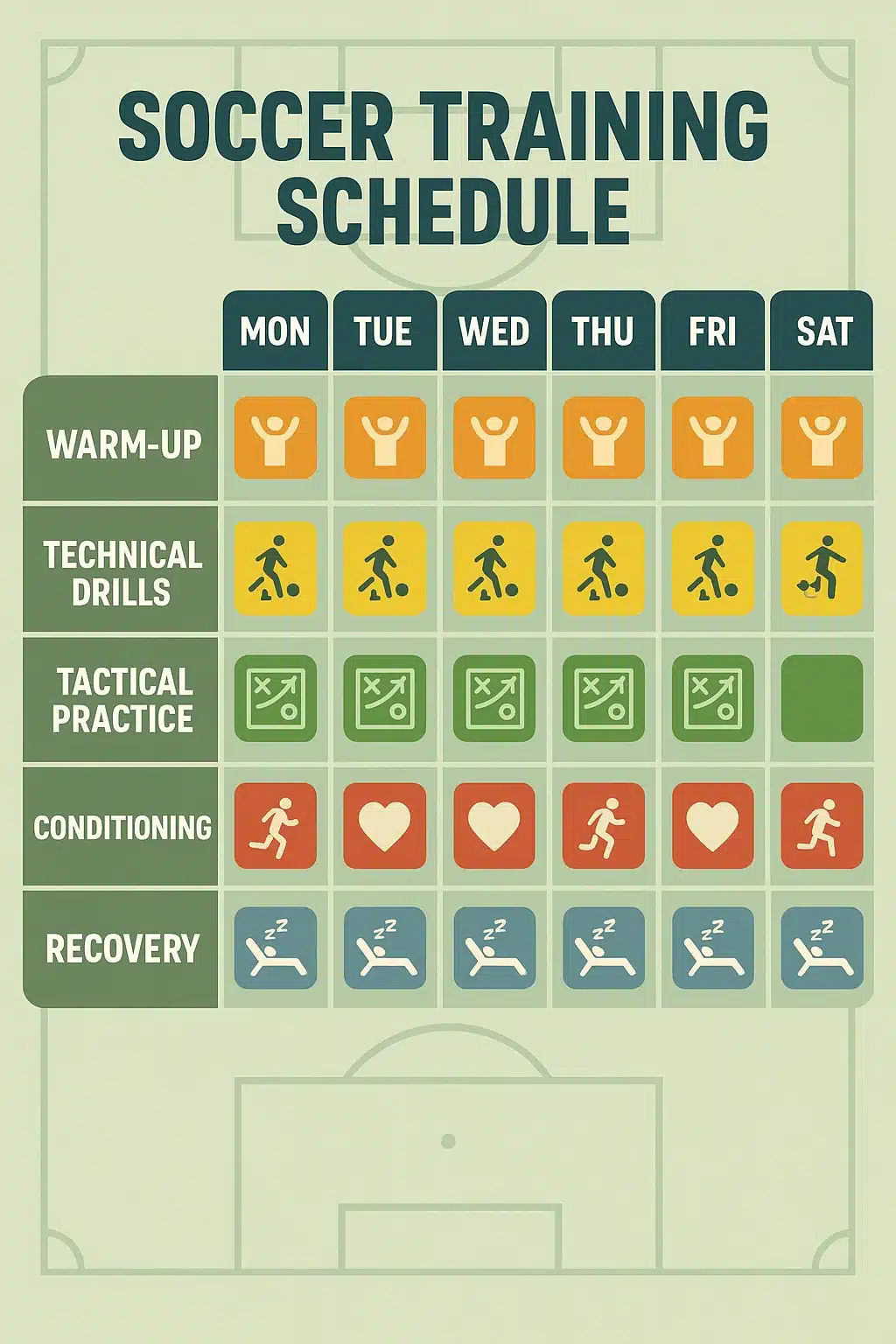
Creating a solid soccer training schedule isn’t about cramming endless drills into every minute of your day. It’s a delicate balance of technical skill-building, physical conditioning, tactical awareness, and mental resilience. Let’s break down these key foundations that every effective training plan must embrace.
Balancing Technical Skills with Physical Conditioning
Technical skills like dribbling, passing, shooting, and ball control are the heart of soccer. Without them, even the fittest player struggles to contribute on the field. Effective schedules allocate dedicated time each session to focused soccer drills—for instance, practicing patterns of passing while moving, or ball control exercises such as the “cone weave” drill, which improves close control in tight spaces.
But fitness conditioning is just as crucial. Soccer demands bursts of speed, quick recovery between sprints, and the stamina to last 90 minutes. Integrating aerobic and anaerobic training—like interval running, agility ladders, and plyometric exercises—into your schedule sharpens your speed and endurance. One effective approach is alternating technical drills with short bursts of conditioning. For example, a 20-minute ball mastery session followed by 10 minutes of shuttle runs keeps your mind and body engaged.
Incorporating Tactical Awareness and Match Simulation
Tactical skills might get overlooked by casual players, but at higher levels, knowing where to be, and when, changes games. Your soccer training schedule should factor in match simulation sessions—small-sided games that help you apply skills under realistic pressure while working on positioning, spacing, and teamwork.
These simulations are fantastic for reinforcing tactical concepts like pressing as a unit, transitioning quickly from defense to attack, and set-piece execution. Coaches often use video analysis alongside these drills, helping players visually understand game situations, mistakes, and adjustments. Carving out time for this dual-focus training boosts not only your physical game but also your soccer IQ.
Prioritizing Mental Toughness and Recovery
Soccer is just as much mental as physical. Incorporating mental toughness training—like concentration workouts, visualization, and breathing techniques—into your routine can improve focus during critical moments. You’ll also want to track how you recover after hard sessions. Recovery sessions, including light stretching, foam rolling, or yoga, prevent injuries and keep muscles primed.
A stellar soccer training schedule acknowledges that rest is part of progress. Mental coaching sessions or mindfulness exercises can be especially beneficial when integrated weekly, helping prepare players to stay calm, confident, and resilient under pressure.
Crafting a Weekly Soccer Training Schedule for Youth Players
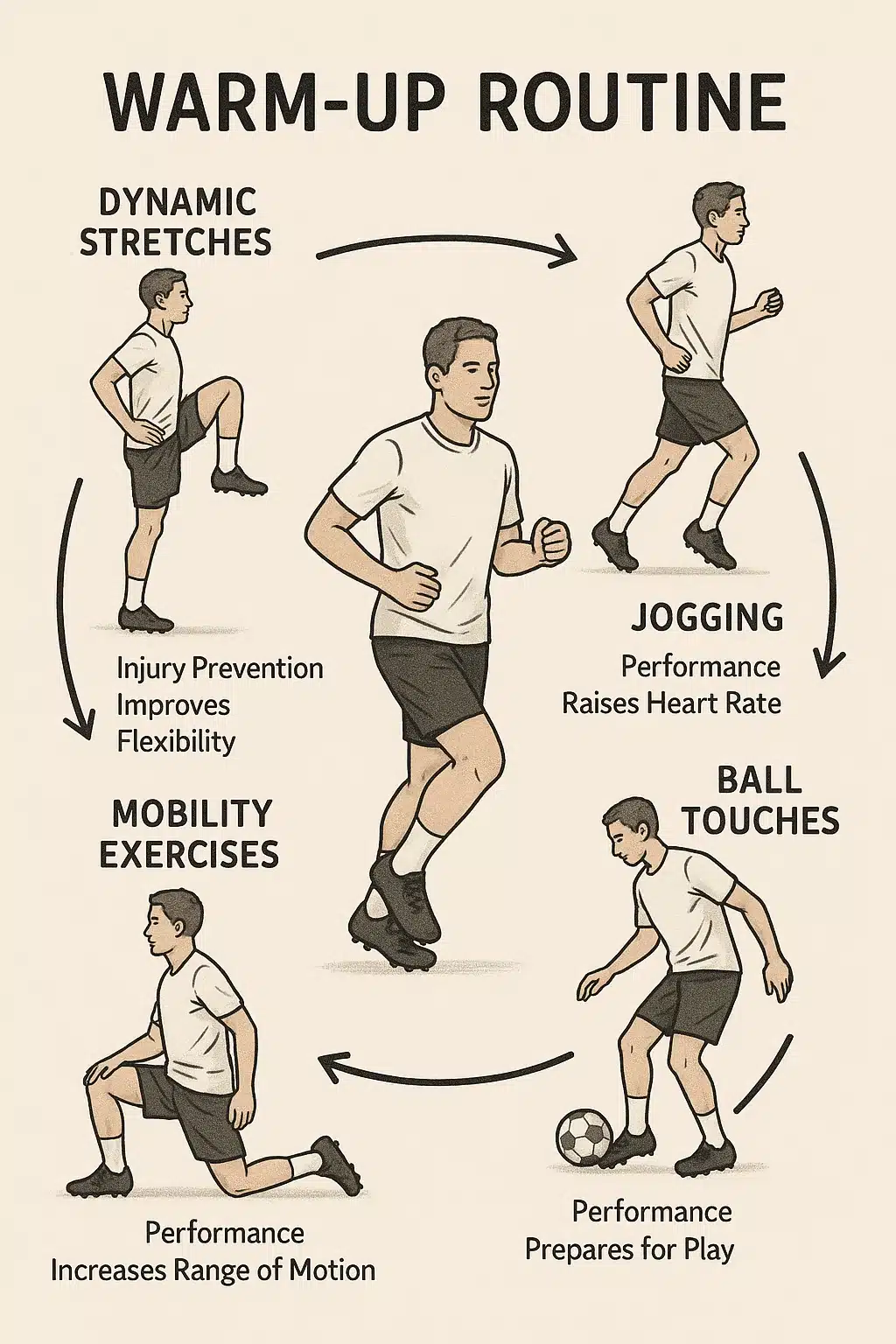
When working with young athletes, the aim is to develop a love for the game while steadily improving skill and fitness in an age-appropriate way. The right weekly soccer training schedule for youth players balances structured drills with fun activities to foster growth without burnout.
Age-Appropriate Drills and Exercises for Skill Development
Younger players thrive on repetition mixed with variety. Basic ball control exercises like toe taps, dribbling through cones, and passing against a wall build foundational technique. Simple juggling challenges (start with 5 touches, work up to 20) also promote coordination and touch sensitivity.
Coaches recommend sessions of 60-90 minutes, 2-3 times per week for beginners, focusing on one or two new skills each day—for example, mastering the inside-foot pass on Monday, dribbling agility on Wednesday, and shooting accuracy Friday. Keeping drills engaging, such as turning passing into a game, helps maintain focus and joy.
Integrating Small-Sided Games and Agility Training
Small-sided games (3v3 or 5v5) offer young players abundant touches on the ball and foster teamwork. These mini-matches should make up 30-40% of training sessions because they combine fun, competitive spirit, and applied skill work. Agility training using ladders, cones, and quick-feet drills builds foot speed and balance essential for quick direction changes in game settings.
For example, a 90-minute session could start with a 20-minute warm-up, then 20 minutes of ball control drills, 15 minutes of agility exercises, and wrap up with 30 minutes of small-sided games. This variety keeps energy high and ensures all-round development.
Scheduling Recovery and Injury Prevention Sessions
Even youth players need dedicated slots for injury prevention. Incorporate dynamic stretches post-training and introduce light strength exercises using body weight—like squats and lunges—to build durability. It’s wise to schedule at least one rest day per week, especially after intensive sessions, to aid growth and prevent overuse injuries.
Designing a Beginner Soccer Training Schedule at Home
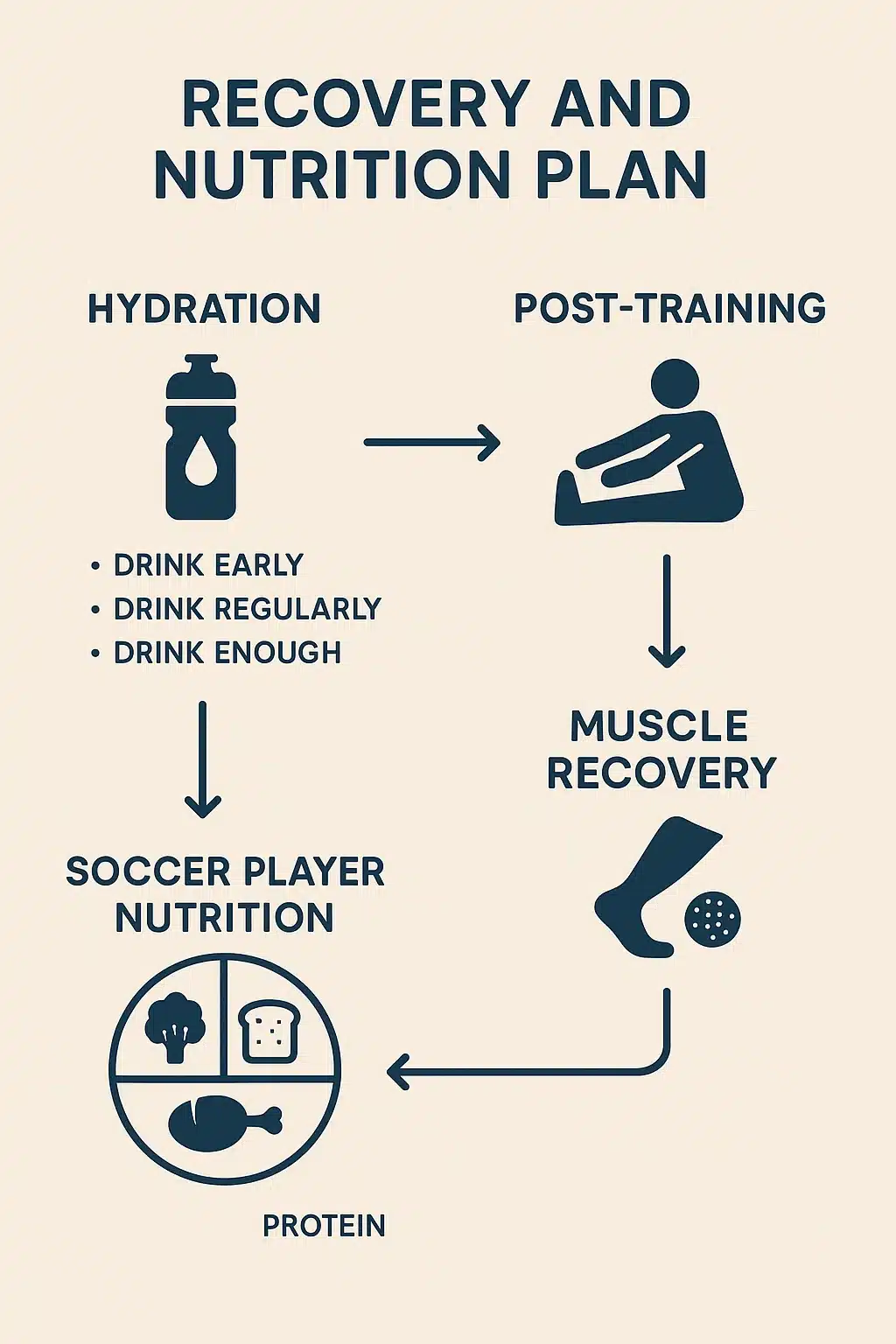
Training at home offers great flexibility but requires discipline. A beginner soccer training schedule at home should emphasize mastering ball basics and physical conditioning through simple, effective routines.
Basic Ball Control and Footwork Drills
Start every session with ball mastery drills—these include toe taps, inside-outside touches, and rolling the ball with the sole. These exercises can be done in a small space and improve touch and confidence with the soccer ball.
Footwork drills like cone weaving or ladder drills enhance coordination and quick feet. Spending 20-30 minutes daily on these fundamentals drastically improves control. For example, 10 minutes of juggling, 10 minutes of footwork ladder drills, and 10 minutes practicing passing against a wall constitute a focused session you can repeat several times weekly.
Body Conditioning and Endurance Building Techniques
Soccer demands more than skill; it requires cardiovascular endurance. At home, beginner players can work on endurance by incorporating jogging, skipping rope, or stair climbing—low-impact yet effective activities.
Begin with 15-20 minutes of steady jogging interspersed with short sprints (20-30 seconds), followed by bodyweight exercises like planks and squats to build strength. Over time, increase the duration and intensity as fitness grows. This holistic approach ensures your body can keep pace with your improving skills.
Developing a Professional Soccer Training Schedule for Peak Performance
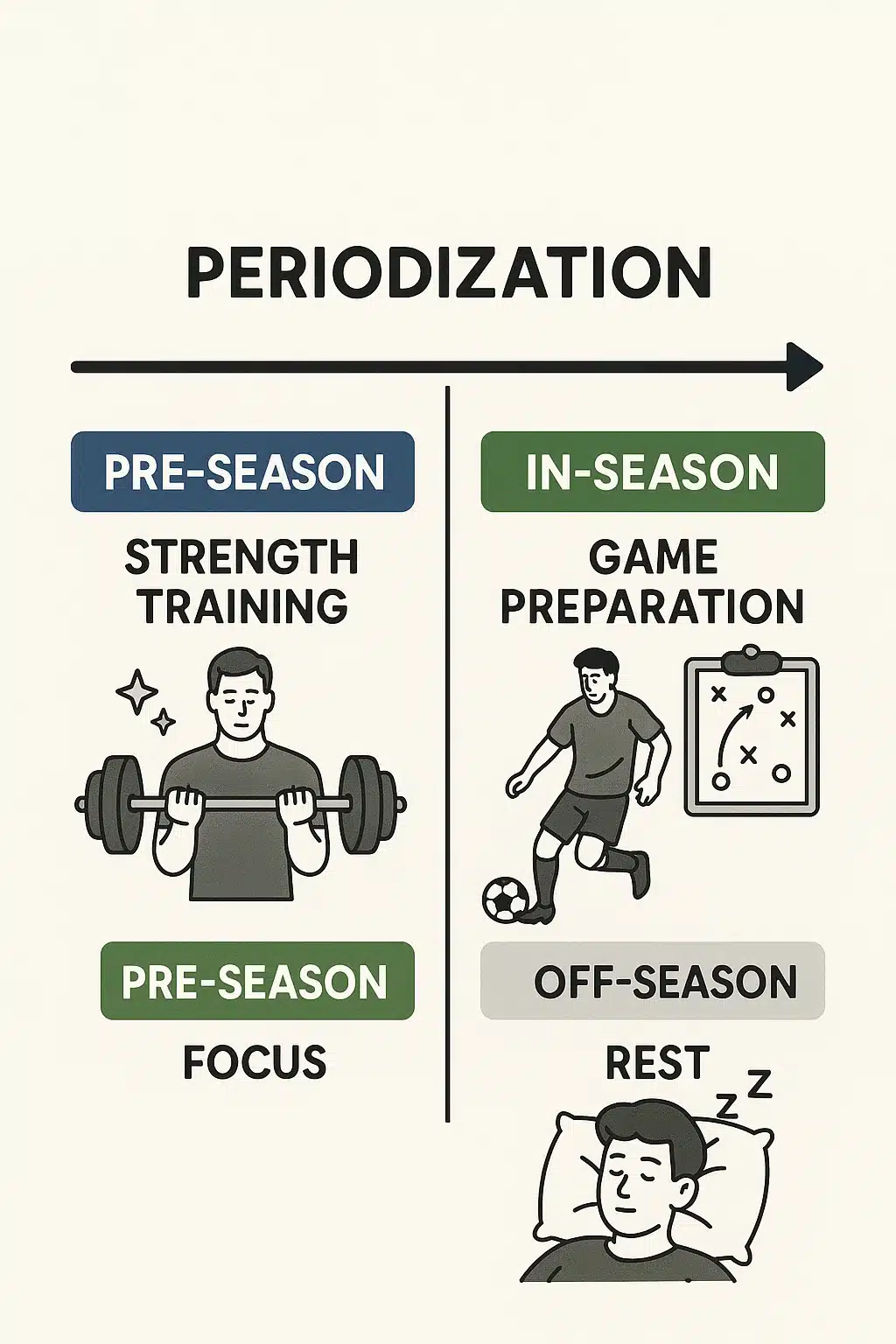
For advanced players targeting elite performance, schedules must be meticulously designed to balance all facets of the game.
Advanced Strength and Speed Training Regimens
Elite players require tailored strength training focusing on explosive power and injury resistance. This includes weightlifting sessions targeting the lower body (squats, deadlifts) and core stabilization exercises. Speed drills like resisted sprints, hill runs, and plyometric jumps enhance acceleration and agility.
Usually, strength sessions are 2-3 times weekly, avoiding back-to-back days. Combining this with on-field sprint intervals (e.g., 10x30m sprints with ample rest) sharpens physical explosiveness crucial for decisive plays.
Tactical Video Analysis and Mental Coaching Integration
High-level players benefit greatly from tactical video review sessions to dissect gameplay nuances. Coaches assist in identifying positioning errors or strategic opportunities, reinforcing lessons learned on the pitch.
Mental coaching through visualization, goal-setting, and relaxation techniques often forms part of weekly routines, preparing athletes mentally for high-pressure matches. These sessions help maintain peak focus and competitive edge.
Optimizing Daily Training Load for Recovery and Performance
Total daily load management ensures training intensity is scaled appropriately to prevent burnout. Light active recovery days featuring swimming, yoga, or mobility drills support muscle repair.
Nutrition and hydration also tie into recovery. Professional players often work with dietitians to tailor meal plans aligned with training volume, ensuring energy stores are replenished and injury risks minimized.
Soccer Training Schedule for Tournament Preparation
Tournaments test a player’s complete skill set under pressure, so preparation schedules must sharpen technical, tactical, and physical capacities simultaneously.
Combining Technical, Tactical, and Physical Drills
Practices early in the preparation phase focus on fine-tuning skills—dribbling under pressure, precise passing, and deadly shooting accuracy. Then, gradually more tactical group drills like defensive shape and pressing patterns are introduced.
Physically, interval conditioning mimics game intensity: alternating sprint and jog cycles to build stamina. Sessions often run 90-120 minutes, with the last 20-30 minutes devoted to simulated matches.
Match Simulation and Pressure Situation Drills
Pressure is a given in tournaments, so replicating these conditions in training is vital. Small-sided games where scoring is worth different points, or timed attacking challenges, simulate stress and decision-making under fatigue.
For example, coaches may design 10-minute “high stakes” mini-games, forcing players to sweat under mental and physical stress, preparing them for real-game anxiety.
Focus on Stamina and Endurance Enhancement
As tournaments involve multiple matches across days, stamina is king. Increasing aerobic base through long, steady runs and boosting anaerobic capacity with sprint repeats builds sustainable energy.
Nutrition and hydration strategies during training also become pivotal, teaching players how to fuel and recover between matches efficiently.
Personalized Soccer Training Schedules for Skill Development and Progression
No two players have identical strengths or weaknesses, so a personalized approach accelerates improvement considerably.
Assessing Individual Strengths and Weaknesses
Begin with comprehensive evaluations—technical proficiency checks, fitness testing, and tactical understanding assessments. This diagnostic guides where emphasis is needed—be it speed, passing accuracy, game awareness, or endurance.
Tailoring Training Blocks for Technical and Tactical Growth
Players benefit from cycles of focused training, often called “training blocks,” targeting one area intensely before switching. For example, a two-week block might concentrate on attacking tactics, followed by another emphasizing defensive organization.
This phased approach maximizes development without overwhelming players and keeps motivation high by celebrating incremental progress.
Soccer Conditioning and Skills Training Schedule Essentials
Conditioning is inseparable from soccer skills. Seamless integration ensures players can execute techniques under fatigue.
Integrating Speed, Agility, and Strength Workouts
A balanced conditioning schedule includes:
- Speed drills: resisted sprints and flying starts
- Agility drills: ladder work, cone drills, change-of-direction exercises
- Strength workouts: bodyweight circuits, resistance training
Alternating these throughout the week avoids monotony and maintains high energy levels.
Utilizing Small-Sided Games for Practical Application
Small-sided games bridge conditioning and skills, encouraging tactical decision-making in fast-paced scenarios while maintaining fitness. They serve as perfect capstone exercises in any training session, reinforcing everything learned.
Offseason Soccer Training Schedule for Advanced Players
The offseason is strategic time for maintenance and rebuilding.
Maintenance of Fitness and Technical Sharpness
Rather than rest completely, advanced players maintain moderate training volumes focused on technical touch, light conditioning, and strength preservation. An example schedule might be 4 days a week consisting of ball drills, light gym workouts, and flexibility sessions.
Injury Prevention and Recovery Focused Sessions
Offseason is ideal to integrate physiotherapy, foam rolling, and mobility exercises aimed at correcting imbalances and preventing common injuries. These efforts pay dividends in the upcoming season.
Goalie-Specific Soccer Training Schedule Components
Goalkeepers have unique physical and mental demands.
Reflex and Positioning Drills
Goalies sharpen reflexes with reaction ball drills, medicine ball throws, and rapid shot-stopping drills. Positioning is taught with shadow play exercises where they practice angles and footwork without a ball.
Strength and Mental Focus Training
Upper body strength (using resistance bands or weights) enhances punching and throw range. Simultaneously, mental focus exercises—including scenario visualization and controlled breathing—instill calmness crucial during high-pressure saves.
Incorporating Mental Toughness and Focus into Your Soccer Training Schedule
Strong minds win matches.
Techniques for Enhancing Concentration and Resilience
Incorporate meditation, breathing exercises, and visualization for enhancing focus. Practice positive self-talk and controlled exposure to high-pressure drills to build mental resilience.
Role of Mental Coaching in Long-Term Development
Engaging with a mental coach or sports psychologist adds immense value for sustained progress, helping players handle stress, recover from setbacks, and maintain motivation throughout their soccer journey.
FAQs
Q1: What is an ideal weekly soccer training schedule for youth players?
A: Ideally, 2-3 sessions of 60-90 minutes focusing on ball control drills, small-sided games, and basic agility training, with at least one rest day for recovery, promote skill growth and fun.
Q2: How can beginners create an effective soccer training schedule at home?
A: Beginners should focus on daily ball mastery drills (e.g., juggling, footwork ladders) combined with light conditioning like jogging and bodyweight exercises, totaling 30-45 minutes per session.
Q3: What distinguishes a professional soccer training schedule for peak performance?
A: It balances advanced strength and sprint training, tactical video analysis, mental coaching, and strategic recovery, designed around individualized goals and careful load management.
Q4: How should soccer players prepare training schedules for tournaments?
A: They should emphasize combined technical, tactical, and stamina work with match simulation and pressure-drill sessions, allowing for optimized recovery between intensified practices.
Q5: What are key components of a goalie-specific soccer training schedule?
A: Reflex and positioning drills, upper body strength training, and mental focus exercises tailored to the unique demands of goalkeeping are essential.
Quick Takeaways
- A successful soccer training schedule balances technical skills, physical conditioning, tactics, and mental toughness.
- Youth players need fun, age-appropriate drills with recovery to avoid burnout.
- Home beginners benefit from daily ball control and endurance-building activities.
- Advanced players require tailored strength, speed, video analysis, and mental coaching.
- Tournament prep demands integrated drills — technical, tactical, and physical — with simulated pressure.
- Personalized schedules maximize growth by targeting individual weaknesses methodically.
- Goalkeepers need specialized reflex, strength, and concentration training.
Conclusion
Designing an optimal soccer training schedule is your ticket to unlocking your full potential on the pitch. I’ve walked you through the essentials—from the building blocks of balanced skill and conditioning, through youth to professional levels, to tailored plans for tournaments and offseason success. Remember, effective training is not about sheer quantity but quality and purpose, blending technical, tactical, mental, and physical elements thoughtfully.
If you’re a serious soccer ball lover, approach your training with commitment and creativity. Don’t shy away from adjusting your schedule as you progress, listening to your body, and prioritizing recovery. By embedding these insights into your daily routine, you’ll see your game sharpen, your fitness soar, and your mental strength grow—making every touch count.
So, why wait? Start structuring your next training week today and watch how a clear, focused soccer training schedule transforms your play. Lace-up, dive in, and let’s chase those goals together!