

Soccer is more than just a game of skill and agility—it demands a strong, conditioned body that can endure the rigors of fast-paced action on the field. As a soccer ball lover, you’ve probably noticed how some players seem to dart past defenders with ease while avoiding injuries that sideline others. The secret often lies in their dedication to soccer strength training. In this comprehensive article, we’ll explore why strength training is essential for soccer players, reveal the best exercises for boosting your game, guide you through designing a solid 12-week program, and share advanced tips for staying at the top of your game all season long.
Throughout this journey, we’ll cover everything from fundamental plyometric exercises for beginners to in-season training adjustments and even neuro-muscular drills that enhance ball control under pressure. Whether you’re just stepping onto the field or looking to elevate your performance, these soccer strength training insights will equip you to build power, improve speed, prevent injuries, and maintain peak condition. Let’s dive right in!
Understanding the Importance of Soccer Strength Training
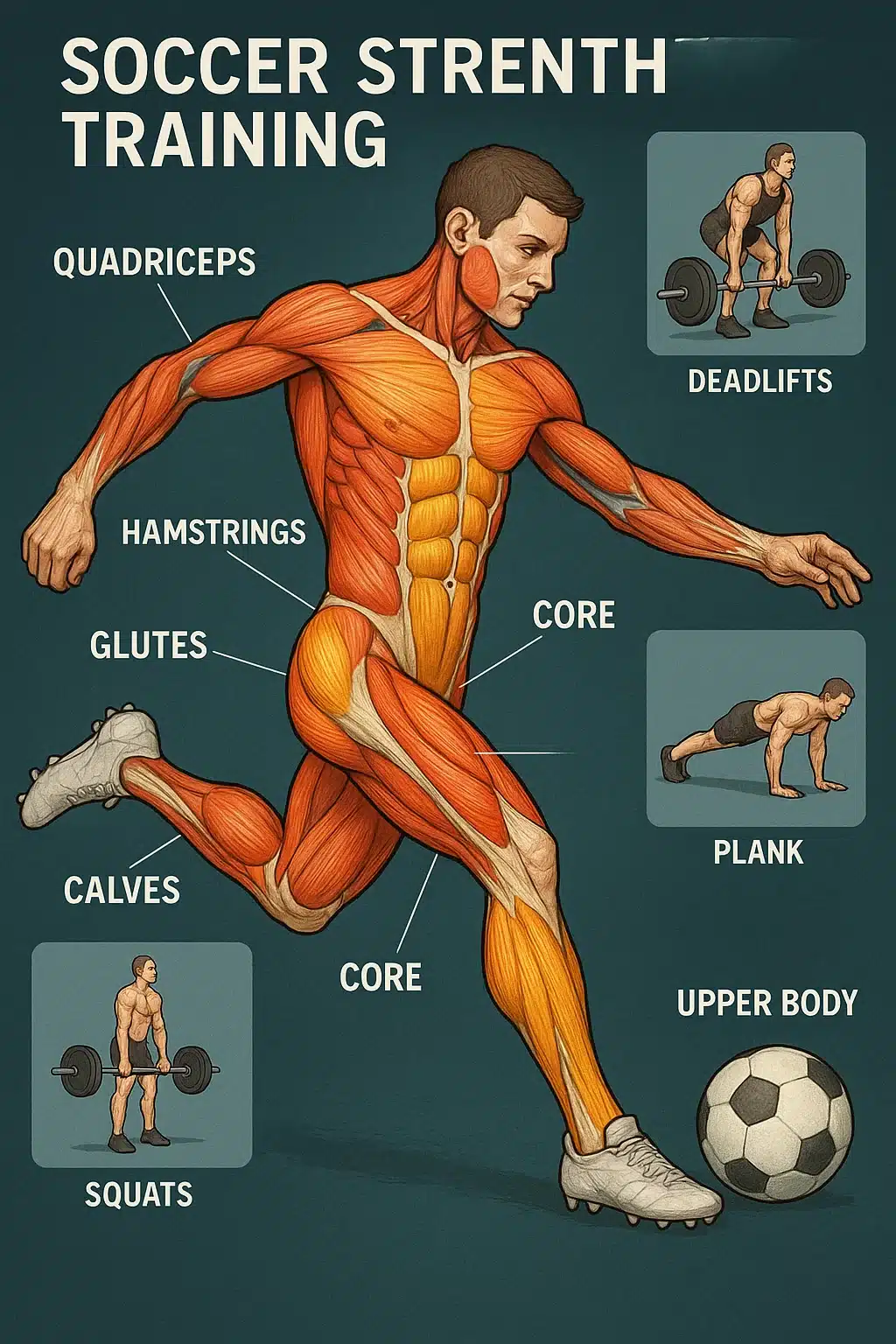
Enhancing Performance Through Targeted Muscle Development
When I first started playing soccer, I believed that skill alone was enough to dominate the field. But soon I realized that strength training played a massive role in turning good players into great ones. Soccer strength training targets specific muscle groups essential for explosive movements, endurance, and overall game performance.
Lower limb muscles, including the quadriceps, hamstrings, calves, and glutes, are critical for sprinting, jumping, and powerful shots. Developing these muscles through targeted exercises not only enhances your speed and kicking power but also improves agility—helping you change direction quickly during those nerve-racking one-on-ones.
Equally important is strengthening your core muscles—abs, obliques, and lower back—which act as a stable base during physical challenges. A solid core increases balance and control, making your movements more precise whether you’re dribbling past opponents or absorbing contact without losing your footing.
Preventing Common Soccer Injuries with Strength Conditioning
Strength training isn’t just about improving your performance; it’s your frontline defense against injuries—a crucial factor for any dedicated soccer ball lover.
Role of Lower Limb Strength in Injury Prevention
Studies show that strong lower limb muscles reduce the risk of common soccer injuries like ACL tears, ankle sprains, and hamstring strains. For example, strengthening the hamstrings through eccentric exercises (where the muscle lengthens under tension) has been proven to protect the knee by balancing the pull with the quadriceps.
By regularly engaging in targeted strength exercises, you can reinforce your joints and tendons, enabling them to withstand the sudden starts, stops, and twists natural to soccer’s playstyle.
Core Stability as a Defense Against Injury
Core stability plays a pivotal role in protecting your spine and pelvis during high-impact moves. A well-conditioned core reduces compensatory movements that often lead to muscle strains or lower back pain. Incorporating exercises like planks, Russian twists, and bird dogs into your routine protects not just your midsection but your overall athletic longevity.
Building a Foundation: Best Soccer Strength Training Exercises for Beginners
Fundamental Plyometric Exercises for Explosive Power
Plyometric exercises are jump-starts for your explosive power and speed. Beginners should focus on movements that improve muscle elasticity and neuromuscular coordination without overstraining.
-
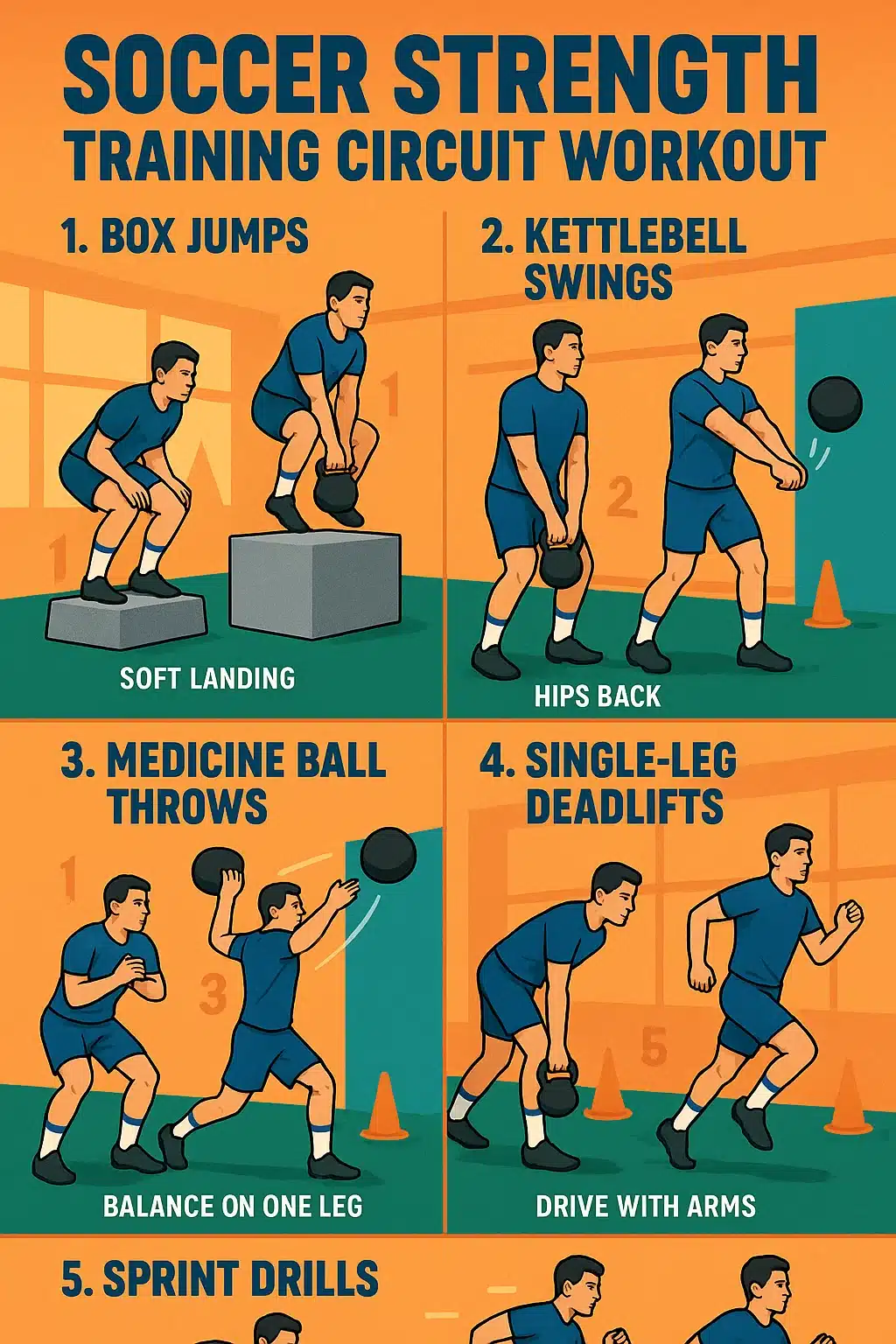
Box Jumps: Start with a sturdy 12-18 inch box. Stand in front, swing your arms, and jump onto the box, then step down carefully. Repeat for 3 sets of 8-10 reps. This builds vertical power essential for winning headers.
-
Lateral Bounds: From a standing position, leap sideways from one leg to the other. Aim to stick each landing for control. Do 3 sets of 15 bounds per side. The lateral movement trains your balance and agility, crucial for quick changes in direction.
-
Jump Squats: Begin in a squat position with feet shoulder-width apart. Explosively jump as high as possible and land softly, immediately lowering back into a squat. Perform 3 sets of 10 reps. This develops strength and endurance in your thighs and glutes.
Essential Weightlifting Techniques for New Players
Weightlifting might sound intimidating initially, but incorporating basic lifts correctly can dramatically improve your soccer performance.
-
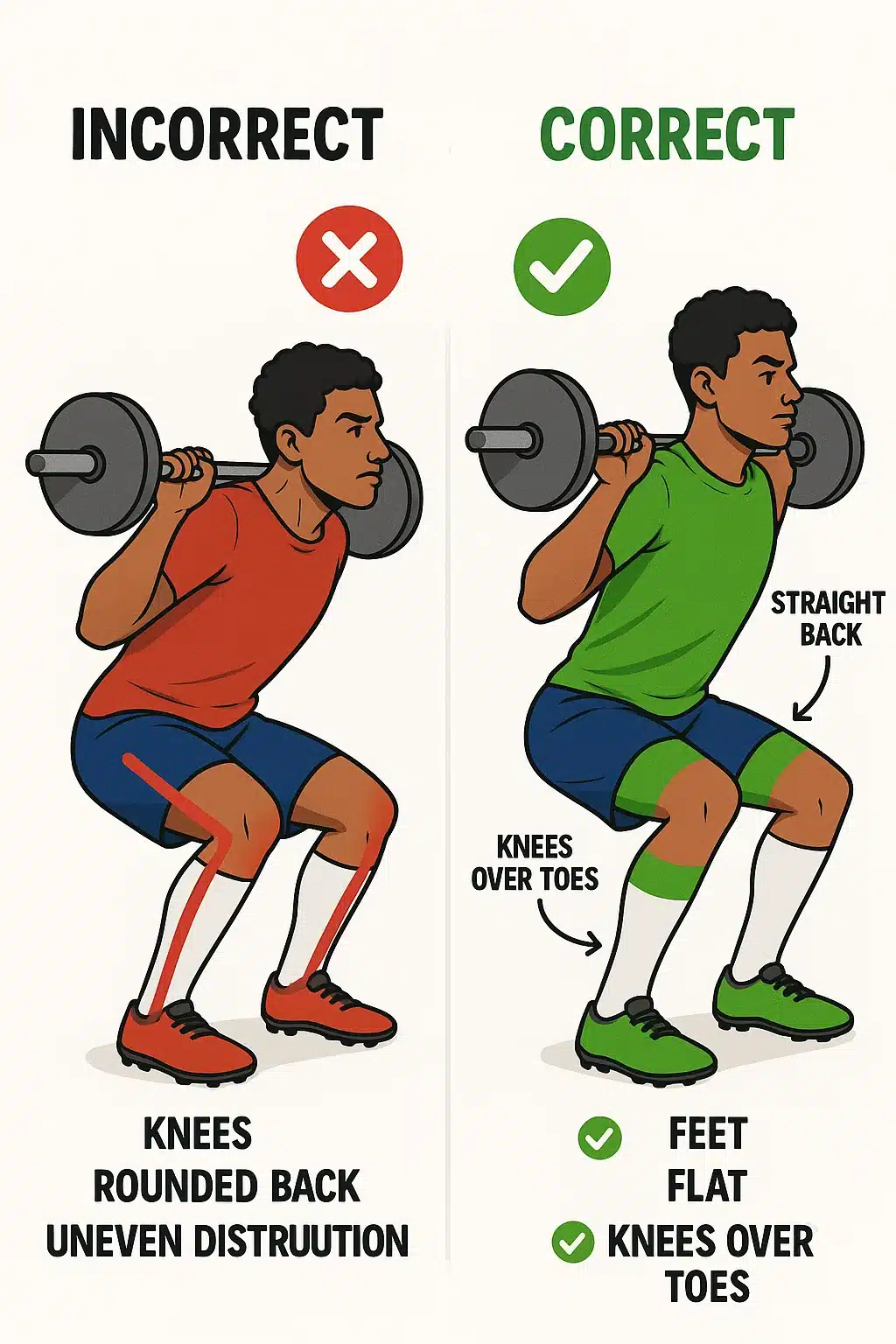
Squats: Whether bodyweight or using light dumbbells/barbells, squats activate multiple lower-body muscles simultaneously. Work up to 3 sets of 8-12 reps, emphasizing proper form—chest up, knees tracking your toes, and a flat back.
-
Romanian Deadlifts: These strengthen your hamstrings and lower back. With light weights at first, perform 3 sets of 8 reps while maintaining a hinge motion without rounding your spine.
-
Bench Press or Push-Ups: To build upper body strength vital for shielding the ball and holding your ground, include 3 sets of push-ups or bench presses with manageable weights.
Integrating Balance and Stability Work Into Beginner Routines
Soccer isn’t just about raw strength; balance and body control are game-changers. Here are simple drills to develop those attributes:
-
Single-Leg Stance With Eyes Closed: Stand on one leg for 30 seconds, switch sides. Progress by standing on an unstable surface like a balance pad.
-
Bird Dogs: From a tabletop position, extend opposite arm and leg, hold, and switch. This promotes core stability important for maintaining control during dynamic play.
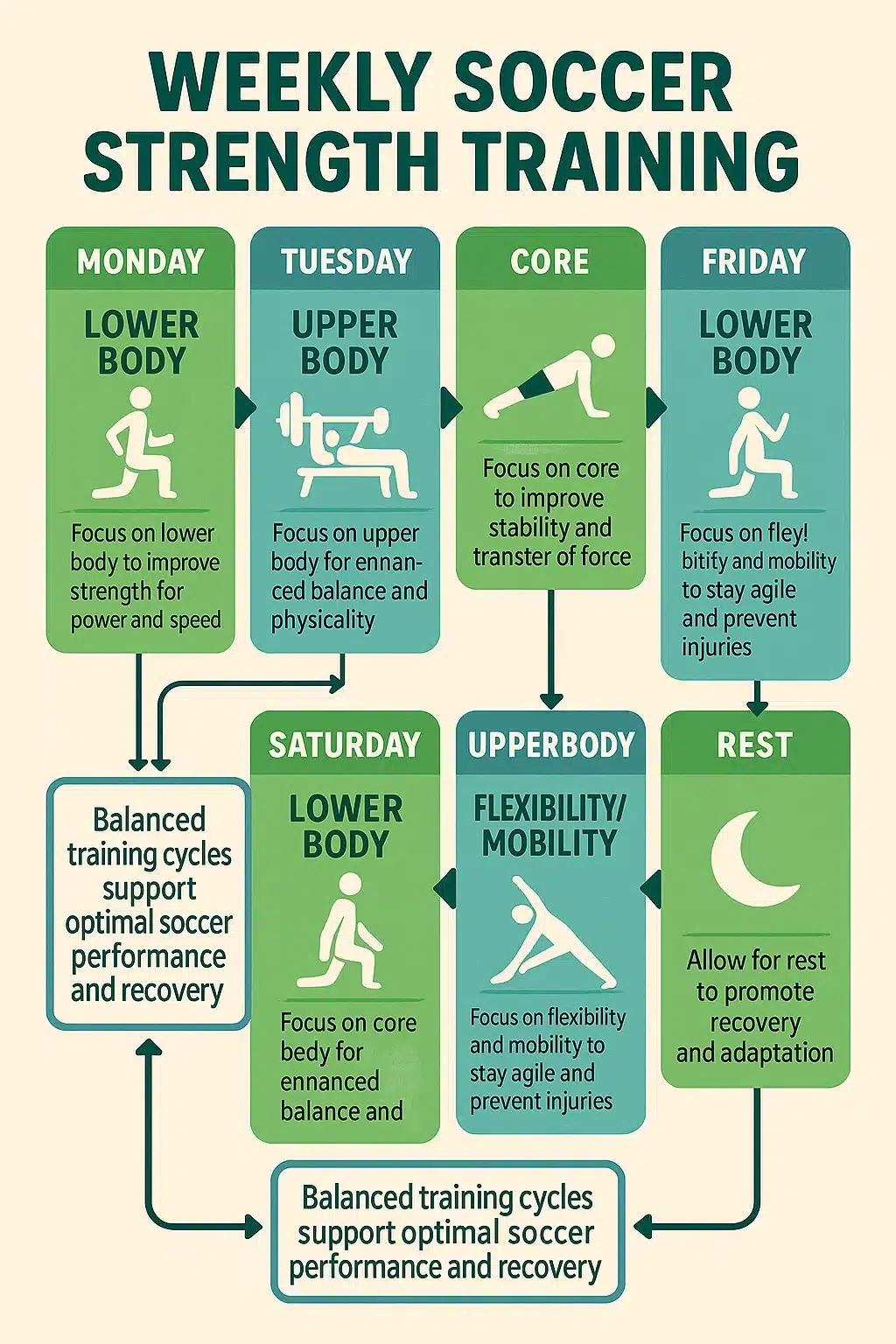
Incorporating these drills 2-3 times weekly alongside strength training builds the foundation for more advanced work ahead.
Designing an Effective 12-Week Soccer Strength and Conditioning Plan
Creating a clear, progressive plan is the key to consistent gains. Here’s how I picture the optimal 12-week soccer strength and conditioning plan broken into three phases.
Phase 1: Building Muscle Endurance and Core Strength
Weeks 1-4 focus on preparing your body for more intense work:
- Exercises: Moderate sets of squats, lunges, planks, push-ups, Romanian deadlifts
- Reps: 3 sets of 12-15 reps for endurance
- Incorporate: Balance drills and light plyometrics (e.g., low box jumps)
- Goal: Improve muscle stamina, joint stability, and core resilience
Phase 2: Developing Explosive Power and Speed
Weeks 5-8 shift toward power output essential for game situations:
- Exercises: Jump squats, weighted lunges, sprint drills, kettlebell swings, bench press
- Reps: 4 sets of 6-8 reps with heavier weights
- Plyometrics: Increase intensity with lateral bounds, depth jumps
- Goal: Enhance fast-twitch muscle fiber recruitment and speed mechanics
Phase 3: Peak Performance and Injury Prevention
Weeks 9-12 focus on fine-tuning skills and avoiding injury under fatigue:
- Exercises: Combination of Olympic lifts, resisted sprints, agility ladder drills, core stabilization holds
- Reps: 3 sets of 5-6 reps emphasizing explosive technique
- Recovery: Add proprioceptive exercises and mobility work
- Goal: Optimize strength gains while maintaining flexibility and joint health
This phased structure not only builds raw power but also keeps you resilient throughout your soccer season.
In-Season Soccer Strength Training Program Adjustments
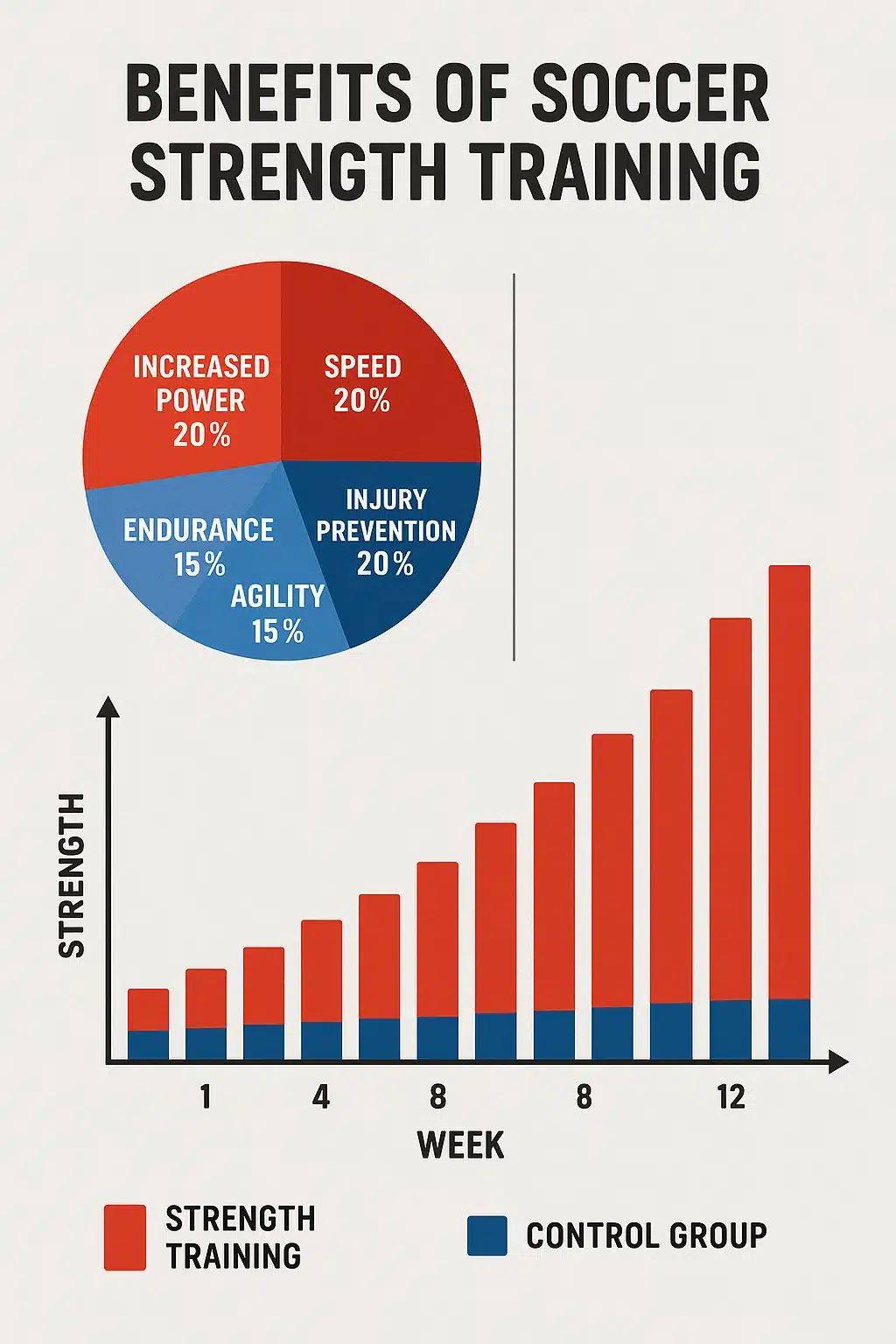
Maintaining Strength Without Overtraining
Once matches intensify, it’s tempting to push hard in the gym, but overtraining can backfire fast. I recommend cutting total volume by around 40% compared to preseason and focusing on preserving strength rather than building anew.
Maintain 2 sessions per week focusing on compound movements like squats and bench presses but with lighter weights (60-70% of max), performing 2-3 sets of 6-8 reps to keep muscle fibers engaged without fatigue.
Scheduling Workouts Around Matches for Optimal Recovery
Timing is everything here. The day before a match should be reserved for rest or very light mobility work to ensure you’re fresh for kickoff. Workout intensity can increase 2-3 days after a game when your body begins recovery, tapering off to rest before the next fixture.
Modifying Plyometric and Agility Drills During Competitive Season
High-impact plyos put additional strain on muscles and joints, so reduce frequency and intensity in-season. Instead of max jumps or bounds, focus on sharp, low-impact drills like quick ladder footwork or light cone drills to keep your neuromuscular system primed without undue risk.
Soccer Strength Training Drills to Improve Speed and Acceleration
Functional Training for Quick Direction Changes
Changing direction instantaneously separates average players from elite ones. Incorporate drills like:
- T-drill: Sprint forward, side shuffle left and right, then backpedal—all as fast and controlled as possible.
- 5-10-5 Shuttle: Sprint five yards one way, ten back the other, then five yards to the start.
These improve your agility, helping you evade defenders with fluid footwork.
Lower Body Strength Drills Targeting Sprint Mechanics
Powerful strides come from explosive hip extension and strong push-off from the ground:
- Resistance Sled Pushes: Use a weighted sled or resistance bands anchored behind you, sprinting short distances to build that explosive drive.
- Nordic Hamstring Curls: Protect your hamstrings while improving strength with this eccentric exercise critical for sprinting mechanics.
Core Strength Workouts to Enhance Ball Control and Stability
A robust core allows you to maintain balance while dribbling, shooting, or absorbing contact. Incorporate exercises like:
- Medicine Ball Rotational Throws: Adding rotational power for shots and passes.
- Plank Variations with Limb Movements: Challenging your stability under dynamic actions to simulate game conditions.
Advanced Upper Body Strength Workouts for Soccer Performance
Tailoring Weightlifting to Soccer-Specific Movements
Although soccer is primarily lower body-focused, upper body strength is crucial for shielding the ball, battling opponents, and maintaining posture under pressure. Exercises to emphasize:
- Dumbbell Rows: Enhance back and shoulder stamina.
- Push Press: Builds overhead strength useful for throw-ins and upper body contacts.
- Farmer’s Walk: Improves grip and core stability simultaneously.
Combining Upper Body Power with Functional Agility Training
Integrate strength and movement drills:
- Perform a push-up followed by a quick lateral shuffle.
- Carry kettlebells for 30 seconds, then perform a cone agility drill.
This combination improves your capacity to exert force while staying agile—exactly what in-game contact demands.
Training Youth Soccer Players: Age-Appropriate Strength Conditioning
Emphasizing Technique Over Load for Long-Term Development
With young players, the goal is building movement literacy rather than heavy loads:
- Bodyweight exercises like squats, lunges, and push-ups are ideal.
- Focus on mastering form and gradually introducing resistance through light bands or medicine balls.
This approach reduces injury risk and fosters a healthy attitude toward exercise.
Incorporating Fun, Functional Exercises for Engagement
Kids stay motivated when training feels like play. Relay races, obstacle courses, and balance games teach coordination and strength while keeping spirits high.
Integrating Strength Training Into Overall Soccer Training Programs
Aligning Strength Days with Skill and Tactical Practice
Avoid overloading a single day; for example, schedule strength training on days when tactical sessions are lighter. This method ensures you have enough energy for both without compromising either.
Managing Periodization for Peak Game Day Performance
Plan training intensity cycles throughout the season with planned rest phases (deload weeks) to avoid burnout, helping you consistently hit peak physical and mental condition on matchday.
Recovery, Nutrition, and Rest: The Triad for Maximizing Strength Gains
Nutrition Strategies to Support Muscle Growth and Repair
Your kitchen is as important as the gym. Protein intake (about 1.6-2.2 grams per kg body weight) supports muscle repair. Carbs replenish glycogen stores, critical for those blazing sprints. Hydration fuels all cellular functions—never underestimate water’s power.
Foods rich in antioxidants and omega-3 fatty acids reduce inflammation and aid faster recovery.
Importance of Rest and Active Recovery Techniques
Sleep is when your body rebuilds muscle fibers. Aim for 7-9 hours nightly. Incorporate light activities—like cycling or swimming—to promote blood flow without strain, flushing out metabolic waste and soothing sore muscles.
Unique Insight: Leveraging Neuro-Muscular Training to Enhance Ball Control During Strength Workouts
Combining Cognitive Drills with Strength Exercises for Improved Game Situational Awareness
Imagine doing a plank while a coach calls out random directions to dribble in—this trains your brain and body to react collaboratively. Studies suggest this dual training improves decision-making under fatigue.
Using Reactive Training Tools to Simulate Match Pressure During Conditioning
Devices like reaction balls, light sensors, or VR simulators add unpredictability, mirroring real-game pressure that improves your reflexes and ball control even while muscles are taxed.
FAQs
Q1: What are the best soccer strength training exercises for beginners?
A: Beginners should focus on foundational exercises like bodyweight squats, lunges, push-ups, box jumps, and planks, which develop muscle endurance, core stability, and explosive power safely.
Q2: How can I maintain strength during an in-season soccer strength training program?
A: Reduce training volume and intensity by about 40%, focus on compound exercises with lighter loads, and schedule workouts for proper recovery between matches to prevent fatigue.
Q3: Are plyometric exercises effective for soccer strength training?
A: Absolutely! Plyometrics like lateral bounds, jump squats, and box jumps enhance explosive power and agility, crucial for quick direction changes and sprinting on the field.
Q4: What’s a good strength training schedule for soccer players during preseason?
A: A 3-4 day weekly schedule focusing on muscle endurance and core strength early on, progressing to explosive power and agility drills, is ideal. Each session should last 45-60 minutes with rest days included.
Q5: How can youth soccer players safely integrate strength training?
A: Prioritize technique with bodyweight movements, keep sessions fun with games and functional activities, and avoid heavy weights to promote healthy development and reduce injury risk.
Quick Takeaways/Key Points
- Soccer strength training is essential for improving performance and preventing injuries by targeting key muscle groups.
- Beginners should emphasize plyometric exercises, basic weightlifting, and balance drills to build a strong foundation.
- A structured 12-week training plan phases from endurance to explosive power and injury prevention for optimal progression.
- In-season programs require reduced volume and strategic scheduling to maintain strength without fatigue.
- Combining cognitive drills with neuromuscular training during strength workouts enhances ball control under pressure.
- Youth training focuses on technique and enjoyment to foster long-term athletic development.
- Proper nutrition, rest, and active recovery are critical pillars supporting strength gains and on-field success.
Conclusion
As a fellow soccer ball lover, I can’t stress enough how soccer strength training transforms your game—not just physically but mentally too. It’s the secret sauce behind those jaw-dropping sprints, pinpoint shots, and ironclad defense that separates everyday players from players who dominate. Whether you’re a beginner or seasoned athlete, these strength tips are your roadmap to heightened performance, injury resistance, and consistent growth.
Start with mastering foundational exercises, build a targeted 12-week plan, and adapt intelligently throughout the season. Don’t forget to fuel your body with the right nutrition and give yourself the rest you deserve. And hey, injecting some neuro-muscular drills will boost your ball control in ways that feel effortless under pressure.
Now’s the time to lace up, hit the gym, and take your love for soccer to the next level with dedicated soccer strength training. Your future self on the pitch will thank you—trust me!
For those eager to explore strength equipment and professional training resources:
- Rogue Fitness offers quality weightlifting gear suited for soccer players.
- Be Stronger provides expert soccer conditioning programs and tips.
- For plyometric training tools, check out SKLZ lightweight boxes and agility ladders tailored for athletes.
Keep training strong and enjoy every moment on the beautiful game’s field!