
Introduction to Soccer Small-Sided Games
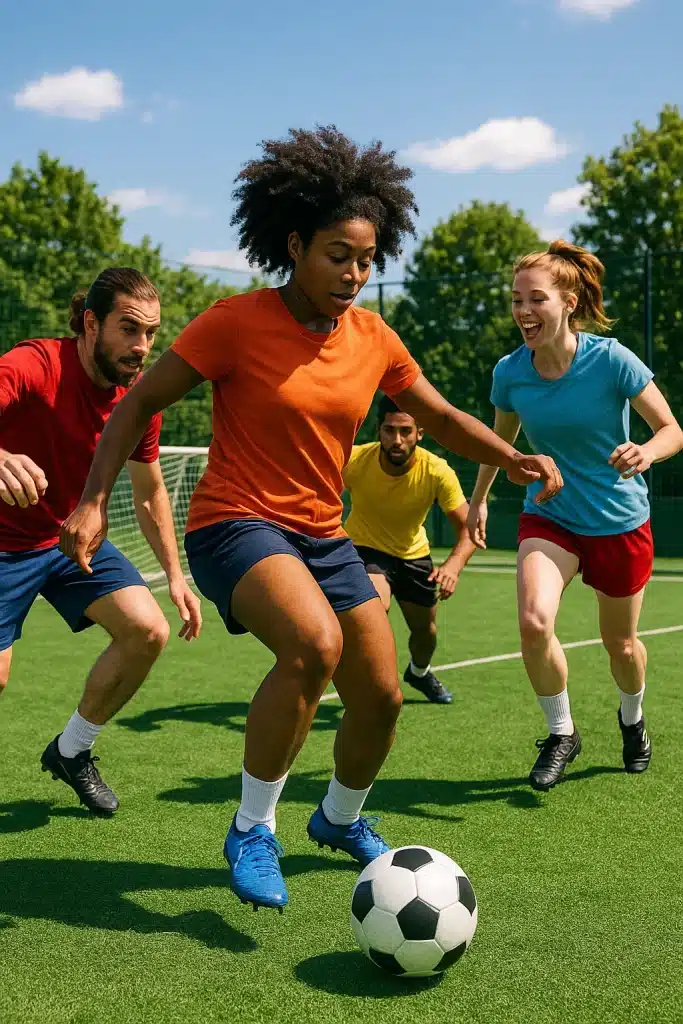
Hey there, fellow soccer ball lover! If you’re passionate about the beautiful game, chances are you’ve heard a lot about soccer small-sided games and their importance in player development. But what exactly are these small-sided games, and why have they become a staple for coaches and players around the world? Simply put, soccer small-sided games are smaller versions of a full-sized soccer match—usually played in formats like 3v3, 5v5, or 7v7. These condensed games are not just about fewer players; they offer a whole new dimension to training, engagement, and skill mastery.
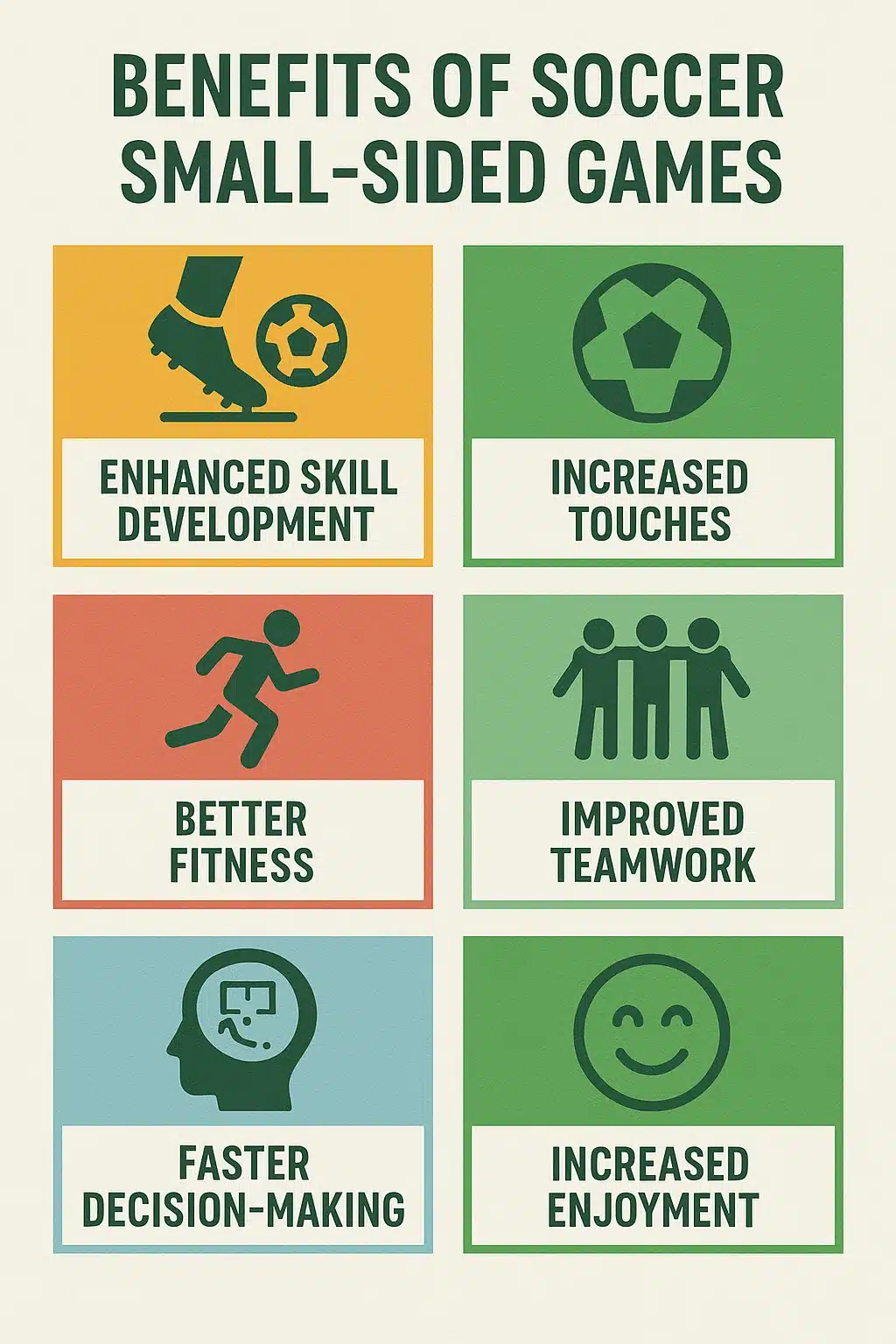
In this article, I’m going to walk you through six essential benefits of soccer small-sided games for players at all levels. We’ll explore everything from how they maximize player engagement and improve technical skills, to their role in tactical training, physical conditioning, and teamwork enhancement. You’ll also gain insights into effective coaching techniques and the fascinating science behind why small-sided games work so well. So, get ready to dive deep into the world of soccer small-sided games and discover how they can transform your love for the game into measurable improvement on the pitch!
Introduction to Soccer Small-Sided Games

Definition and Formats: 3v3, 5v5, 7v7
Soccer small-sided games come in various formats, but the most common include 3v3, 5v5, and 7v7. These smaller team sizes naturally reduce the playing area size and the number of touches each player gets. For instance, in a 3v3 format, there are only three outfield players per side, no goalkeepers in many cases, and a pitch roughly a third or quarter the size of a regulation field. This scaling drastically changes game flow, increasing the pace and frequency of decision-making.
- 3v3: Ideal for very young players or skill-focused practice sessions. Creates high defensiveness and creative attacking chances.
- 5v5: Often used in both youth and adult training; great for balancing tactical play and individual skill.
- 7v7: Bridges the gap toward full-sided soccer; widely used in youth leagues for developing comprehensive game understanding.
Smaller teams mean every player gets more ball touches and is forced to think quickly, fostering accelerated learning and development.
Historical Evolution and Popularity in Youth Soccer Development
Small-sided soccer games weren’t always this popular, but over the past few decades, youth soccer programs worldwide have embraced them as a core training method. Historically, full 11v11 matches were the norm, even for young players, which often resulted in limited touches for many children and less meaningful participation. Coaches and organizations like the U.S. Soccer Federation and UEFA pushed for small-sided games to address these gaps.
Today, you’ll find small-sided games taking center stage in youth soccer academies, tournaments, and grassroots programs globally. Their popularity is driven by their ability to grow technical skills, tactical intelligence, and player confidence much faster than traditional formats. This shift reflects an understanding that quality practice and game time outweighs quantity when it comes to player development.
Maximizing Player Engagement through Small-Sided Games
Increased Touches and Participation per Player
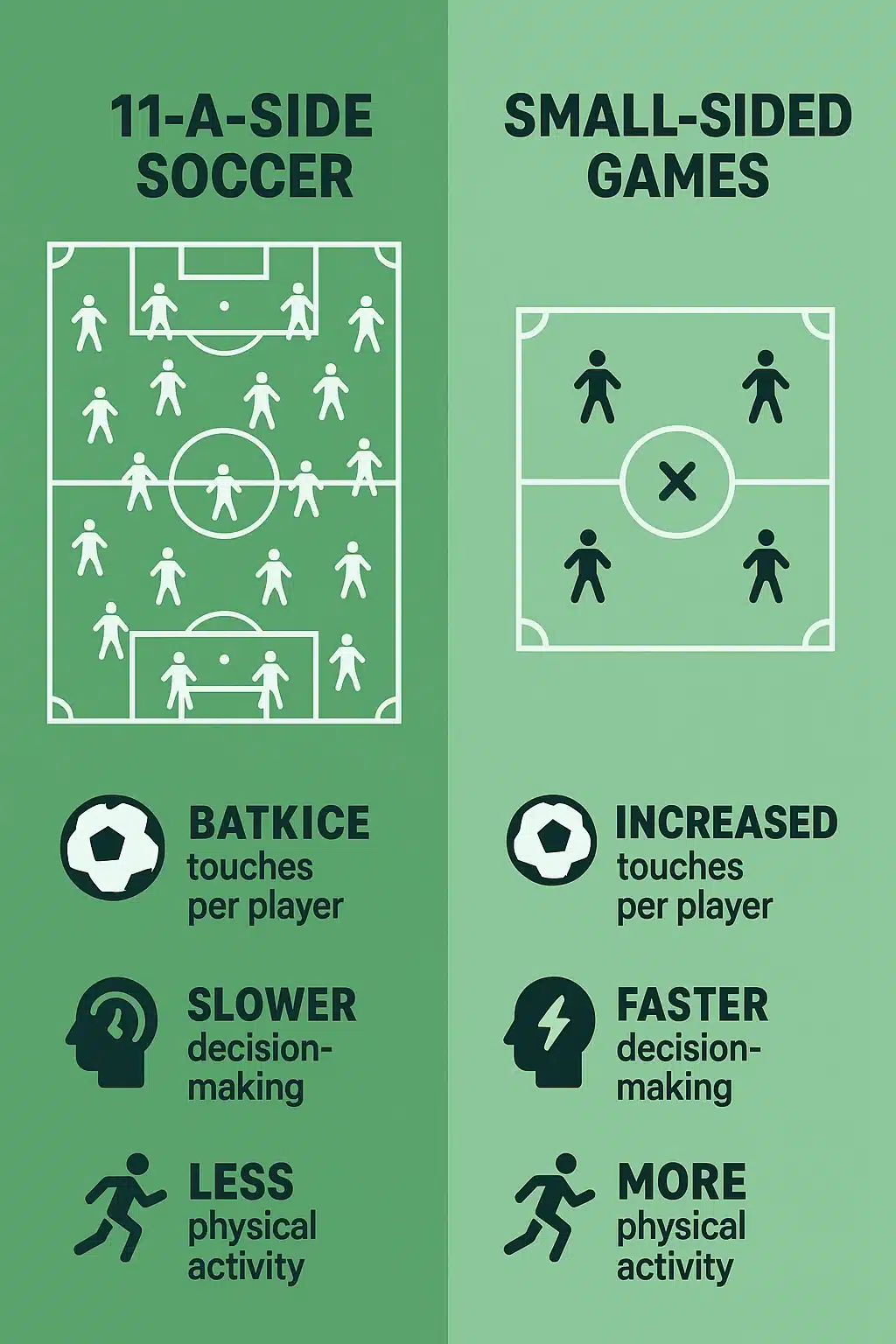
One of the biggest perks of soccer small-sided games is the explosion of player involvement. Unlike 11v11 games where a player might only touch the ball a handful of times, small-sided games guarantee regular and sustained interaction. Studies show players in 3v3 or 5v5 formats can get as much as 4-6 times more touches per game!
For example, a midfielder in a 5v5 game could realistically receive and pass the ball a dozen times in 15 minutes, compared to just a few in a full-sided match. This increased ball contact fosters quicker technical improvement and better situational awareness.
Psychological Impact: Confidence and Motivation Enhancement
More touches and active participation don’t just develop skills; they boost confidence and motivation. When players consistently engage with the ball and contribute meaningfully, their love for the game grows stronger. This psychological boost enhances learning retention and long-term commitment to training.
Young players especially benefit from this setup—those initial moments when a child dribbles past opponents or scores a goal can spark passion, reinforce effort, and encourage continuous play.
Using Game-Based Learning to Sustain Interest
Small-sided games integrate naturally with game-based learning principles. Instead of static drills or repetitive skill work, players learn by doing, making decisions under pressure, and experiencing situational play. The continuous flow and dynamic nature prevent boredom and keep players mentally sharp.
Coaches leveraging this method report higher levels of engagement, quicker tactical understanding, and players’ enthusiasm to attend training sessions regularly.
Technical Skill Acquisition in Small-Sided Formats
Dribbling, Passing, and Shooting Improvements
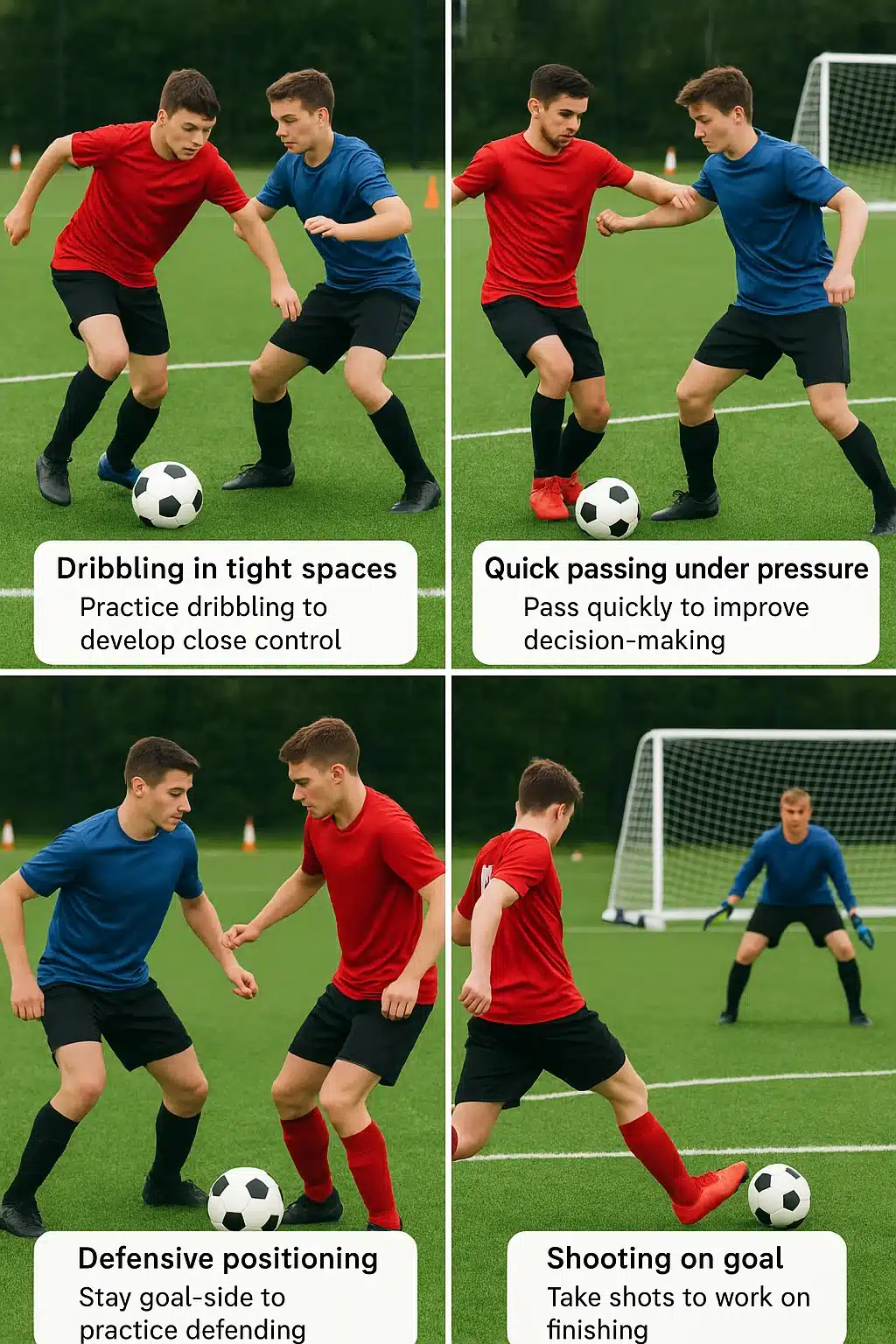
Technical skills are the heart and soul of soccer, and small-sided games are the perfect incubators for these abilities. With fewer players and tighter spaces, every moment involves dribbling, precise passing, or quick shooting decisions.
For example, in 3v3 matches, players find themselves one-on-one more frequently—a golden opportunity to practice dribbling moves like feints, step-overs, and quick turns. Passing must be sharp and accurate, often requiring skills like wall passes or through balls. Shooting chances arise more often due to the smaller field and closer proximity to goal, allowing players to experiment with placement and power.
Best Soccer Small-Sided Game Drills for Beginners
If you’re just starting out or coaching beginners, the right drills are key to harnessing the benefits of small-sided games. Some proven beginner-friendly drills include:
- 4 Corners Drill: Players practice passing and moving within a tight grid, focusing on possession and quick decision-making.
- One-Touch Passing Rondo: Using a small circle of players, quick one-touch passes simulate the pressure in game situations.
- Small Goals Shooting: Mini-goals placed within a small field help beginners focus on accuracy over power.
These drills emphasize control, spacing, and teamwork, setting a solid foundation before advancing to competitive small-sided games.
Tailoring Drills to Different Skill Levels and Age Groups
One beauty of soccer small-sided games is that drills and game complexities can be progressively tailored. Younger players might start with a basic 3v3 with no goalkeepers, focusing on dribbling and passing. Older or advanced players can use 5v5 or 7v7 formats with added tactical constraints—like zonal restrictions or limited touches—to stretch their decision-making under pressure.
Age-appropriate coaching styles combined with these adaptable games ensure that players grow at their own pace while constantly being challenged.
Tactical Training and Decision-Making Enhancement
Developing Tactical Awareness with Small-Sided Soccer Games
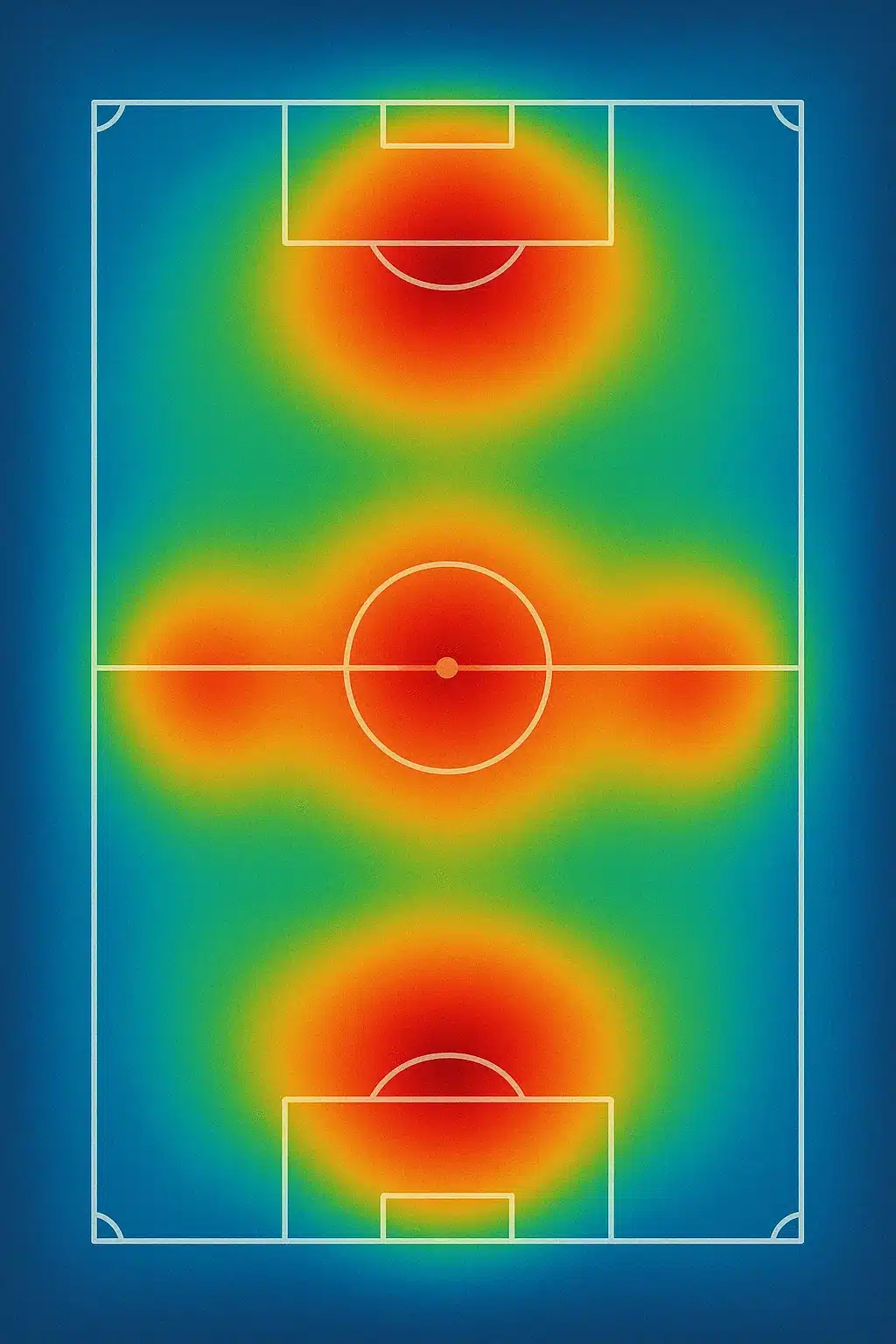
Tactics often feel overwhelming when watching full 11v11 matches, but small-sided games break them down into manageable chunks. The reduced number of players simplifies formations, making it easier to teach positional play, defensive marking, and offensive movement.
Players experience immediate feedback on their tactical choices. For instance, in 5v5 games, players quickly learn to spread out, create passing lanes, or press together defensively.
Team Strategy Development in 3v3 and 5v5 Formats
Unlike isolated drills, small-sided games allow implementing and practicing team strategies in realistic conditions. Coaches use 3v3 games to instill fast counter-attacking principles or high-press tactics. In 5v5 formats, playing styles such as possession-based football or quick transitions can be fine-tuned.
The continuous nature of gameplay ensures that these strategies don’t remain theoretical—they become muscle memory.
Real-Time Decision-Making and Spatial Awareness
In small-sided games, players constantly face decisions: When to pass, dribble, shoot, or move into space. Because the pitch is smaller, spatial awareness becomes crucial. Players learn how to find or create pockets of space, anticipate opponents’ moves, and react dynamically.
This training of cognitive aspects results in faster, more accurate choices during full-sized matches, giving players an edge in competitive settings.
Physical Conditioning Benefits of Small-Sided Play
Aerobic and Anaerobic Fitness Gains in Reduced Field Dimensions
Soccer small-sided games offer a unique physical workout combining aerobic endurance and anaerobic bursts. Due to the smaller field size and shorter playing intervals, players undergo repeated high-intensity sprints intermixed with active recovery.
Research shows that small-sided games can produce heart rates averaging 85-90% of a player’s maximum, comparable to formal conditioning drills. This simultaneous development of technical and physical fitness makes training efficient and sport-specific.
Engaging Physical Conditioning through Competitive Play
Unlike monotonous running drills, small-sided games make conditioning engaging, competitive, and fun. Players often forget they’re “training” because the game’s pace and challenge keep their adrenaline up.
For youth players especially, combining skill work with conditioning in games prevents burnout and makes physical improvement a natural byproduct of enjoyable activity.
Coaching Techniques and Game Organization Best Practices
How to Organize Soccer Small-Sided Games for Training Efficiency
Organizing small-sided games requires thoughtful planning to maximize benefits. Coaches should:
- Divide players into balanced teams considering skill and age.
- Use cones or small goals to clearly define boundaries.
- Keep game duration short (5-15 min) to maintain intensity.
- Rotate players frequently to avoid fatigue or disengagement.
- Set clear objectives for each session (e.g., improve passing under pressure).
This structured approach ensures that every minute on the pitch counts.
Coaching Tips for Small-Sided Soccer Games
Here are some quick coaching tips I swear by:
- Encourage communication and decision-making rather than just giving instructions.
- Use positive reinforcement to keep players motivated.
- Adapt rules based on training focus (e.g., limit touches to speed up play).
- Analyze game footage to provide visual feedback.
- Focus on process over outcome, celebrating effort and learning.
Rules Adaptation for Training Objectives and Player Safety
Small-sided games are flexible, and one of the perks is modifying rules to suit goals and safety. For example, you might:
- Eliminate offside in 3v3 games to enable attacking play.
- Use “no slide tackle” rules for younger kids to reduce injury risk.
- Allow unlimited substitutions to keep players fresh.
- Adjust game time based on player stamina levels.
Such adaptations create a nurturing environment that prioritizes learning and fun.
Comparing Futsal and Soccer Small-Sided Games
Key Differences in Rules, Play Style, and Skill Emphasis
Futsal is a popular indoor variant of small-sided soccer with notable differences:
- Ball: Smaller, heavier, and less bouncy futsal ball promotes close control.
- Surface: Played on hard court, influencing player movement and ball behavior.
- Rules: Fewer players (usually 5v5), shorter game times, no walls in play.
- Play Style: Emphasizes tight control, quick passing, fast transitions.
While both futsal and soccer small-sided games develop valuable skills, futsal’s unique setup shifts focus to sharper ball control and rapid playmaking.
Selecting Appropriate Formats for Player Development Goals
Choosing between futsal and soccer small-sided games depends on development objectives:
- Aim to improve dribbling and quick passes? Futsal may be the answer.
- Want tactical understanding and spatial awareness closer to outdoor soccer? 5v5 or 7v7 soccer games are preferable.
In reality, many elite players benefit from incorporating both into their training arsenal.
Designing Effective Small-Sided Soccer Practice Sessions
Integrating Small-Sided Games into Periodized Training Plans
Periodization involves structuring training into cycles focusing on different performance aspects. Coaches integrate small-sided games varying by season phase:
- Pre-season: Focus on high intensity and team cohesion using 5v5 games.
- In-season: Use shorter, targeted sessions to maintain tactical sharpness.
- Off-season: Small-sided games for skill maintenance without heavy load.
This systematic inclusion ensures players develop holistically without overtraining.
Balancing Technical, Tactical, and Physical Elements
Effective practice sessions balance drill types:
- Start with technical drills (passing or dribbling).
- Progress to tactical small-sided games emphasizing positioning.
- End with competitive games combining all elements.
This transition helps players apply isolated skills into game-like contexts seamlessly.
Using Small-Sided Games to Foster Teamwork and Communication
Building Cohesion through Collaborative Game Situations
Soccer thrives on teamwork, and small-sided games naturally promote collaboration because every player’s action directly impacts outcomes. Players learn to read teammates’ cues, call for passes, and defend as a unit.
Over time, this builds trust, understanding, and a unified mindset which is crucial for team success.
Encouraging Leadership and Role Adaptation
Small-sided game situations create opportunities for players to emerge as leaders on and off the ball. For example, a defender may organize the backline, or a striker may lead pressing actions.
These games also encourage players to adapt and rotate roles—a central midfielder might act as a forward in one instance, learning to understand various positional responsibilities.
Scientific Insights into Small-Sided Game Effectiveness
Research on Skill and Tactical Development Outcomes
Numerous studies validate that soccer small-sided games enhance player development more effectively than traditional practices alone. For instance, research highlights increased technical actions per minute and better retention of tactical knowledge.
Player monitoring shows improved decision-making speed and accuracy after consistent small-sided training, confirming its value.
Neurological and Cognitive Benefits of Small-Sided Formats
Beyond physical and technical gains, small-sided soccer stimulates neurological growth by challenging the brain to process stimuli quickly, adapt, and respond effectively. Cognitive research links such training to enhanced neural plasticity, vital for learning complex motor and tactical skills.
This brain-body link is one of the reasons soccer small-sided games have become a cornerstone in modern player development.
Unique Strategies for Advancing 3v3 Soccer Small-Sided Game Play
Specialized Tactics to Enhance Competitive Edge and Enjoyment
In 3v3 soccer small-sided games, space is tight and mistakes punishable, so specialized tactics include:
- Constant movement: Players avoid standing still, opening passing lanes.
- Rotation: Regular swapping of positions prevents predictability.
- High pressing: Forcing opponents into mistakes due to limited space.
These strategies not only improve the competitive edge but keep games exciting and engaging.
Case Studies from Youth and Amateur Competitive Leagues
Youth leagues widely report that teams incorporating small-sided game tactics outperform others in skill and teamwork. For example, an amateur 3v3 league champion credited their success to simulated match rehearsals and tight rotation tactics, built entirely through small-sided game training.
Conclusion: Integrating Small-Sided Games for Long-Term Player Growth
Soccer small-sided games offer a dynamic, effective, and engaging way to develop core skills, tactical understanding, physical fitness, psychological resilience, and teamwork. Their ability to increase engagement and provide realistic, game-based learning environments is unmatched. Whether you’re a youth player just starting or a seasoned amateur looking to sharpen your edge, integrating small-sided games into your training regimen is a no-brainer.
Remember, the key to maximizing benefits lies in thoughtful organization, tailored drills, and maintaining an enjoyable atmosphere. I encourage you to embrace the various formats—3v3, 5v5, and even futsal—and unlock your full potential on the pitch. Dive into coaching tips, explore tactical strategies, and watch your love for soccer transform into lasting skill and success!
Ready to kick off? Get started with a small-sided game today and experience firsthand the powerful impact these games can have on your development.
FAQs
1. What are the benefits of soccer small-sided games for youth players?
Soccer small-sided games increase touches, enhance technical skills, improve tactical awareness, boost physical fitness, and build confidence—making them ideal for youth development.
2. What are the best soccer small-sided game drills for beginners?
Drills like 4 Corners passing, one-touch passing rondos, and small goals shooting are beginner-friendly and improve fundamental skills through game-like scenarios.
3. How do coaches organize soccer small-sided games for training purposes?
Coaches balance team size, set clear objectives, use proper pitch dimensions, apply appropriate rules, and rotate players frequently to ensure an effective and engaging session.
4. How can small-sided games improve tactical awareness in soccer?
They simplify tactical concepts by focusing on fewer players and smaller spaces, encouraging players to understand positioning, teamwork, and game strategy in real time.
5. What are the main differences between futsal and soccer small-sided games?
Futsal uses a smaller, less bouncy ball on hard courts with specific rules emphasizing tight control and quick passing, while soccer small-sided games usually simulate outdoor soccer with larger fields and different tactical focuses.
Quick Takeaways/Key Points
- Soccer small-sided games maximize player involvement, creating more touches and decision-making opportunities.
- They significantly accelerate technical skill development, including dribbling, passing, and shooting.
- Small-sided formats enhance tactical training by simplifying game concepts and fostering spatial awareness.
- These games deliver efficient physical conditioning by combining aerobic and anaerobic workloads in a fun environment.
- Proper coaching and thoughtful organization elevate the effectiveness and safety of these game formats.
- Comparing futsal and soccer small-sided games helps tailor development goals for players at various levels.
- Integrating small-sided games into periodized training builds balanced skill, fitness, and tactical knowledge over time.
If you’re serious about growing your soccer skills—or coaching others toward greatness—soccer small-sided games are an absolute must in your toolkit. Lace up, gather some friends or players, and start playing small—but dreaming big!