
Introduction to Soccer Passing Drills
If you’re a true soccer ball lover like me, you know that mastering the art of passing isn’t just about kicking the ball from point A to point B. It’s about precision, timing, and building trust between teammates. Soccer passing drills form the backbone of any successful training regimen because they teach you how to move the ball quickly and accurately under pressure—skills every player craves to own on the field.
In this article, I’ll walk you through six essential soccer passing drills designed to sharpen your technique, boost your ball control, and elevate teamwork. I’ll also share expert insights to help you integrate these drills into your daily practice, no matter your skill level. Along the way, we’ll explore the fundamentals of passing, the nuances of receiving, and advanced tactics that can make a difference during high-stakes matches.
Whether you’re starting out or looking to refine your skills with the best soccer passing drills for beginners and youth players, this comprehensive guide has got you covered. Buckle up—it’s time to pass like a pro!
The Importance of Passing Accuracy and Ball Control
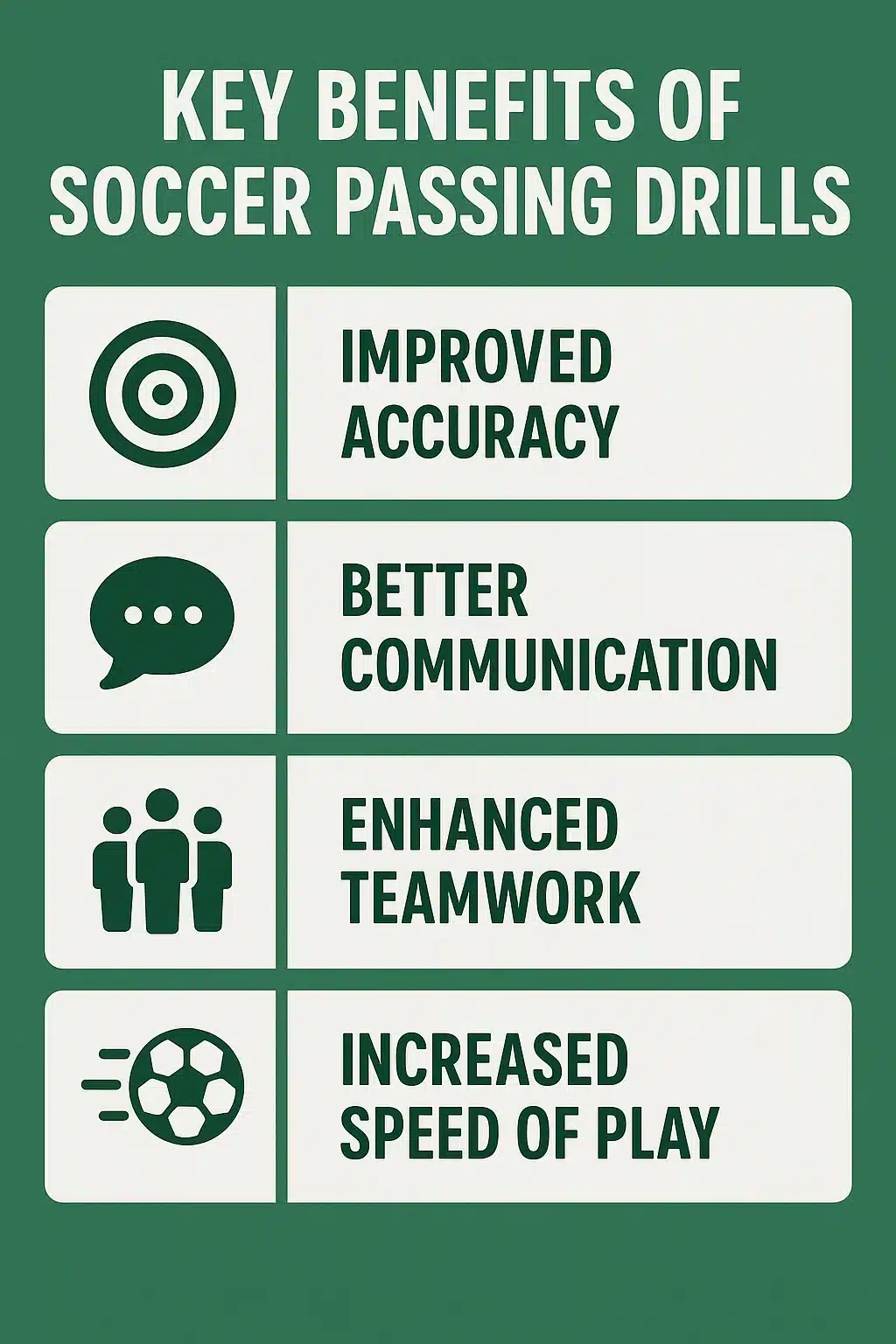
Passing accuracy is the lifeline of soccer. Without it, your team risks losing possession and missing scoring opportunities. But accuracy alone isn’t the whole story—you’ve got to control the ball with finesse to maintain flow and rhythm.
Good ball control starts at the core: your first touch. Imagine receiving a pass and the ball ballooning away from you—that’s a missed opportunity to create an offensive advantage. Practicing both passing accuracy and ball control develops a player’s confidence and decision-making speed. Statistics from youth leagues show that teams with higher passing completion rates tend to dominate possession and have more winning matches.
I’ve seen firsthand how dedicated passing drills improve these skills. For example, Barcelona’s famed La Masia academy emphasizes quick, precise passing combined with first-touch control to build their legendary possession style. Coaches stress that even a slight improvement in a player’s passing can translate to game-changing plays.
Developing Communication and Teamwork Through Passing
Another reason soccer passing drills are critical is that they cultivate communication and teamwork. Passing isn’t done in isolation—it’s a language on the field that every player must learn to speak fluently.
Effective communication includes calling for the ball, signaling intentions, and reading teammates’ movement patterns. When players get used to drills that mimic game scenarios, they naturally start anticipating each other’s actions. This implicit understanding can break defensive lines with swift passing sequences.
Take small-sided games, for example—these drills encourage players to talk, move quickly, and make rapid passing decisions under pressure. This fosters trust and sharpens spatial awareness, crucial for arranging passing triangles and creating attacking options. As you practice, try calling out player names or using simple cues like “man on” or “switch” to enhance communication.
Fundamental Passing Techniques for All Skill Levels
To execute any passing drill effectively, understanding basic passing techniques is crucial. Let’s dive deeper into two fundamental types:
One-Touch vs. Two-Touch Passing: Benefits and Applications
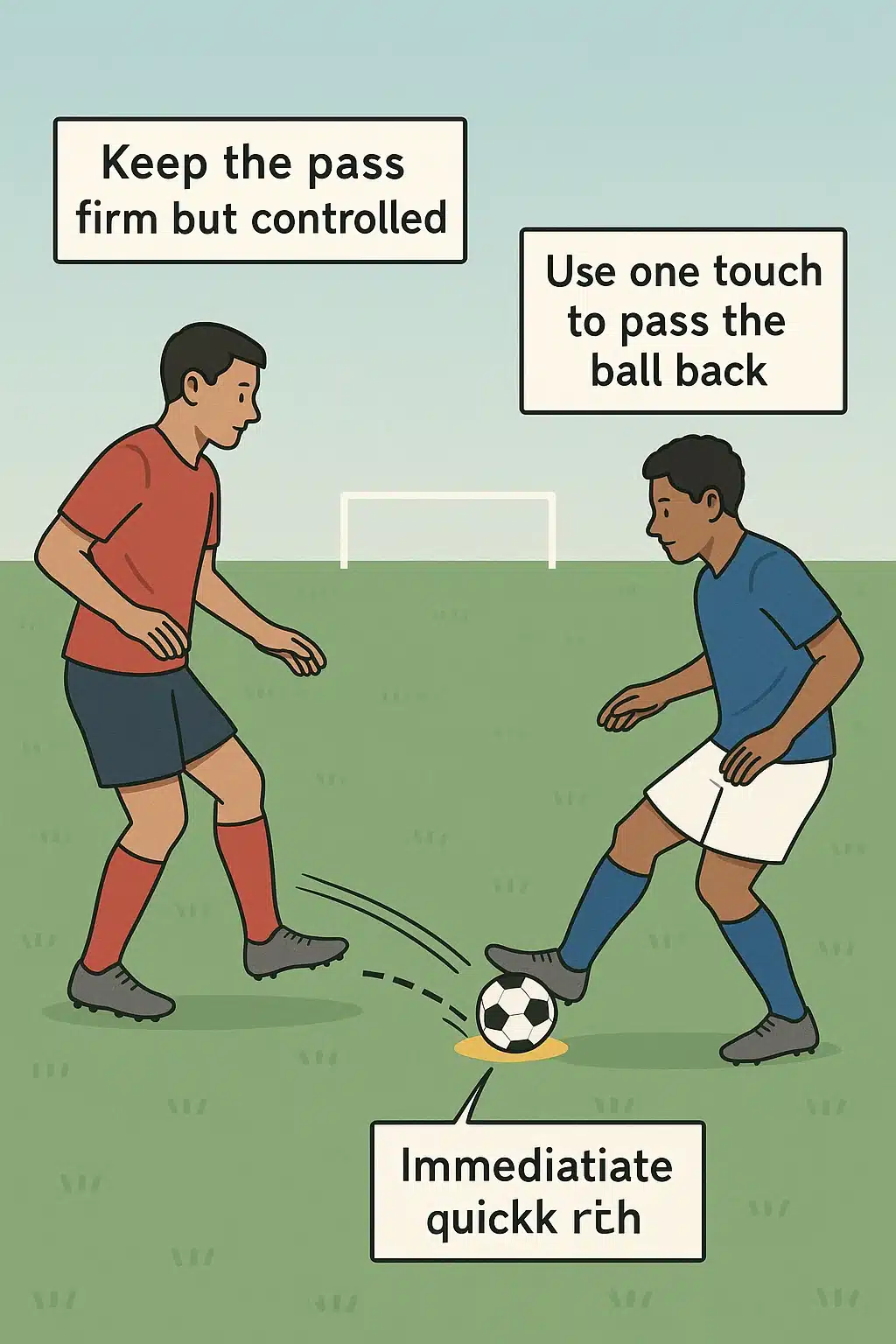
One-touch passing involves sending the ball with a single, fluid kick right after receiving it. This technique speeds up play by minimizing hesitation and is ideal for breaking through tight defenses or fast-paced counterattacks. Mastery of one-touch passing can transform your gameplay since it demands acute awareness and precise timing.
On the flip side, two-touch passing gives the player an additional touch to control and set up the pass. It’s excellent for maintaining possession and managing more complex passing sequences. Beginners often find two-touch passing easier since it allows better ball placement and reduces errors.
Both techniques are indispensable. For example, in youth training sessions, coaches mix these styles, starting with two-touch drills to build confidence before challenging players with one-touch passing drills for training tactical speed.
Receiving Techniques to Complement Passing Efficiency
Receiving the ball cleanly is as important as sending it accurately. Techniques such as the sole trap, thigh control, and chest trap prepare players to maintain possession and set up the next pass smoothly.
Proper body positioning when receiving—such as turning your hips and opening your body towards the field—improves your passing angles and options. When executing drills, focus on softening your first touch instead of powering it away. It keeps the ball close and gives you more control over your next move.
Incorporating receiving drills alongside passing builds a holistic skill set. It trains your muscles to react instinctively during matches—a skill top professionals develop through thousands of repetitions.
Drill 1: The Triangle Passing Drill for Quick Ball Movement
This drill is a classic and a cornerstone for building fast, accurate passing and balanced movement off the ball.
Setting Up the Drill: Cones, Spacing, and Player Roles
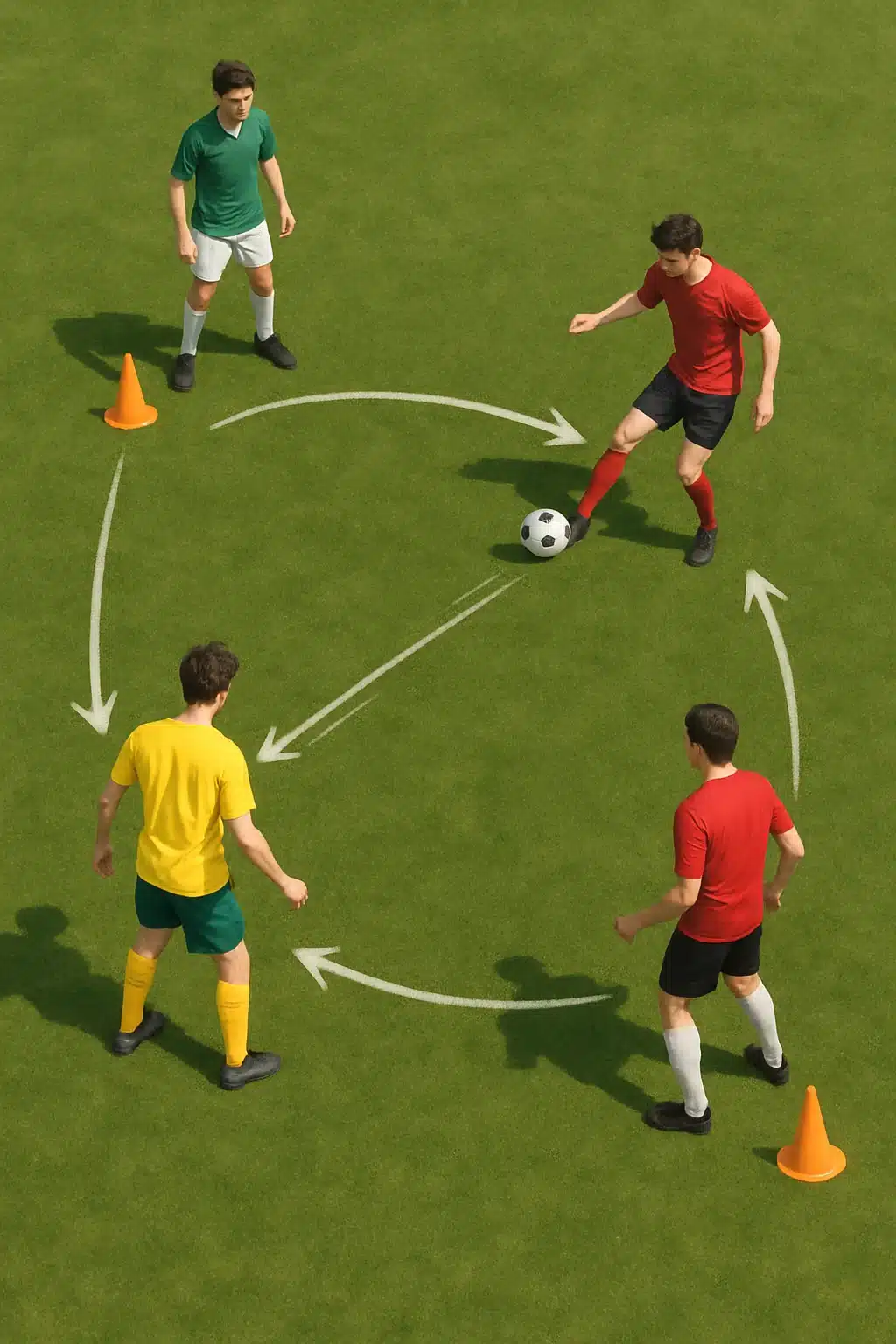
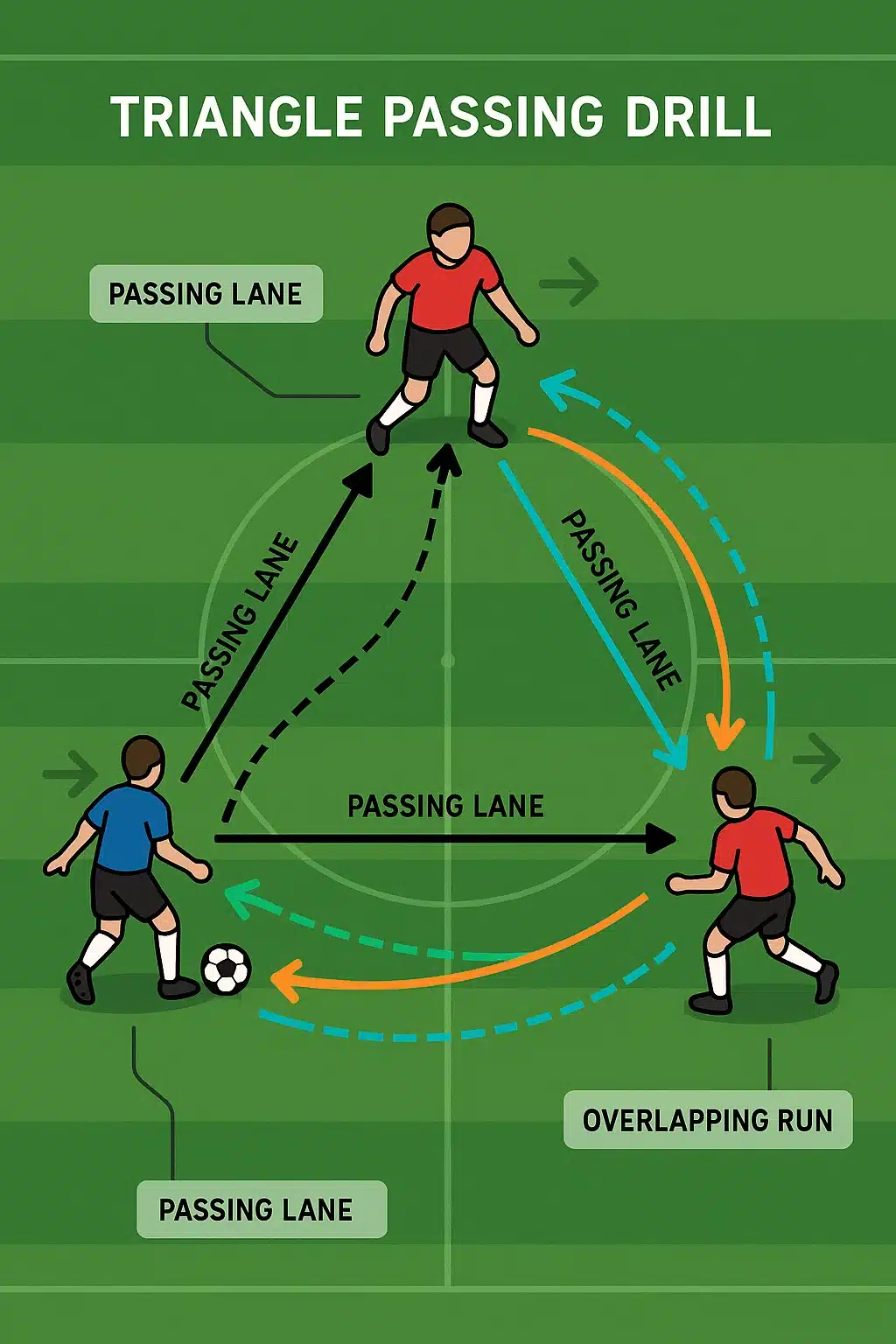
Create a triangle using three cones spaced about 10 meters apart. Three players stand at each cone with a ball to start. Each player has a role—passing, receiving, and preparing for the next pass.
Keeping equal distance supports quick decision-making and builds muscle memory for passing angles. You can increase or decrease the spacing depending on players’ skill levels.
Emphasizing Off-the-Ball Movement and Passing Angles
Key to this drill is not just passing the ball but moving immediately after your pass. Off-the-ball runs create new passing lanes and confuse defenders. Players should pivot, open their bodies, and call for the ball to improve passing communication and spatial awareness.
Passing angles here matter substantially. Rather than passing straight across, players should aim for diagonal or curved passes that open the field.
Variations to Challenge Passing Speed and Decision Making
Once the basic pattern feels smooth, try introducing a defender to pressure the passer or receiver. You can also reduce time limits—forcing one-touch passing under pressure. These modifications mimic game conditions, helping players react quicker and make smarter decisions.
For example, in a session with youth players, I introduced a passive defender during the triangle drill, which instantly saved players from slow, predictable passes and improved their awareness of defensive pressure.
Drill 2: Small-Sided Passing Games for Spatial Awareness
Small-sided games are phenomenal for honing passing under dynamic conditions.
Incorporating Possession Drills and Dynamic Passing Combinations
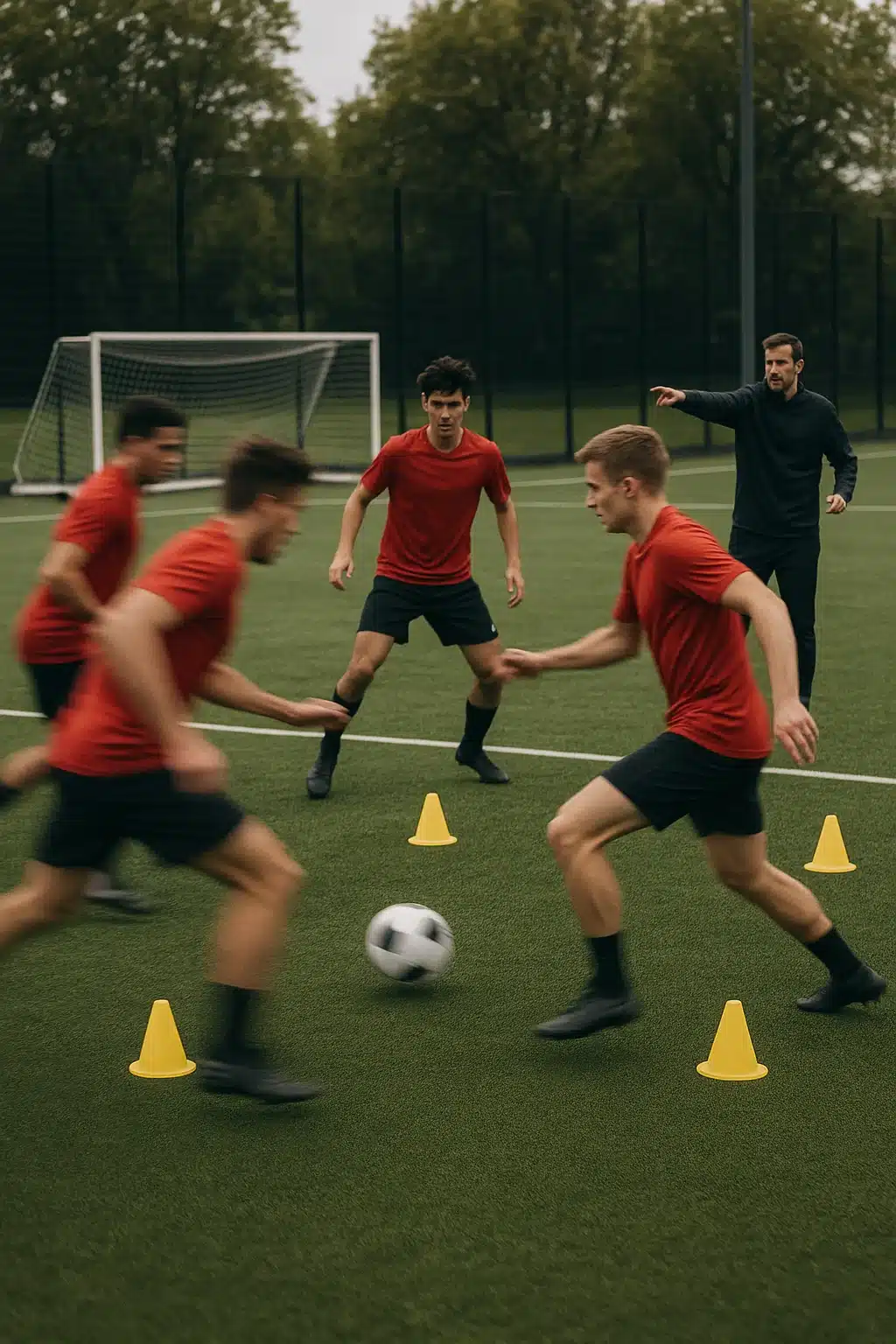
Set up a small field with teams of 3-5 players focusing on possession and passing sequences. The objective is to maintain control and use quick passes to break through the opposing side.
Integrate rules like mandatory minimum passes before scoring to encourage multiple touches and accurate passing combinations. These games improve spatial awareness by forcing players to constantly scan the field and anticipate teammates’ runs.
Using Passing Triangles to Enhance Teamwork and Communication
Encourage players to form triangles constantly. Triangles provide multiple passing options and are fundamental building blocks in soccer tactics.
By practicing these in small-sided games, players learn to keep the ball moving and switch play when necessary. This drill is a favorite among coaches training youth players, as it simulates real-match conditions in a small, manageable setting.
Applying Pressure: Passing Under Defensive Duress
Add defenders to increase pressure on ball handlers, teaching them to pass efficiently under duress. Learning how to maintain composure and make split-second passing decisions can change the outcome of tight matches.
I recommend rotating defenders and attackers regularly so players experience multiple scenarios. This approach develops adaptability and mental toughness.
Drill 3: Passing Accuracy Drills with Cones and Markers
Accuracy drills are essential for improving precision over varying distances.
Techniques for Improving Passing Precision Over Various Distances
Set up a line of cones or markers approximately 5, 10, and 15 meters away from the passer. The goal is to pass the ball and hit the target cone directly or in a designated passing zone.
Focus on different passing techniques such as driven passes, chips, or lofted balls to master passing on the ground and through the air. Encourage players to use different foot surfaces (inside, outside, laces) to get comfortable controlling power and direction.
Progressive Difficulty Through Target Size Reduction
Start with larger targets and gradually decrease their size or increase the distance to make the task more challenging. You can also introduce time constraints to simulate game pressure.
I’ve used this method effectively with my team, where players started with passing into broad zones and progressed to hitting target pockets about a meter wide. This strategy resulted in noticeable improvements in match passing accuracy statistics.
Drill 4: Wall Passing (One-Two Pass) for Quick Transitions
Wall passing, also known as the give-and-go, teaches players to create space and initiate quick transitions.
Execution and Timing for Effective Give-and-Go Moves
Players pair up and pass the ball back and forth, with the receiving player moving forward immediately after the pass. The key is timing—the passer must anticipate the runner’s return path and pace the pass accordingly.
This drill fosters coordination and quick thinking, essential for breaking lines during fast counterattacks.
Dribbling Integration Post-Pass for Game-Like Scenarios
Add dribbling elements after the first pass to simulate beating a defender or advancing the ball. For instance, after completing a give-and-go, the player dribbles around a cone or towards a small goal.
Such realistic integration helps players transition from passing to attacking seamlessly during matches.
Drill 5: Double Square Passing with Combination Play
Double square passing drills focus on developing advanced combination plays and ball retention in tight spaces.
Enhancing Passing Combinations and Possession Control
Arrange two squares next to each other on the field, each about 8-10 meters wide, with four players per square and two floaters acting as neutral players. Players pass within squares and use the floaters to switch possession between squares.
This drill enhances quick combination passing and forces players to think about possession from different angles.
Incorporating Goalkeeper Interaction and Shooting Elements
Challenge players by placing a goalkeeper and a mini goal at one end, encouraging quick transitions from passing to shooting. After maintaining possession and successfully completing a set number of passes, players try scoring to integrate finishing into the drill.
This adds purpose and simulates attacking scenarios where quick passing leads to goal-scoring chances.
Drill 6: Cone Weave Pass and Small Goals for Decision Making
This drill is excellent for developing decision-making and tactical awareness.
Dribbling under Pressure Followed by Accurate Passing
Players weave through a line of cones with the ball and must make a precise pass into a small goal or target zone. The cones simulate defenders, forcing players to maintain close ball control before passing.
This drill mirrors real match pressure where players must maneuver tight spaces and still find teammates with pinpoint passing.
Fostering Tactical Awareness Using Small Goals as Targets
Using small goals or target areas enhances focus on accuracy and encourages players to think about passing options critically. It also simulates the need to pass into tight spaces during attacking phases.
I’ve seen this drill dramatically improve a player’s ability to execute under pressure, especially when combined with a time cap or added defenders.
Coaching Tips to Maximize Effectiveness of Soccer Passing Drills
Encouraging Communication and Positive Feedback During Drills
Great drills go hand in hand with strong coaching. Always encourage players to talk and support each other during drills—it boosts confidence and teamwork.
Use positive feedback to correct errors gently and highlight good decision-making. This creates a safe learning environment where players push themselves.
Adjusting Drill Complexity Based on Player Age and Level
Customize the drills based on age and skill. For beginners or young players, simplify movements and reduce pressure by increasing pass distance or slowing pace. For advanced players, add resistance, impose decision-making time limits, or increase drill intensity.
Tailoring drills keeps players challenged but not frustrated.
Using Video Analysis and Data Tracking to Measure Progress
Modern coaching involves technology. Recording passing drills or matches allows players to visually grasp areas needing improvement. Use apps or software to track passing completion rates, speed, and accuracy.
This data-driven approach motivates players by showing tangible improvements over time.
Unique Perspective: Integrating Cognitive Load Exercises into Passing Drills
Enhancing Decision-Making Speed Through Mental Fatigue Simulation
Incorporate cognitive challenges, such as memory tasks or math puzzles, between passes to simulate mental fatigue players experience in games. This trains brains to maintain sharp passing decisions even when tired.
Studies from sports science confirm players exposed to this training show faster and smarter choices on the field.
Combining Physical and Cognitive Challenges for Advanced Players
Combine dribbling and passing drills with quick reaction tasks—like responding to colored cues or changing target cones based on a coach’s signal. This fusion of physical and mental demands prepares players for unpredictable match conditions.
Conclusion: Building a Holistic Passing Skillset for Game Success
Mastering these six essential soccer passing drills equips any soccer ball lover with the tools needed to dominate possession, make sharp decisions, and build team chemistry. Consistent practice embeds these skills into muscle memory, allowing you to pass instinctively and precisely no matter the pressure or pace of the game.
By embracing drills ranging from the fundamental triangle passing to advanced cognitive load exercises, you’re investing in a comprehensive passing skillset that pays dividends on every field. Remember, adaptability is key—feel free to modify drills to suit your unique team needs or personal goals.
So, get out there, gather some cones, rally your teammates, and start embedding these soccer passing drills into your routine. Your next game-winning pass might just be one practice away!
FAQs
Q1: What are the best soccer passing drills for beginners?
For beginners, starting with the Triangle Passing Drill and Passing Accuracy Drills using cones is ideal. These drills teach foundational skills like passing technique, movement, and accuracy without overwhelming new players.
Q2: How do one-touch soccer passing drills improve game performance?
One-touch passing drills enhance decision-making speed and ball control under pressure. They simulate real-game scenarios where holding the ball longer isn’t an option, fostering quick play and fluid attacks.
Q3: Can small-sided soccer passing drills improve teamwork?
Absolutely! Small-sided games promote constant communication, spatial awareness, and understanding of passing triangles, which build stronger on-field relationships and better collective play.
Q4: What tools do I need for effective soccer passing drills?
Basic tools include cones, markers, soccer balls, and small goals. For advanced sessions, you can add training vests, rebound walls, and video recording devices for analysis.
Q5: How can I improve passing under pressure during drills?
Incorporate drills with defenders or time limits, like passing under defensive duress in small-sided games or quick decision drills such as the Wall Passing or Cone Weave Pass. These scenarios simulate real match pressure and improve composure.
Quick Takeaways
- Passing accuracy and control build confidence and maintain possession.
- Communication and off-the-ball movement are critical for effective passing.
- One-touch and two-touch passing each serve unique purposes and should be trained.
- Triangle passing and small-sided games develop speed, spatial awareness, and teamwork.
- Passing accuracy drills and wall passes enhance precision and quick transitions.
- Complex drills like double square passing and cone weave drills improve tactical awareness and decision-making.
- Coaches should adapt drills based on skill level and use positive feedback and technology for development.
If you’re passionate about improving your game, these essential soccer passing drills will sharpen your skills and deepen your understanding of the beautiful game. Why wait? Lace up your cleats, grab your teammates, and make every practice count!