
Introduction to Soccer Goalkeeper Training
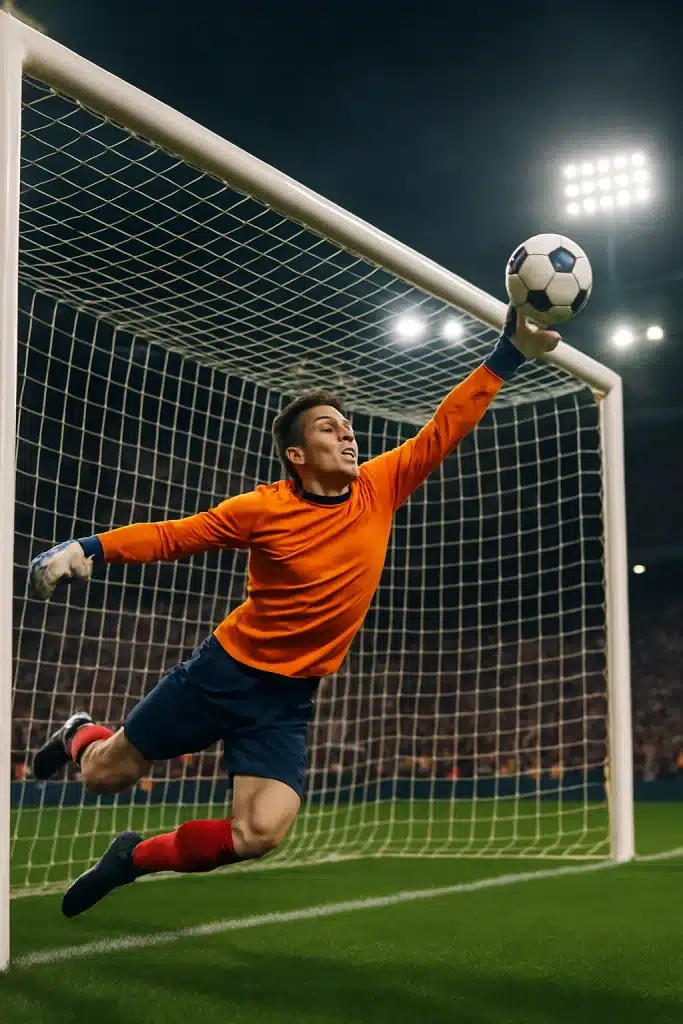
If you’re a true soccer ball lover, you already know how pivotal a goalkeeper’s role is in the beautiful game. The goalkeeper is the last line of defense—a player who must blend reflexes, agility, decision-making, and courage all in one package. Training as a goalkeeper isn’t just about standing between the sticks; it’s about mastering a wide range of specialized skills that keep the team safe and boost your confidence during matches. That’s why soccer goalkeeper drills are so essential.
In this article, I’m excited to guide you through some of the most powerful and practical goalkeeper drills you can add to your training routine. Whether you’re a beginner looking for the best soccer goalkeeper drills for beginners or aiming for advanced soccer goalkeeper training drills, these exercises target the core abilities required: diving technique, reaction time, footwork, and handling, all while simulating real match conditions.
You’ll discover how to prepare your body and mind with dynamic warm-ups, improve your shot-stopping through advanced diving technique drills, sharpen your reflexes with reaction time training, and even build confidence in one-on-one situations. We’ll round it all off with unique insights on cognitive and tactical training—because great goalkeepers aren’t just physical athletes; they’re chess masters on the pitch.
So, let’s lace up those gloves and dive into these key soccer goalkeeper drills that will sharpen your skills and elevate your game to the next level!
Warm-Up Exercises: Preparing for Peak Performance
Before you dive into intense goalkeeper drills, it’s crucial to get your body and brain ready. Effective goalkeeper warm-ups aren’t just about touching your toes; they set the tone for agility, reaction speed, and focus that you’ll need during training and matches.
Dynamic Footwork Warm-Up: Agility Ladder and Cone Drills
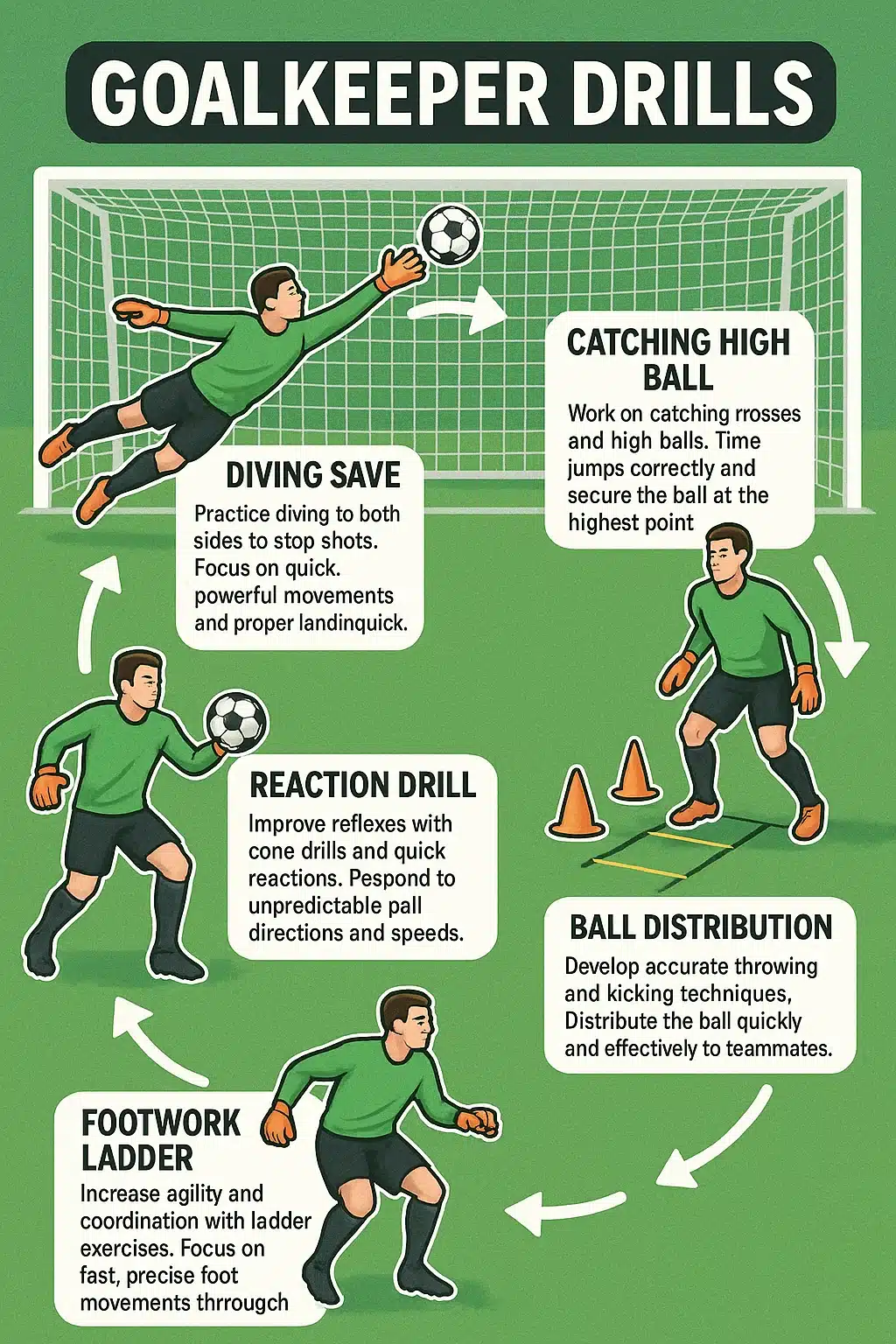
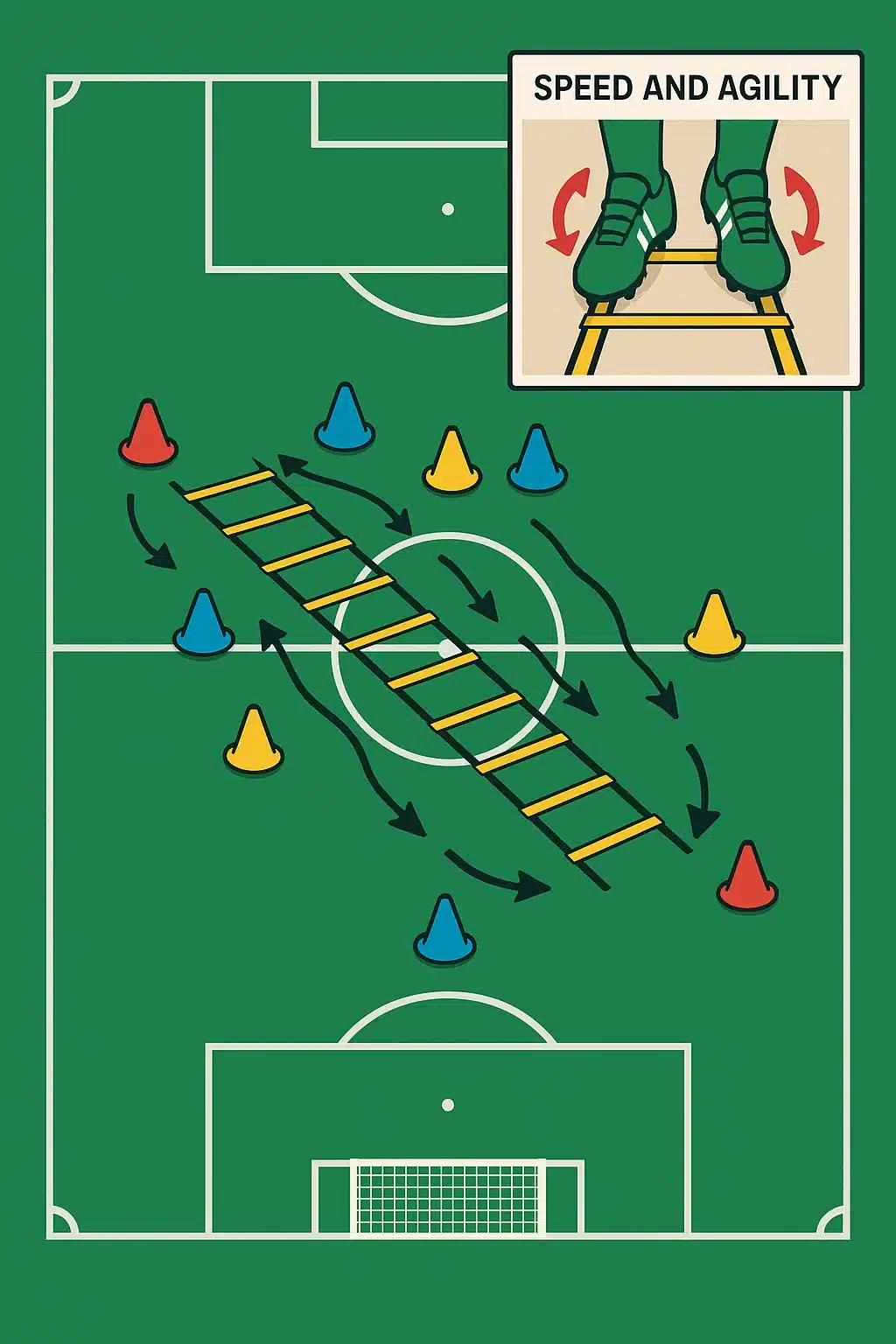
One of the best warm-up exercises involves using agility ladders and cones. These tools are super effective in developing quick feet and sharp lateral movement—key ingredients in any goalkeeper’s arsenal. Begin with simple ladder drills like the “two feet in each rung” and progress to more complex patterns such as lateral in-and-outs and crossover steps. This enhances your foot speed, coordination, and rhythm.
Set up cone drills to simulate real match movement patterns. For example, place five cones about a yard apart and practice lateral shuffles and backpedals between them. This positional footwork trains your muscle memory to quickly get into the right spot when a shot is coming your way.
Activation Drills for Reaction Speed and Lateral Movement
Next, add some activation drills that focus on reaction time and lateral explosion. Have a coach or training partner point or shout out directions unpredictably while you jump or shuffle toward that side. The key is to move explosively and land softly, preparing your body to react swiftly to shots or crosses.
These reaction drills help deepen the neuromuscular connections necessary for that split-second decision-making that separates elite keepers from the pack.
Mental Preparation: Visual Focus and Game Awareness Warm-Ups
Lastly, warm-up your mind too. Use a ball toss drill where a partner throws the ball from different heights and angles, and you track it with your eyes without moving your body significantly. This trains your visual tracking, a vital skill for catching high balls and anticipating rebounds.
Also, practice breathing techniques to center your focus and visualize in-game scenarios—seeing yourself making key saves primes your brain to perform under pressure.
Drill 1: Advanced Diving Technique and Shot-Stopping Practice
Diving saves aren’t just about flinging yourself through the air—they require perfect technique and precise body control to minimize injury and maximize save success.
Setup and Equipment Needed
For this drill, you’ll need a good quality soccer ball, cones to mark your dive starting points, and ideally a soft grassy pitch or training mat. Have a partner or coach ready to shoot from varying distances and angles.
Step-by-Step Dive Execution and Landing Mechanics
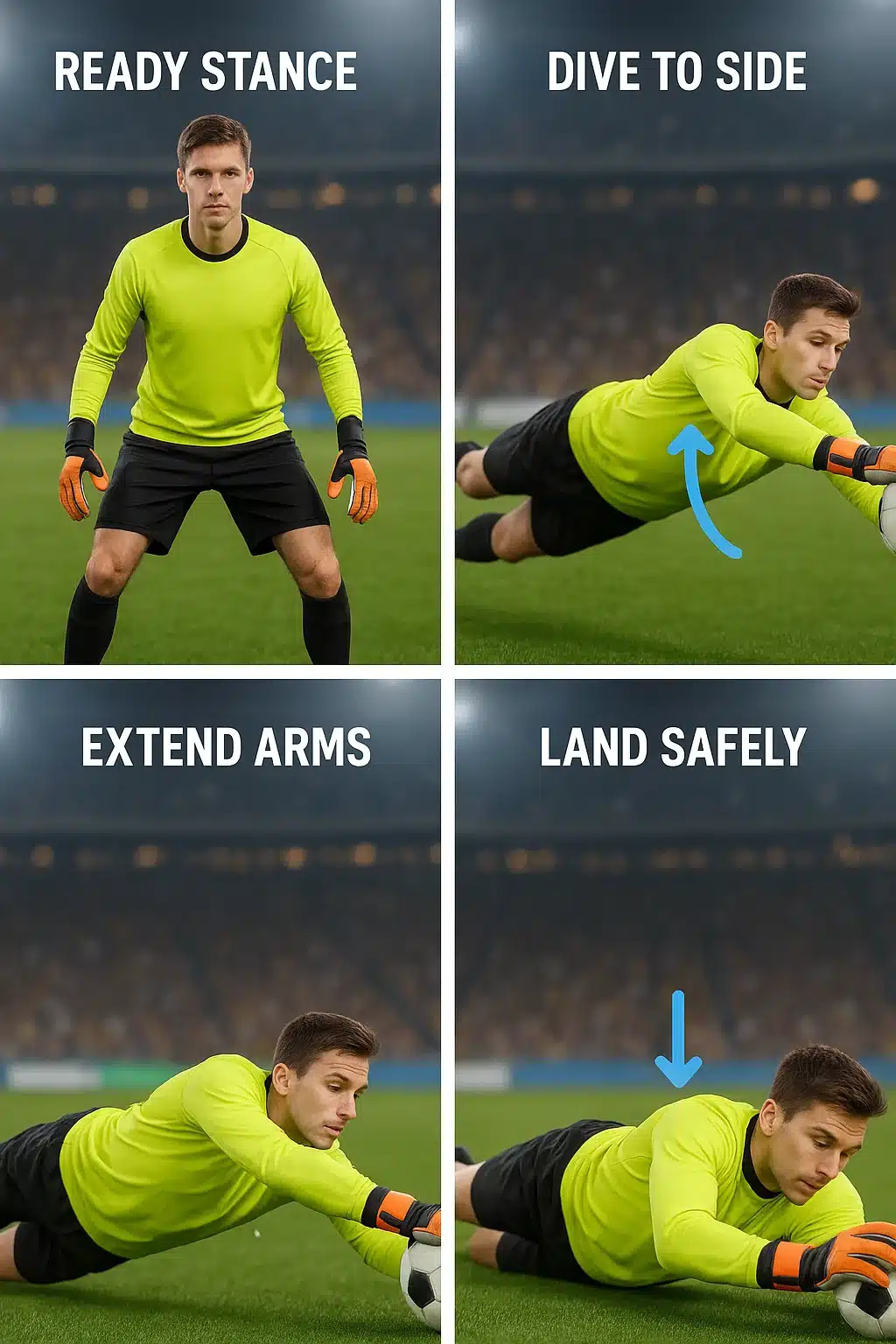
Start by positioning yourself in the ready stance—feet shoulder-width apart, knees slightly bent, and hands in front, ready to react. When the shot comes, push off strongly from your inside foot closest to the ball. Your hips should lead, and your dive should be fluid, reaching out with both hands to cradle or deflect the ball.
Crucially, practice your landing by rolling slightly or landing on your side rather than flat on your wrists or elbows. This protects your joints against impact injuries.
Coaching Points for Optimal Hand Positioning and Body Control
Keep your eyes locked on the ball from the moment it’s kicked until it’s safely in your grip or deflected. Your hands form a triangle or “W” shape on the ball, enabling controlled catches.
Try to keep your arms extended but relaxed to absorb the force. Engage your core muscles to maintain body control mid-air, which helps you recover quickly after the dive.
Variations for Different Skill Levels and Situation Types
Beginners can start with stationary dives to shots at waist height. Intermediate keepers should practice diving shots that force forward or backward momentum, simulating real game unpredictability. For advanced goalkeepers, incorporate shots aimed at the top corners or low, skimming the ground, requiring quick responses and excellent flexibility.
Drill 2: Agility and Footwork Patterns for Improved Positioning
Footwork is the unsung hero of goalkeeping. You can have lightning-fast reflexes, but without precise positioning, your saves become guesses.
Utilizing Cones and Obstacles for Lateral Movement Drills
Set up cones in a zigzag or “T” pattern and practice quick shuffles and backpedals, focusing on minimal ground contact and balanced posture. The goal is to simulate the need to reposition rapidly as the play shifts.
Add obstacles like small hurdles to incorporate plyometric jumps, improving your explosive power.
Incorporating Backpedal and Shuffle Combinations
A typical drill might have you shuffle laterally between two cones, backpedal toward the goal line, then power-step out to collect a ball on the ground or chest level.
Consistency in foot placement leads to better saves because it gets your body squared to the ball—a crucial element of positioning.
Enhancing Angle Cutting with Rapid Direction Changes
Goalkeepers constantly need to “cut angles” to reduce shooting space for attackers. Place cones to mimic attacking runs, and practice sprinting out to challenge the attacker, then retreating quickly. Integrate sudden changes of direction to mimic feints and shots, conditioning your body to adjust angles with ease.
Drill 3: Reaction Time Enhancement with Rebound and Ball Transmission Drills
Being sharp on your reaction time can make the difference between a routine save and a spectacular one.
Using Rebounders and Quick Release Shots
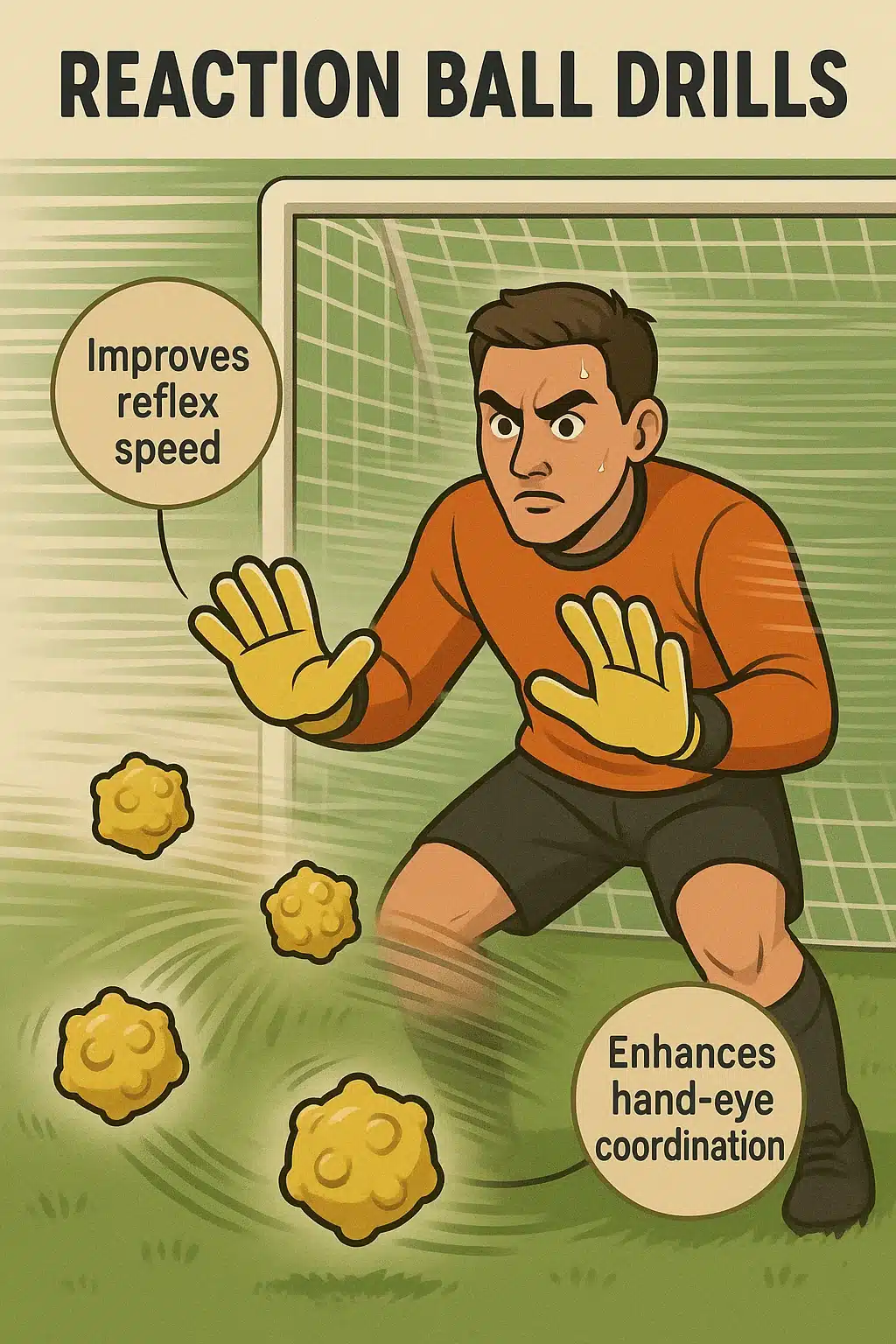
A rebounder or wall can be an excellent training partner. Kick or throw the ball at it and catch or deflect the unpredictable rebounds. This develops your reflexes and hand-eye coordination.
Combine this with fast close-range shots from a partner, forcing you to react under pressure and remain composed.
Drill Format for Training Reflexes Under Pressure
Set up a “rapid-fire” drill where your coach fires off multiple shots in quick succession, compelling you to reset immediately after every save without losing focus or form.
Coaching Tips to Improve Decision-Making Speed
Prioritize “reading” the shooter’s body language—often telling you where the ball might go. Training your peripheral vision and anticipating the play improves both reflexes and decision-making speed.
Drill 4: One-on-One Scenario Training for Defensive Confidence
Nothing simulates match intensity like a one-on-one situation that tests your nerve, timing, and positioning.
Setting up 1v1 Drills to Simulate Real Match Pressure
Use cones to mark the penalty area, and have a teammate dribble toward you one-on-one. Your job is to position yourself to block shooting angles without diving prematurely.
Techniques for Closing Down Angles and Timing Tackles
Approach the attacker slowly to force a mistake and watch their hips and feet for cues. Time your movement to close down space just as they attempt a shot or dribble.
Stretching out a foot for a controlled tackle or block can sometimes surprise the attacker and regain possession.
Managing High-Pressure Saves and Distribution Post-Save
After securing the ball, practice quick and accurate distribution—whether that’s a strong throw, punt, or short pass—to launch a counter-attack. This drill teaches you to remain composed in pressure situations and contribute to your team’s offensive strategy.
Drill 5: Handling Crosses and High Ball Catching Under Pressure
Crosses are nerve-wracking moments for keepers. Good handling here not only prevents direct scoring but also boosts team morale.
Key Positional Awareness and Jump Timing Drills
Practice timing your jumps with a partner delivering aerial crosses from different directions. Positioning is vital—start by observing the attacker and ball trajectory carefully, then launch your jump at the optimal moment.
Exercises for Improving Hand-Eye Coordination and Parrying Choices
Practice both catching and parrying options. Sometimes, pushing the ball away firmly is safer than risking a catch. Use drills where you must make split-second decisions on whether to catch or punch the ball.
Role of Communication and Commanding the Defensive Line
Use these drills to improve your vocal leadership. Calling for the ball with confidence, instructing defenders to mark attackers, and maintaining control during chaotic set pieces reaffirms your command—a crucial attribute for every goalkeeper.
Incorporating Distribution and Passing Skills into Training
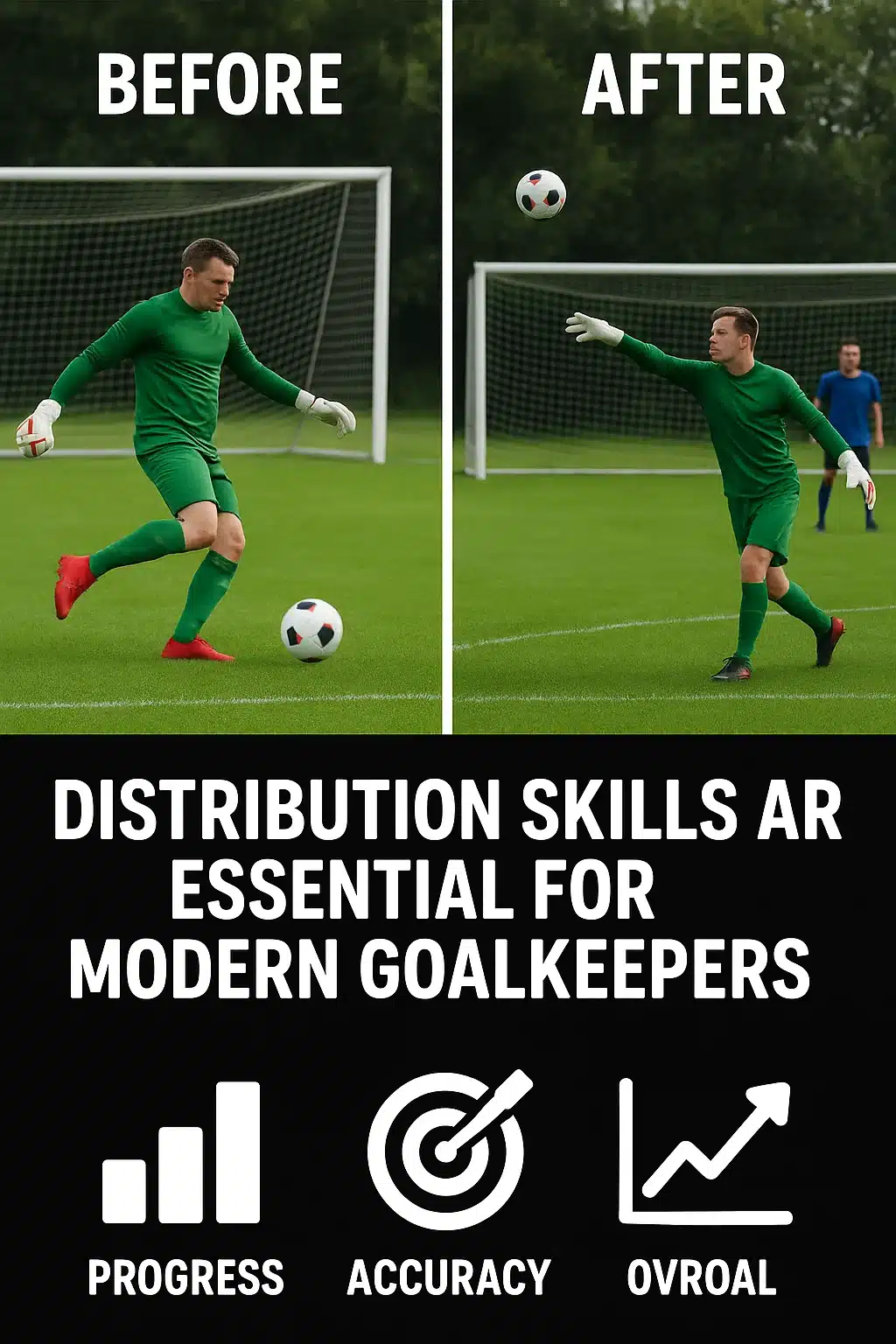
Modern goalkeepers aren’t just shot-stoppers; they are playmakers starting attacks from the back.
Drills for Accurate Throwing and Kicking Techniques
Practice both overarm throws for quick counter-attacks and sidearm or underarm rolls to defenders. Combine this with kicking drills targeting various distances and trajectories, improving both power and accuracy.
Integrating Foot Skills with Handling to Build Complete Goalkeepers
Goalkeepers must handle backpasses and occasionally dribble short distances. Add footwork drills that include stopping and passing the ball with precision, merging your hand and foot coordination smoothly in game-like situations.
Recovery and Cool-Down: Preventing Injuries and Maintaining Fitness
After the high intensity of your soccer goalkeeper drills, a thorough cool-down helps your muscles recover and reduce injury risks.
Stretching Focused on Flexibility and Explosive Movement Recovery
Focus on hamstrings, quads, calves, and shoulders—the muscles most engaged in diving and jumping. Use static stretches held for 20-30 seconds and incorporate yoga-inspired moves to decompress your spine and shoulders.
Breathing and Visualization for Post-Training Mental Reset
Finish with deep breathing exercises to lower your heart rate and visualize your training successes and areas to improve. This mental cooldown is just as important as the physical one to maintain focus over a long season.
Unique Insight: Combining Cognitive Load with Physical Drills for Elite Goalkeeping
To advance beyond basics, integrating cognitive challenges during physical drills is a game-changer.
Training Decision-Making Under Fatigue and Distraction
Run drills when you’re physically tired, adding distractions like shouting teammates or unexpected cues. This conditions your brain to stay sharp when energy dips during a match.
Use of Game-Like Scenarios with Tactical Variations
Simulate different tactical demands—such as facing a penalty shootout or managing a defensive wall—to condition your mental adaptability.
Technology-Assisted Feedback and Performance Tracking
Utilize video analysis and wearable sensors to track metrics like reaction speed, jump height, and positioning accuracy. Such feedback helps tailor your training regimen and monitor progress scientifically.
Conclusion: Creating a Tailored Drill Program for Consistent Improvement
As a soccer ball lover eager to improve your goalkeeping mastery, integrating these 5 powerful soccer goalkeeper drills into your routine will sharpen your reflexes, positioning, and confidence on the pitch. Remember, a balanced training approach covering all critical attributes—from diving saves and footwork to high ball handling and cognitive skills—is key to becoming a well-rounded goalkeeper.
Progressively challenge yourself by adjusting drill difficulty and intensity, matching your skill growth and competitive level. Don’t forget to warm up and cool down properly—your body and mind deserve it.
Now, get out there, practice with passion, and watch your game-saving abilities soar!
FAQs
1. What are the best soccer goalkeeper drills for beginners?
Beginners should focus on basic footwork with cones and ladders, stationary diving practice, and simple catching drills to build foundational coordination and confidence.
2. How can I improve my soccer goalkeeper diving technique?
Practice pushing off with your inside foot, keeping your eyes on the ball, and rolling during the landing to reduce injury risk. Use progressive drills starting with low dives and advancing to full extension.
3. Which drills help enhance reaction time for goalkeepers?
Rebounder exercises and rapid-fire shot drills improve reflex speed. Incorporating unpredictable stimuli, like partner commands, also sharpens reaction under pressure.
4. How can I train for one-on-one soccer goalkeeper drills effectively?
Simulate match-like 1v1 situations where you focus on closing angles calmly and timing tackles. Drills should vary attacker speed and direction to build defensive confidence.
5. What are good goalkeeper warm-up drills before matches?
Dynamic footwork using ladders and cones, lateral movement activation, and visual tracking exercises prepare your body and mind optimally before games.
Quick Takeaways / Key Points
- A comprehensive warm-up primes agility, reaction speed, and game focus.
- Mastering diving saves involves technique, body control, and safe landings.
- Footwork drills with cones and obstacles improve positioning and lateral quickness.
- Reaction time is enhanced with rebounders and rapid-release shooting drills.
- One-on-one and high ball handling drills build confidence for match pressure.
- Distribution skills integrate foot and hand coordination to boost playmaking.
- Combining cognitive challenges with physical drills produces elite goalkeeping performance.
Ready to elevate your goalkeeping skills? Start incorporating these targeted soccer goalkeeper drills today, and experience the thrill of saving more shots and commanding your area like a true pro!