
If you’re a soccer ball lover like me, you know that scoring goals is the heartbeat of this beautiful game. Finishing—that razor-sharp moment when a chance becomes a goal—can transform the outcome of any match. But mastering finishing takes more than just luck or raw talent; it demands focused practice on very specific skills. That’s why today, I’m excited to dive deep into five powerful soccer finishing drills designed to sharpen your precision, power, and composure in front of goal.
Whether you’re a budding youth player, a beginner aiming to improve, or an advanced striker hungry for consistency under pressure, these drills cover every angle. We’ll explore the core elements of finishing: shooting techniques, body positioning, reaction speed, and decision-making. Then, I’ll walk you through detailed, actionable drills—from finishing in front of goal to one-on-one scenarios with defenders. Along the way, I’ll share expert insights, practical tips, and variations tailored to different skill levels, ensuring you get the most out of your training sessions.
So lace up your cleats and get ready to take your finishing abilities to the next level—this guide will empower you to score more goals and feel unstoppable every time you step on the pitch!
Mastering the Basics: Understanding the Core Elements of Finishing
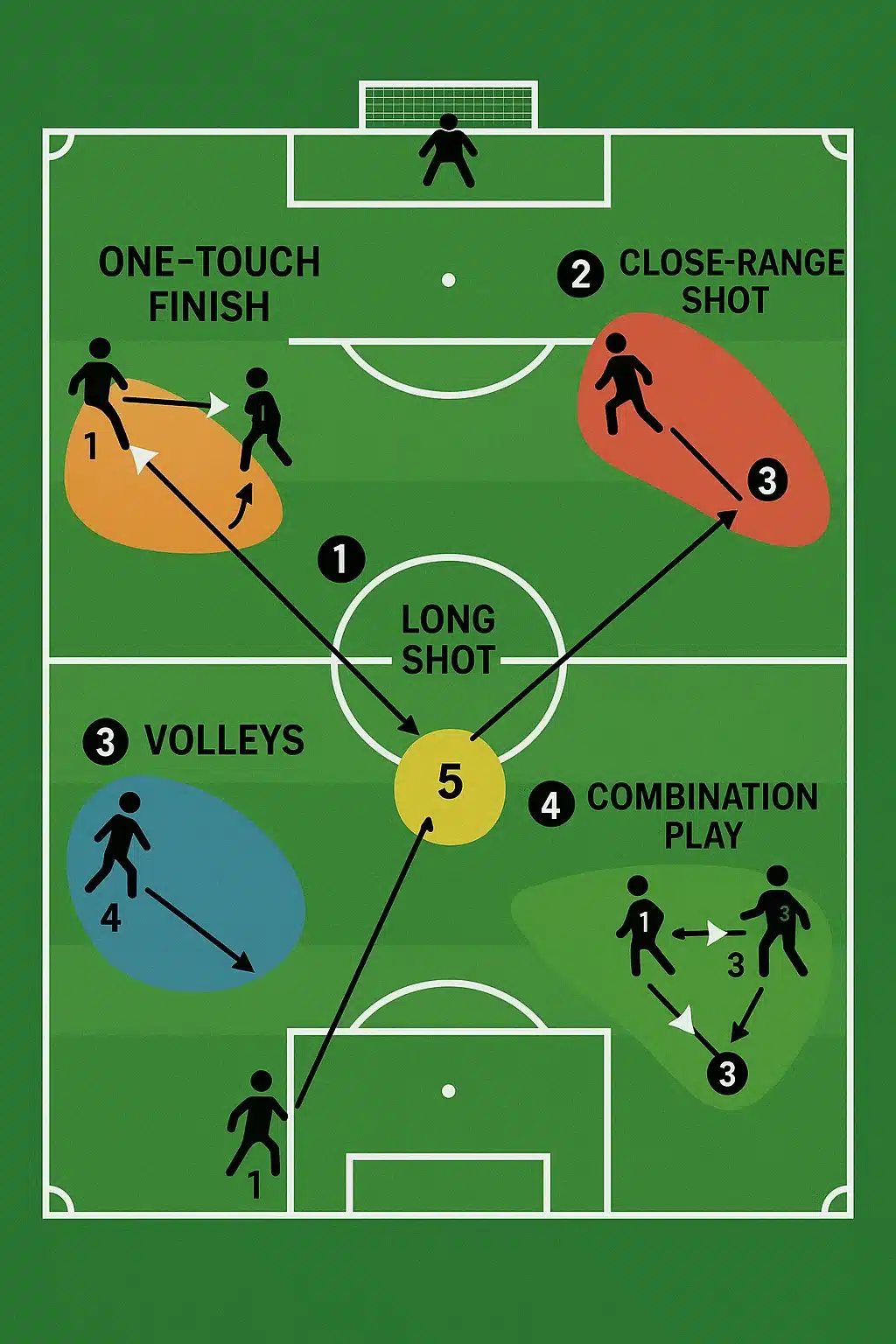
Before jumping into drills, it’s crucial to build a solid foundation. I always emphasize to players that successful finishing hinges on three core elements: shooting technique, first touch and body positioning near the goal, and reaction speed combined with sharp decision-making. Neglect any one of these, and your chances of converting scoring opportunities drop dramatically.
Shooting Technique Essentials for Precision and Power
Good finishing starts with how you strike the ball. Accuracy without power often ends with a goalkeeper save; power without accuracy misses the target. A blend of both is vital.
- Foot Placement: Position your non-kicking foot about six inches beside the ball, pointing toward your target. This setup stabilizes your balance and guides the ball’s path.
- Body Lean: Lean your body slightly over the ball to keep your shot low and controlled, preventing sky-high bloopers.
- Follow Through: A full, smooth follow-through using the instep (laces area) adds power, while striking with the inside of the foot increases accuracy.
- Eye on the Ball: Always keep your head down and eyes locked on the ball at contact to maintain control.
For example, Lionel Messi’s shots combine precise body mechanics with impeccable foot placement, allowing him to whip low-driven shots past goalkeepers consistently.
Importance of First Touch and Body Positioning Near Goal
Before shooting, your first touch can set you up for success—or cause disaster. A clean first touch controls the ball quickly and positions you to shoot with optimal power and angle.
- Control Direction: Your first touch should guide the ball away from defenders and into a shooting zone, ideally keeping it close to your shooting foot.
- Open Body Position: Position your body at a slight angle to the goal to open up options and create a wider shooting area.
- Ready to Shoot: After that first touch, you want to be on balance and ready to strike in one fluid motion.
Think of top strikers who can deftly control tricky passes and whip shots without hesitation—this is no accident, but finely honed skill.
Role of Reaction Speed and Decision-Making in Scoring
Finishing requires split-second decisions under immense pressure. Reacting quickly to rebounds, defensive errors, or goalkeeper movements often determines whether you score or miss your chance.
- Awareness: Constantly scan the goal area to anticipate where the ball will fall or where defenders are positioned.
- Quick Decisions: Should you take a quick shot, dribble around the keeper, or pass to a teammate? Sharpening your gut instincts here is crucial.
- Practice Reaction Time: Many drills focus on creating unpredictable ball movement or “pressure scenarios” to improve your response speed.
This mental sharpness and reaction time distinguish good finishers from great ones.
Drill 1: Finishing in Front of Goal – Creating High-Quality Scoring Opportunities
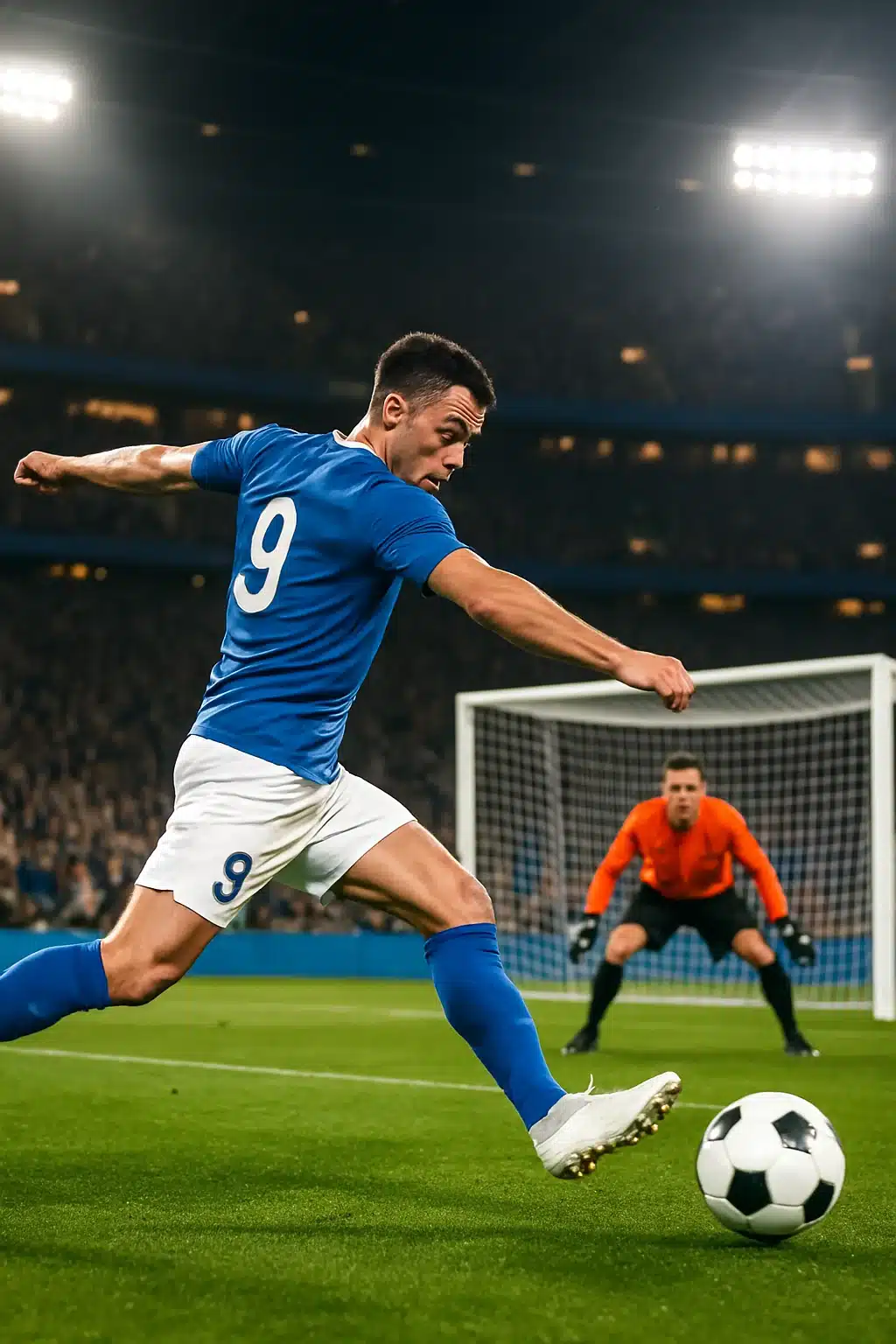
Great strikers thrive on clean chances close to goal. This drill focuses on replicating those high-quality goal-scoring situations to boost your finishing accuracy and composure.
Setup and Equipment Needed for Optimal Drill Execution
- Equipment: Soccer balls (about 10-15), cones or markers, goal with a goalkeeper or a marked target zone inside the net.
- Space: Goal area on a full-sized field or small-sided pitch.
- Players: One shooter, a server (can be a coach or teammate), and optionally a goalkeeper for realistic opposition.
Step-by-Step Instructions and Key Coaching Points
- Server delivers the ball—either through a pass or lofted ball—into the striker’s path just inside the penalty box.
- The shooter’s task is to control the ball and finish within two touches.
- Focus on shooting low and on target using the instep for power or inside foot for placement.
- Rotate players after 5-7 shots to keep intensity high.
Coaching tips: Encourage the striker to keep composure, maintain good body balance, and choose shooting corners instead of aiming center. Emphasize quick decision-making—do not overthink!
Variations to Challenge Players at Different Skill Levels
- Beginners: Start with stationary balls and remove defender pressure, focusing purely on shooting form.
- Intermediate: Add a passive defender who pressures but doesn’t attempt to steal the ball.
- Advanced: Introduce a cutting defender and goalkeeper to simulate real-game scenarios. Use timed challenges or introduce weaker-foot finishing drills.
Drill 2: Small-Sided Soccer Finishing Drills with Pressure Scenarios
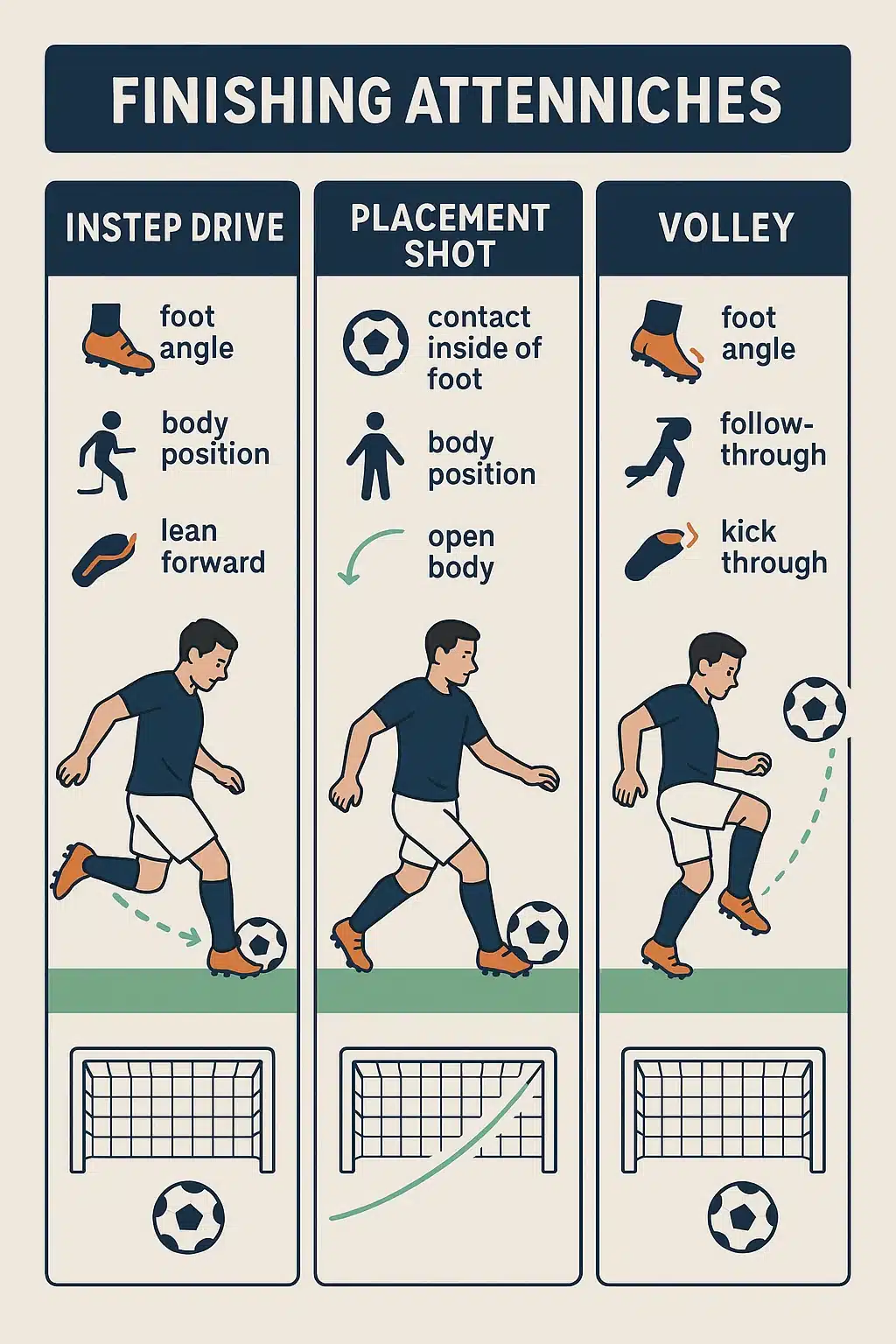
Small-sided games mimic fast-paced pressure situations and are perfect for developing quick reactions and decision-making under defensive duress.
Using Defender Pressure to Simulate Game Conditions
- Set up a mini 3v2 or 4v3 attacking scenario in a reduced space (about 20×25 yards).
- The attackers aim to create scoring chances quickly while defenders apply real pressure.
- The drill teaches composure, accurate finishing when under pressure, and spatial awareness.
Touch Restrictions and Time Limits to Enhance Quick Decision Making
- Enforce a maximum of two touches before shooting. This pushes attackers to act swiftly.
- Add a timer (e.g., finish the play within five seconds) to increase urgency and simulate game pace.
- Gradually reduce time and increase defender intensity to challenge players further.
Balancing Offensive Creativity with Tactical Awareness
- Encourage players to use feints, quick passes, and off-ball runs to disorient defenders.
- Teach reading defenders’ cues to exploit gaps at the right moment.
- Allow moments of improvisation—a little flair boosts confidence and creativity in front of goal.
This drill trains players for real match intensity and situation-based scoring opportunities.
Drill 3: Combination Passing and Finishing Drills to Develop Team Play
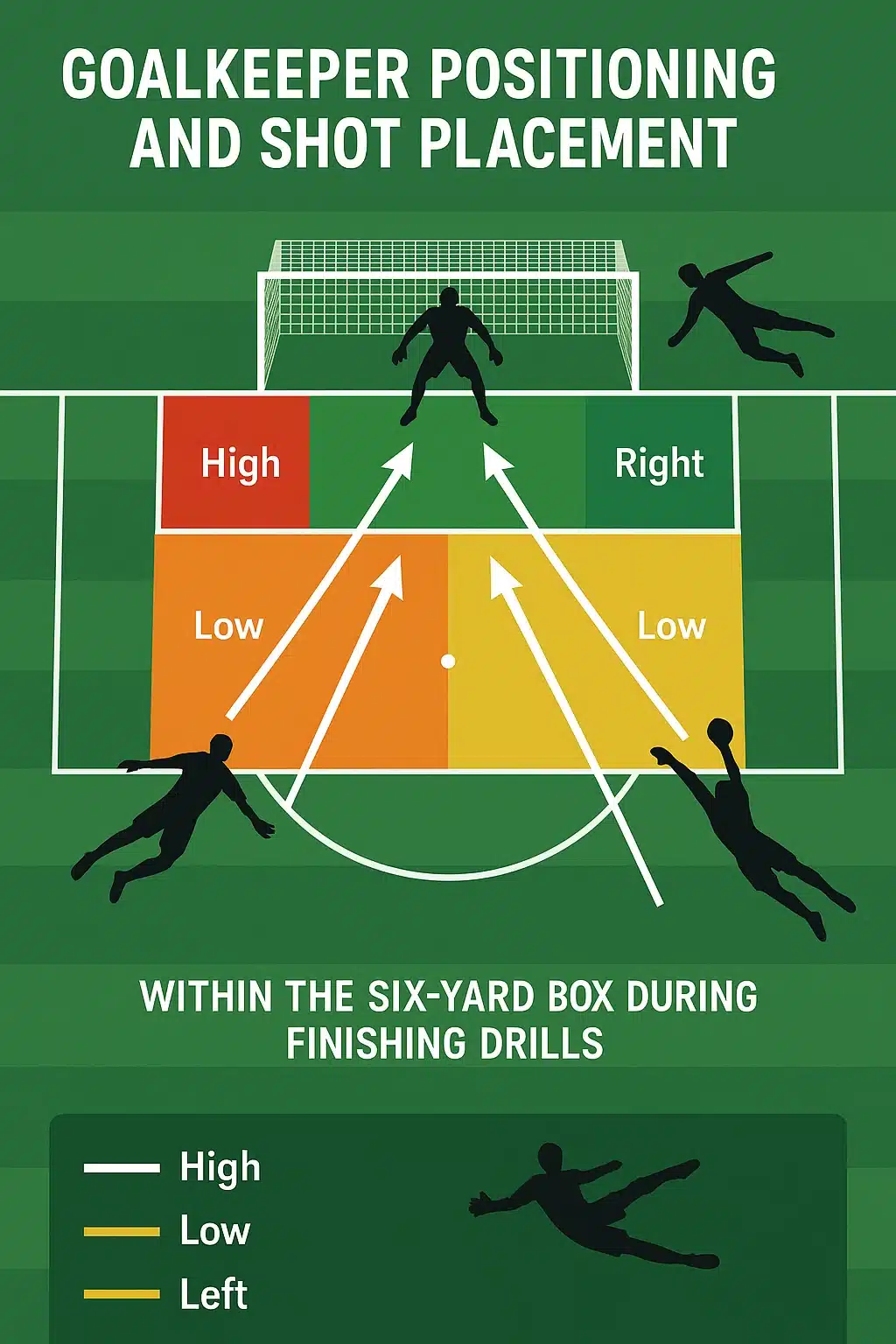
Team-oriented finishing is often the difference between isolated attempts and consistently scoring goals. This drill builds fluid passing combinations leading to deadly finishes.
Incorporating Passing Combinations and Movement Off the Ball
- Organize players in a triangle or diamond setup near the attacking third.
- Work on short one-touch passes, wall passes (give-and-go), and quick lay-offs culminating in the striker receiving a pass in a scoring position.
- Encourage constant movement to create passing lanes and confuse defenders.
Techniques for Back-to-Goal Receiving and Quick Turns
- Train the striker to receive passes with back to the goal, protect the ball using their body, and turn quickly to shoot.
- Use drills involving the striker receiving the ball under pressure and responding with a rapid finish.
- Teach body shielding techniques and quick pivots to maintain possession and shoot accurately.
Drills to Improve Finishing Accuracy After Quick Combinations
- Once the striker completes a combination, the finishing shot should be deliberate—aiming for corners or low drivens.
- Incorporate target zones within the goal for accuracy training.
- Use both feet and volleys as part of finishing varieties in this drill.
This drill not only sharpens technical skills but also fosters communication and situational awareness among teammates.
Drill 4: Crossing and Finishing Drills to Master Wide Attacking Skills
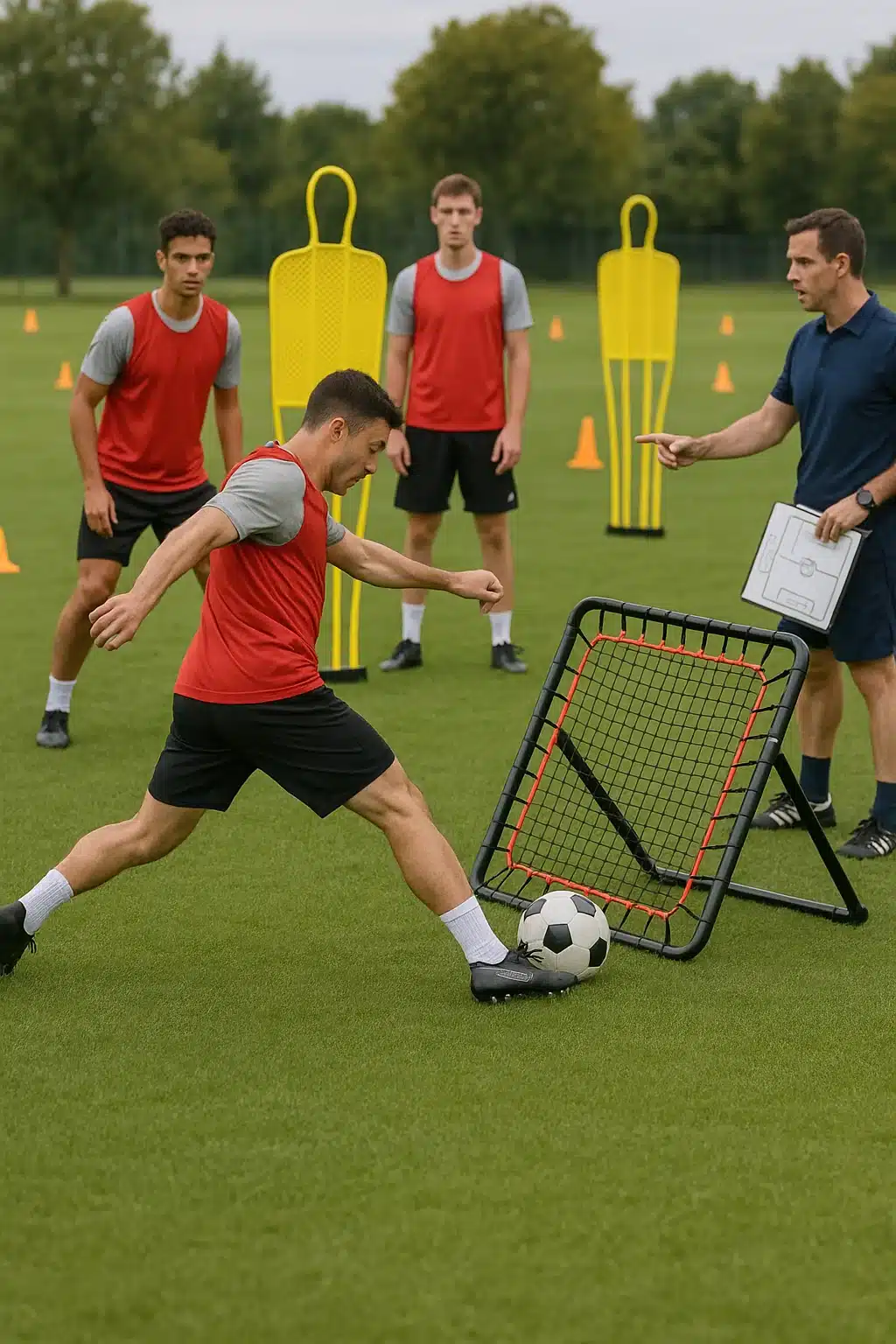
Crossing is a vital skill for wide attackers and strikers alike. Drills focusing on crossing and finishing develop timing, positioning, and the ability to execute on the run.
Coordinating Runs for Near Post, Far Post, and Center Finishes
- Set up two wingers to deliver crosses from opposite sides.
- Strikers practice making timed, well-angled runs targeting near post, far post, and center channel.
- This trains spatial awareness and coordination to outsmart defenders.
Importance of Timing and Positioning During Crosses
- Emphasize the importance of analyzing the trajectory of the cross and adjusting runs accordingly.
- Teach players to vary their starting points and speeds to create separation.
- Practice waiting just a fraction longer to volley or head while maintaining balance for clean contact.
Drills to Improve Heading and Volleys Under Pressure
- Include defenders or passive opposition to replicate aerial duels.
- Incorporate volley drills where players must control and finish crosses with the first touch.
- Use low-driven crosses to challenge players on timing and technique with headers and volleys.
Forcing players to master these aspects translates to lethal attacking options from wide areas during matches.
Drill 5: One-on-One Finishing Drills to Boost Confidence and Composure
Nothing builds confidence like winning your duel against a defender and goalkeeper. One-on-one finishing drills sharpen dribbling, feints, and composure under real-match pressure.
Simulating Real Match Pressure with Defenders and Goalkeepers
- Isolate attacker versus defender plus goalkeeper scenarios.
- The attacker begins with the ball facing the defender and must beat them to take a shot.
- This drill adds intense pressure, forcing attackers to rely on quick skills and smart decision-making.
Techniques for Dribbling, Feints, and Quick Shot Execution
- Work on feints like stepover, body feints, and changes of pace to unbalance defenders.
- Practice shooting immediately after beating the defender to take advantage before the keeper reacts.
- Encourage staying calm, balancing speed with control.
Progressions for Different Age and Skill Levels
- Beginners: Focus on controlling the ball and basic dribbling under light defender pressure.
- Intermediate: Add more aggressive defenders forcing quicker decisions.
- Advanced: Add time constraints and variable starting positions to simulate chaotic scenarios.
One-on-one drills train attackers to be fearless finishers, mastering both physical and mental elements of goal-scoring.
Integrating Finishing Drills into Regular Training Sessions
To truly benefit from these powerful soccer finishing drills, integrating them smartly into your regular training routine is key.
Designing Sessions for Youth, Beginners, and Advanced Players
- For youth and beginners, focus on foundational drills with emphasis on shooting form and confidence-building.
- Advanced players benefit from pressure drills and combination play to simulate match intensity.
- Use blended sessions combining technical, tactical, and psychological components.
Combining Technical, Tactical, and Physical Components Efficiently
- Start sessions with warm-ups focused on technique.
- Progress to tactical scenarios incorporating defenders and teammates.
- Include physical conditioning elements like short sprints to mimic game situations.
- End with small-sided games emphasizing quick finishing.
Measuring Progress and Providing Constructive Feedback
- Use video recordings to track technical improvements and decision-making.
- Offer positive, specific feedback highlighting strengths and areas for improvement.
- Set measurable goals like hitting target zones 80% of the time or reducing shot hesitation.
Continuous feedback and structured sessions ensure better retention and skill progression.
Advanced Insights: Enhancing Mental Resilience and Creativity in Finishing
Top finishers aren’t only skilled technically—they’re mentally tough and creative thinkers under pressure.
Mental Preparation Techniques for High-Pressure Scoring Situations
- Practice mindfulness and breathing exercises to stay calm in front of goal.
- Develop pre-shot routines—for example, controlled breathing, visualizing the shot trajectory—that steady nerves.
- Train consistently under varied pressure to build resilience.
Encouraging Creative Solutions in Tight Spaces and Under Pressure
- Promote improvisation in drills allowing multiple finishing options—chip, curl, blast.
- Simulate chaotic penalty box scrambles encouraging players to think outside the box.
- Encourage self-confidence through success repetition and positive reinforcement.
How Visualization and Routine Can Improve Finishing Consistency
- Visualization drills where players mentally rehearse scoring goals improve accuracy and composure.
- Establish consistent pre-shot routines to build muscle memory.
- Combining mental preparation with physical practice leads to higher finishing success rates.
Equipment, Space, and Safety Considerations for Effective Finishing Drills
Optimizing your environment and safety during finishing drills maximizes benefit and minimizes injury risk.
Optimizing Setup for Different Age Groups and Training Environments
- Youth drills need reduced spaces and softer balls for safety and confidence.
- Advanced players can use full-sized goals and standard balls.
- Indoor setups require clear boundaries and safe surfaces.
Injury Prevention Tips During Intense Finishing Practice
- Always include a thorough warm-up focusing on lower limbs.
- Monitor player fatigue to avoid sloppy technique or collisions.
- Use proper footwear suitable for the playing surface.
Utilizing Technology and Video Analysis to Enhance Skill Development
- Record finishing drills to analyze shooting form, timing, and decision-making.
- Use apps and software that provide instant feedback on shot speed and accuracy.
- Implement performance tracking tools to measure improvement over time.
Technology complements expert coaching and accelerates development.
Conclusion: Embracing the Joy and Science of Scoring Goals Through Targeted Drills
As a fellow soccer ball lover, I can’t overstate how transformative targeted soccer finishing drills are in shaping a player’s confidence and effectiveness in front of goal. From mastering the basics like shooting technique and first touch, to navigating high-pressure one-on-one situations and perfecting team combinations, these drills bring scientific precision and creativity into your training.
When you commit to systematic practice incorporating these five powerful soccer finishing drills, you’re not only enhancing your technical skills but also building the mental toughness and tactical awareness that define elite finishers. It’s a lifelong journey of passion, persistence, and progression.
So why wait? Start integrating these drills into your training sessions today. Watch how your finishing sharpens, your goals multiply, and your love for the game grows even deeper. Keep pushing, keep practicing—and most importantly, keep enjoying every thrilling moment on the pitch!
FAQs About Soccer Finishing Drills
Q1: What are the best soccer finishing drills for youth players?
The best drills for youth players involve basic shooting techniques, controlled first touches, and simple finishing from close range without defender pressure, such as “Finishing in Front of Goal” drills with slow-paced balls and clear target zones.
Q2: How can soccer finishing drills help beginners and advanced players differently?
Beginners focus on developing shooting form, confidence, and timing, while advanced players use drills simulating high-pressure scenarios, combination plays, and one-on-one finishes to sharpen decision-making and composure.
Q3: Which soccer finishing drills improve shooting accuracy under pressure?
Small-sided soccer finishing drills with defender pressure and time limits are excellent for boosting accuracy under pressure by forcing quick decision-making and precision.
Q4: Are there specific drills to improve heading and volleys in soccer finishing?
Yes, crossing and finishing drills incorporating varied cross deliveries help improve timing, positioning, heading, and volley techniques under defensive pressure.
Q5: How often should I practice soccer finishing drills to see real improvement?
Consistency is key. Aim for finishing-focused drills two to three times per week, ideally integrated into full training sessions, with measurable goals and regular feedback to track progress.
Quick Takeaways / Key Points
- Mastering shooting technique and first touch are foundational to scoring consistently.
- Reaction speed and decision-making separate good finishers from great ones.
- Finishing in front of goal drills build confidence in high-quality scoring chances.
- Pressure scenarios in small-sided drills enhance mental and technical resilience.
- Combination passing drills develop team play crucial for dynamic finishes.
- Crossing drills improve timing, positioning, and aerial finishing skills.
- One-on-one drills boost composure and creativity under goalkeeper and defender pressure.
By embracing these focused drills, every soccer ball lover can dramatically improve goal-scoring ability and enjoy the beautiful game even more.