
As a soccer ball lover, there’s nothing quite like seeing young players sprint across the field with confidence and agility. One of the most pivotal factors that can make or break a kid’s performance on the soccer pitch is their footwear. That’s right—soccer cleats for kids aren’t just any shoes; they’re engineered to enhance speed, control, and safety. Whether your child is a budding striker or a cautious defender, choosing the right cleats is essential for both performance and the health of their developing feet.
In this extensive guide, I’ll take you through everything from why selecting the right cleats matters to the nuances of different playing surfaces, key factors to consider, and a detailed review of the top 9 soccer cleats for kids that combine comfort, durability, and style. Along the way, I’ll also address special needs like wide feet or waterproof options, and share tips on caring for cleats to ensure they last through endless games and practices. So, lace up your curiosity, and let’s kick off with the essentials!
Why Choosing the Right Soccer Cleats for Kids Matters
Soccer is a fast-paced, high-impact sport. When it comes to kids, their growing bodies demand extra attention, especially when it involves their feet. Choosing the right cleats involves more than just picking a cool-looking pair; it influences performance and long-term foot health.
Foot Development and Injury Prevention
Children’s feet are far from miniature adult feet. Their bones, joints, and muscles are still developing. Wearing ill-fitting or inappropriate soccer cleats can cause discomfort, blisters, and even lasting foot deformities. For example, tight cleats can lead to bunions, while insufficient arch support might trigger pain or imbalance.
The right soccer cleats provide a stable base, cushioning to absorb impact, and adequate room for natural foot expansion during play. Cleats designed with ergonomic principles reduce the risk of common injuries such as plantar fasciitis and ankle sprains. Features like padded heels and ankle support further safeguard young athletes who are still perfecting their coordination.
Impact on Performance and Confidence
Let’s face it—comfort fuels confidence. When kids wear soccer cleats that fit well and offer good traction, they move with more assurance. This translates into faster sprints, sharper turns, and better ball control, all of which elevate their performance on the field. Conversely, struggling with slippery soles or uncomfortable cleats can frustrate even the most passionate young players, hampering skill development and enjoyment of the game.
As a soccer fan, I’ve observed countless times how the right shoes transform hesitant beginners into enthusiastic, agile players ready to take on challenges head-on.
Understanding Different Playing Surfaces: Natural Grass, Artificial Turf, and Indoor Courts
Choosing soccer cleats isn’t a one-size-fits-all situation. The type of surface your child plays on most often directly influences the best cleat choice to maximize traction, prevent slips, and ensure comfort.
Firm Ground (FG) Cleats
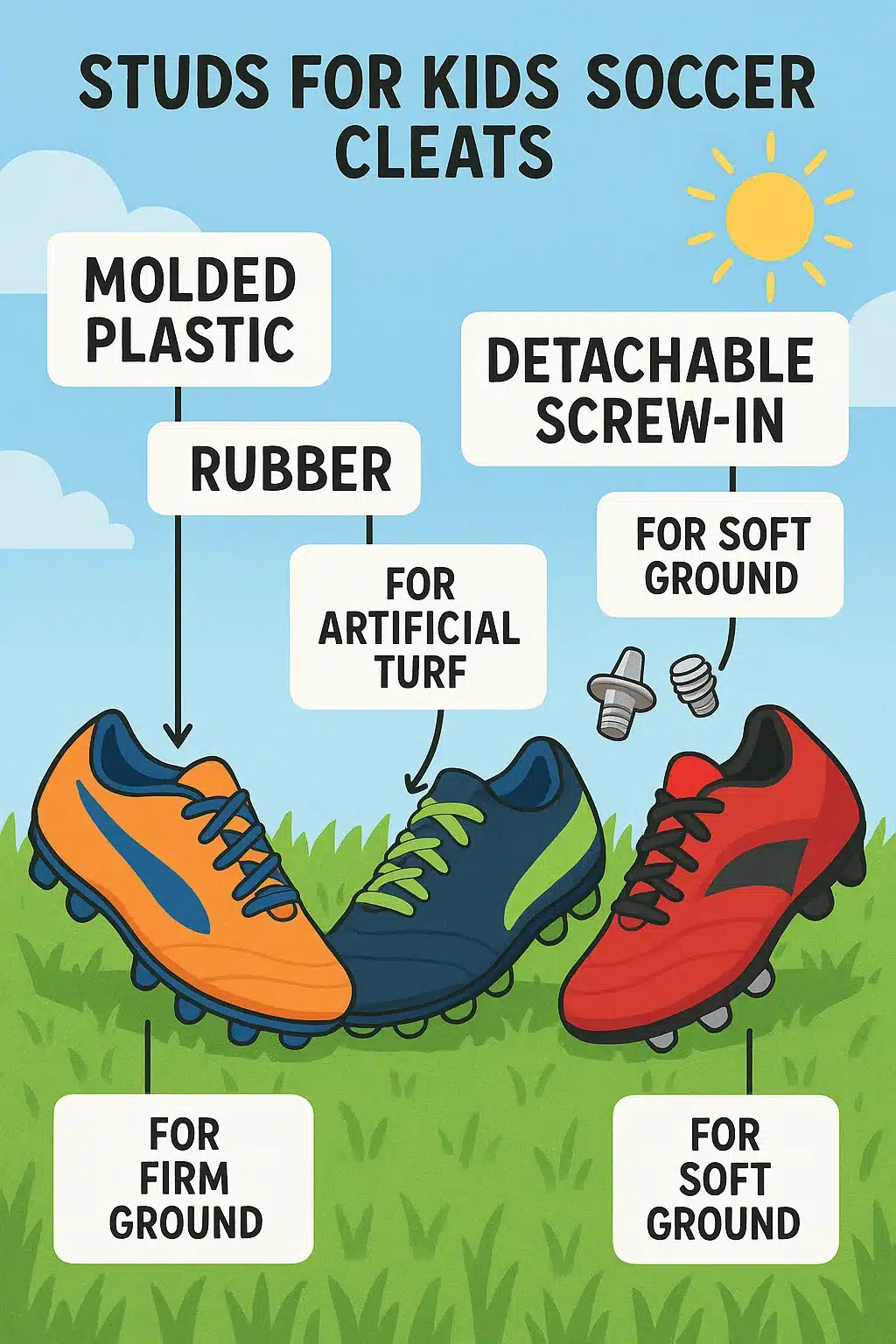
Firm ground, or FG, cleats are designed specifically for natural grass fields that are dry or slightly damp but not overly muddy. These cleats feature conical or bladed studs arranged to provide excellent traction while allowing easy pivoting and quick direction changes. They usually have molded rubber or plastic studs about 12mm in length.
One commonly loved option is the Nike Jr. Mercurial Vapor 16 Academy, built to enhance speed and agility on natural grass. The stud configuration ensures kids dig into firm ground firmly without the risk of getting stuck, a vital balance that reduces injury risk.
Artificial Ground (AG) and Multi-Ground (MG) Cleats
Artificial turf fields have become increasingly common, but they demand different stud designs. Artificial ground cleats usually have numerous shorter, equally spaced studs that distribute pressure evenly to prevent discomfort on harder turf surfaces.
Multi-ground cleats are versatile, engineered to perform well on both firm natural grass and artificial turf. The Puma Ultra Play FG/AG is an excellent example of this category, providing outstanding traction and lightweight support on both surfaces.
Indoor Soccer Shoes Vs. Cleats
Indoor soccer is played on smooth, hard courts, which require totally different footwear. Instead of studs, indoor shoes have flat, rubber soles that maximize grip without damaging the surface.
It’s worth noting that indoor soccer shoes are not interchangeable with cleats on grass or turf—they simply won’t provide the necessary traction outdoors. For kids who play indoor soccer, investing in quality indoor shoes is just as important as cleats for outdoor play.
Key Factors to Consider When Choosing Soccer Cleats for Kids
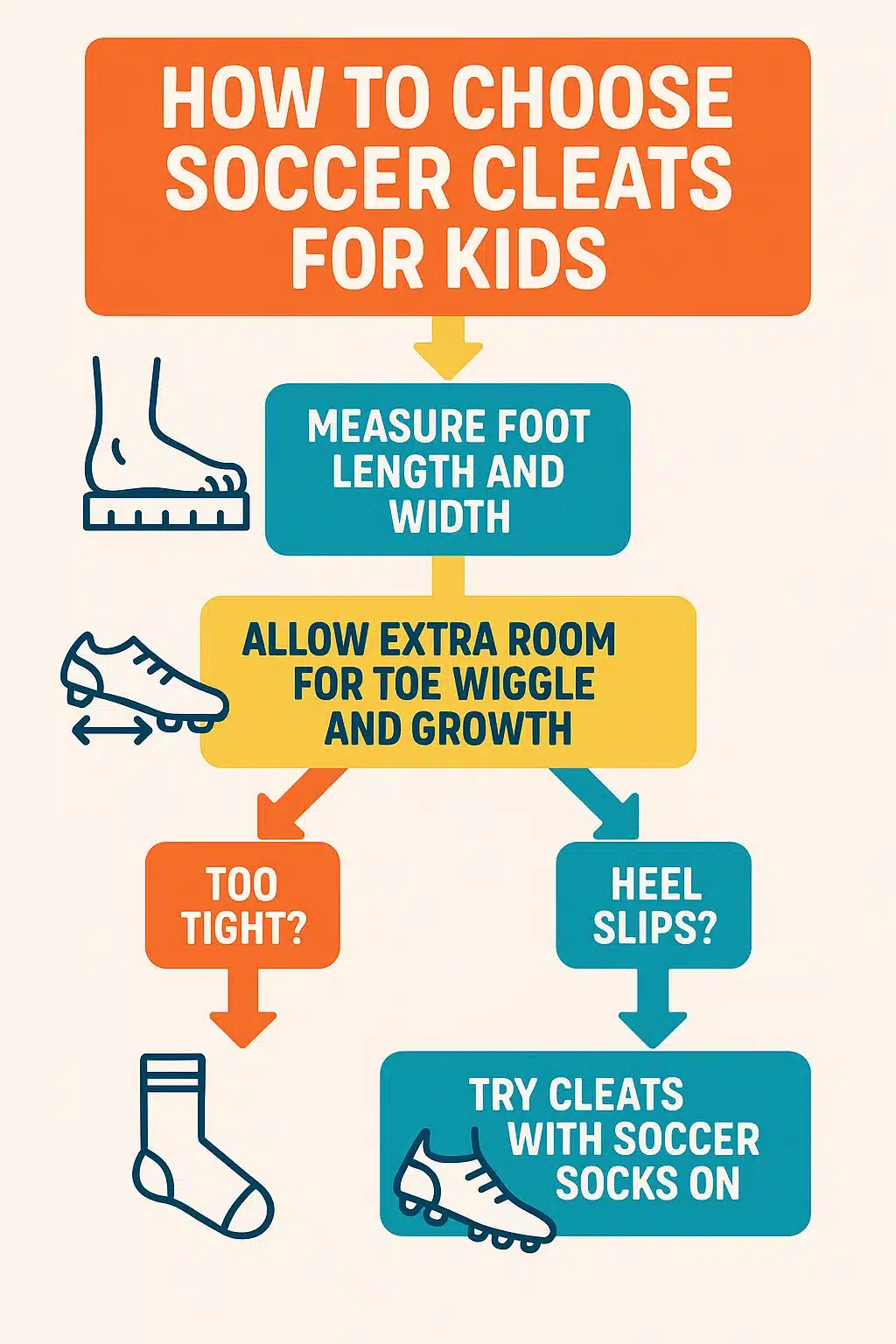
Now that we understand the playing surfaces, let’s dive into what makes a soccer cleat truly suitable for young players.
Sizing and Fit: Following a Kids Soccer Cleats Size Guide
Fitting soccer cleats for kids requires a little more care than regular shoes. Because feet grow rapidly, it’s best to measure your child’s feet before every season using a kids soccer cleats size guide. Remember, a thumb’s width (about 1 cm) of space from the longest toe to the cleat’s tip ensures enough room for movement and toe splay.
Always try cleats on with the socks your child will wear during matches. Also, ensure the cleats snugly hug the heel and midfoot to prevent slipping but don’t squeeze the toes.
Traction and Stud Configuration
Different stud shapes—conical, bladed, or mixed—offer various benefits. Conical studs allow smooth rotational movement, making them excellent for midfielders who turn frequently. Bladed studs provide direct traction for explosive acceleration, favored by forwards.
Finding the right stud configuration for your child depends on their playing position, style, and field surface.
Materials: Synthetic Leather, Mesh, and Knit Uppers
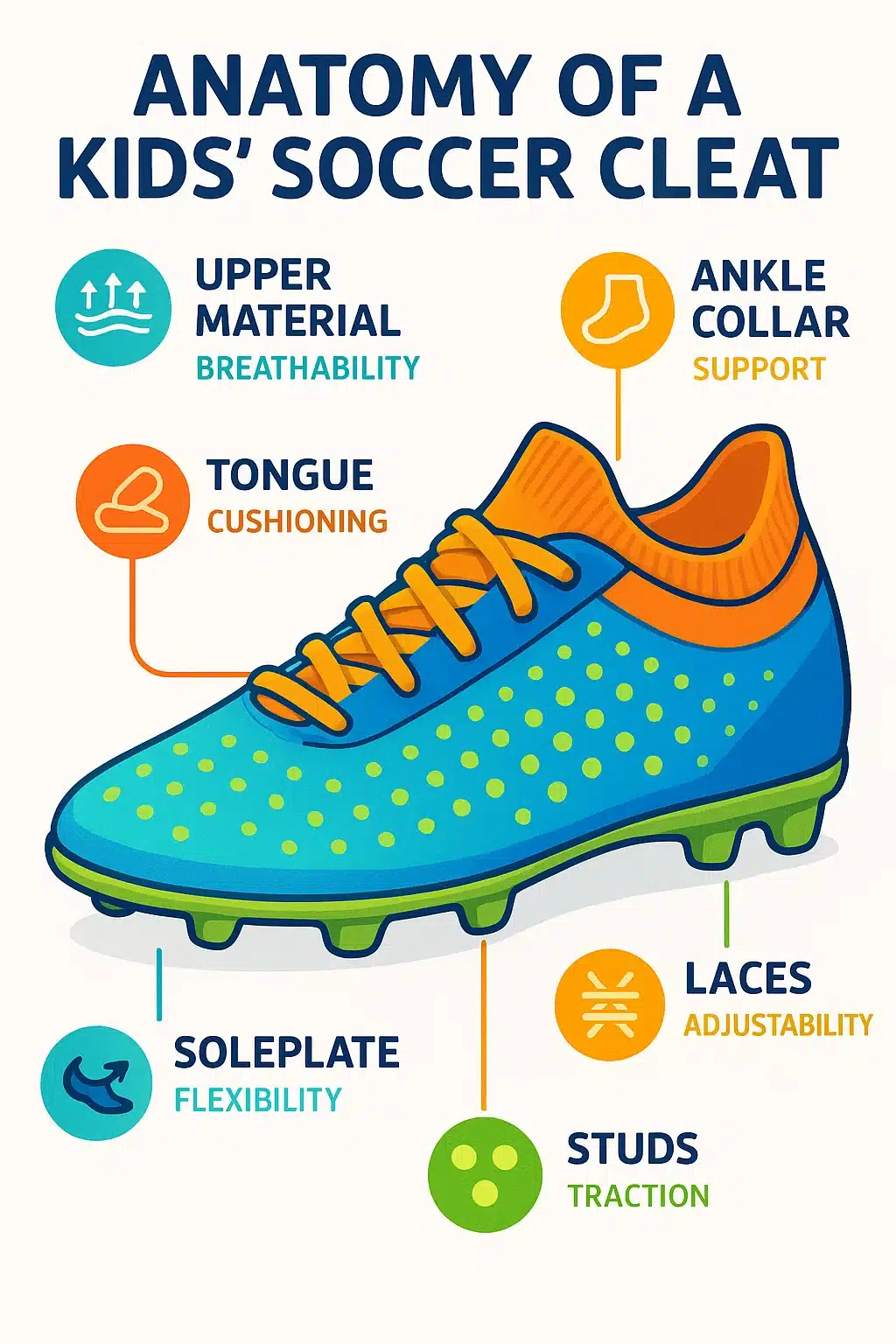
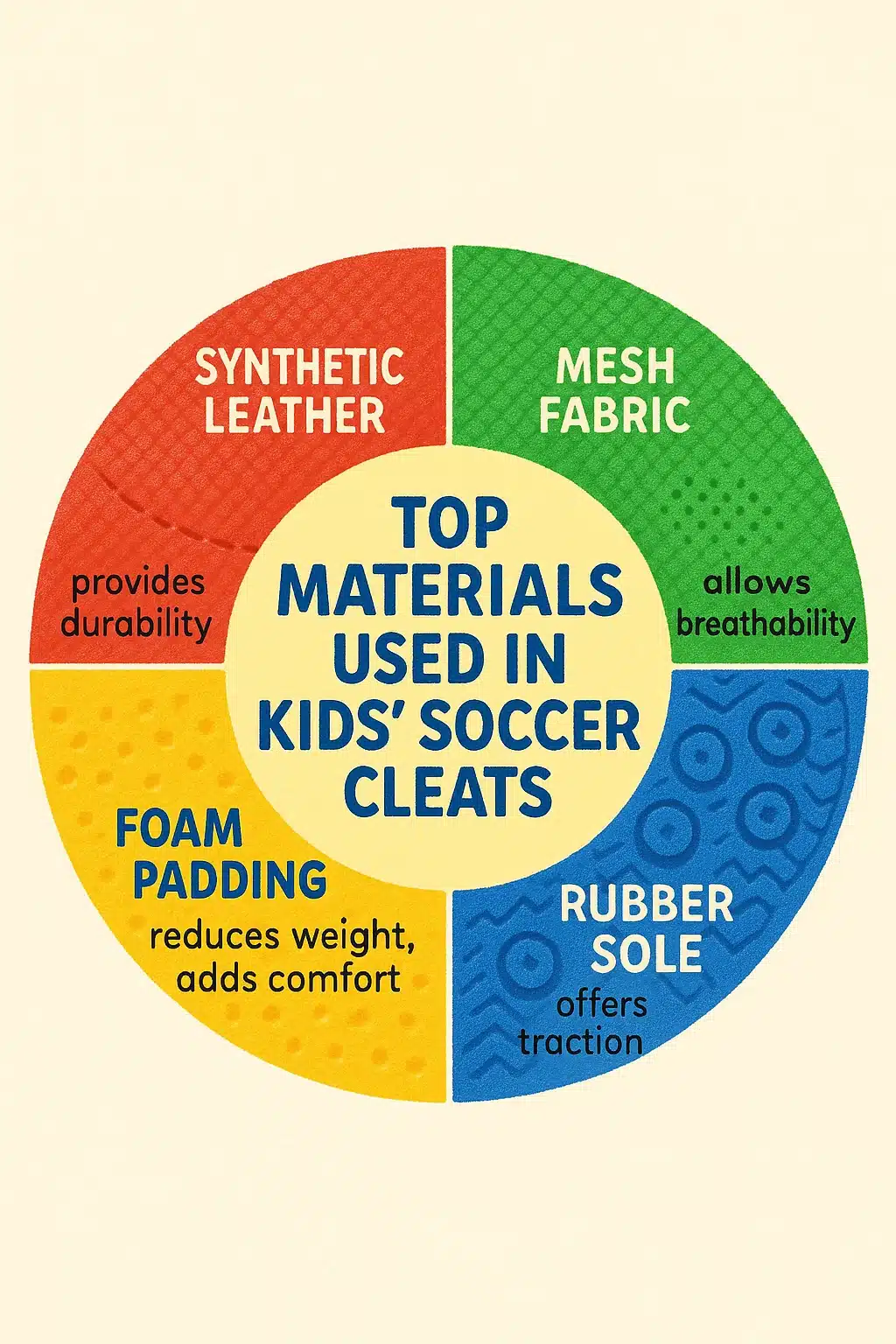
Most modern kids’ soccer cleats feature synthetic leather or mesh uppers, balancing weight, durability, and breathability. Synthetic leather is easier to clean and more water-resistant, whereas mesh and knit materials offer superior ventilation and flexibility.
For example, the Adidas Predator Edge+ uses an adaptive PRIMEKNIT collar that feels like a sock, combining comfort with excellent ball control.
Comfort Features: Arch and Ankle Support, Cushioning
Many kids need extra arch support, especially if they have flat feet or high arches. Cleats with built-in arch cushioning and padded heels can prevent aches and support endurance during long matches.
Ankle collars or higher-top designs provide additional lateral stability. This is crucial for kids still developing their balance.
Closure Types: Laces, Straps, and Slip-On Options
Traditional lace closures offer the most adjustable fit but might be tricky for younger kids to manage. Velcro straps or slip-on cleats are convenient for quick fastening and secure fit, particularly for beginners.
The Vizari Infinity FG features adjustable straps, making it a popular choice for kids new to cleats or those who prefer straightforward fastening.
Top 9 Soccer Cleats for Kids Reviewed
Here’s my detailed review of nine top soccer cleats that excel in performance, comfort, and value. Each selection is based on quality materials, standout features, and user feedback.
Nike Jr. Mercurial Vapor 16 Academy: Speed and Agility
The Nike Jr. Mercurial Vapor 16 Academy is perfect for young speedsters. Its lightweight design and snug fit encourage quick acceleration and rapid direction changes on firm ground. The cleats’ outsole offers excellent grip, which is crucial for games on natural grass.
Ideal for active kids who love swift maneuvers, these cleats also come with cushioned insoles to keep little feet comfortable during extended play.
Pros: Lightweight, durable, excellent traction
Cons: May run narrow for wide feet
Buy here
Adidas Predator Edge+: Control and Power with Laceless Design
For kids focused on ball control and striking precision, the Adidas Predator Edge+ offers a revolutionary laceless design. The Zone Skin upper generates superior grip on the ball, while the Facet Frame outsole provides dynamic traction, perfect for firm ground.
Plus, its PRIMEKNIT collar wraps the foot securely, combining comfort with style.
Pros: Laceless clean strike area, excellent grip, comfortable fit
Cons: Pricier compared to entry-level cleats
Buy here
Puma Ultra Play FG/AG: Versatile Cleats for Grass and Turf
If your child plays on a mix of surfaces, the Puma Ultra Play FG/AG is a versatile option. It features a lightweight synthetic upper with a support frame and TPU outsole for traction on both firm ground and artificial turf.
Available in multiple color options, these cleats balance speed, control, and sturdiness.
Pros: Multi-ground compatibility, lightweight, stylish
Cons: Limited ankle support
Buy here
Vizari Infinity FG: Affordable Durability and Adjustable Fit
For families on a budget, the Vizari Infinity FG packs value without skimping on key features. Adjustable straps allow a custom fit, while the rubber sole provides solid traction. Its padded heel reduces blisters, and synthetic materials resist water.
Great for beginner kids or casual players.
Pros: Affordable, adjustable straps, durable
Cons: Not as lightweight as premium models
Buy here
Adidas F50 Elite Messi: Elite Lightweight Performance
Designed with the pro touch in mind, the Adidas F50 Elite Messi features HybridTouch upper material and a Speedframe 360 outsole for agility on firm ground. It’s incredibly light and offers a snug fit, ideal for kids who want a performance edge.
It also incorporates sustainable materials, reflecting Adidas’s commitment to eco-friendly production.
Pros: Lightweight, excellent ball feel, sustainable
Cons: Higher price point
Buy here
Mizuno Morelia Neo Beta IV: Premium Leather and Comfort
For those seeking premium options, Mizuno’s Morelia Neo Beta IV boasts a soft leather upper for enhanced ball control and comfort. The lightweight design helps with quick moves and maintains stability with strategically placed studs.
Perfect for more experienced players who value quality materials.
Pros: Premium leather, lightweight, durable
Cons: Requires break-in period
Buy here
Nike Jr. Phantom 6 Low Pro: Precision and Traction
This cleat brings innovative Flyknit and VNMSkin materials together for close ball contact and superior striking control. The Cyclone 360 traction pattern supports quick cuts and pivots.
Recommended for youth players who prioritize control and touch.
Pros: Close ball feel, superb traction
Cons: Narrow fit
Buy here
Adidas Predator Elite Kids: Advanced Control and Snug Fit
Adidas Predator Elite is a step above in technology with HybridTouch 2.0 and Strikeskin rubber fins for ultimate ball grip. The Controlframe outsole helps with dynamic movement.
Ideal for young players wanting to replicate pro-level control.
Pros: Superior ball control, secure fit
Cons: May be too advanced for younger beginners
Buy here
Nike Phantom GX 2 Elite AG: Best for Artificial Turf
Specialized for artificial grass fields, this cleat offers outstanding grip and energy return to help young players tackle challenges on turf. Its design reduces foot fatigue during fast-paced games.
Highly recommended for kids who primarily play on artificial turf.
Pros: Turf-specific traction, lightweight
Cons: Limited use on natural grass
Buy here
Specialty Considerations for Kids with Unique Needs
Not every kid’s feet are the same, and thankfully, there are cleats designed with special features.
Soccer Cleats for Kids with Wide or Flat Feet
Some children have wider feet or flat arches, needing cleats that provide expanded toe boxes and better arch support. Brands like Nike and Adidas offer wider models, or cleats with stretchy knit uppers, giving more room without compromising fit.
Cleats with Easy Fastening Straps for Younger Kids
For younger children unfamiliar with tying laces, cleats with Velcro straps like the Vizari Infinity FG make it simpler to secure shoes while providing adjustable fit, encouraging independence.
Waterproof and Weather-Resistant Options
Rainy season or wet fields demand cleats with synthetic uppers that resist water absorption. Models like the Nike Jr. Mercurial Vapor 16 Academy stand up well against damp conditions and ease cleaning.
How to Maintain and Care for Kids’ Soccer Cleats
Proper care prolongs cleats’ lifespan and keeps kids comfortable.
Cleaning and Drying Tips
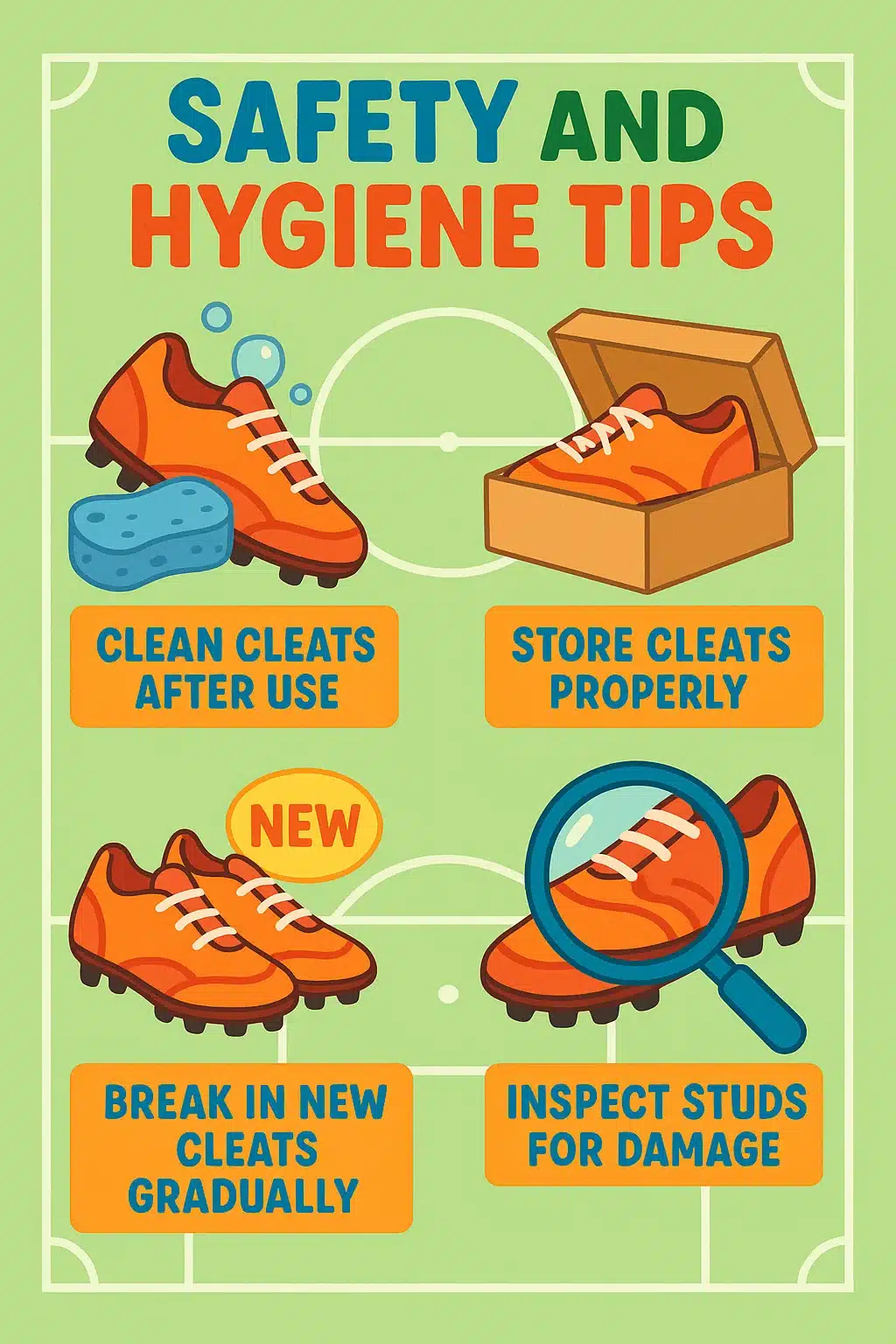
Wipe dirt off after each use with a damp cloth. Remove insoles and laces to dry separately if wet. Avoid direct heat sources like radiators; instead, air-dry in a well-ventilated space.
Proper Storage for Longevity
Store cleats in a cool, dry place. Use shoe trees or stuff paper inside to maintain shape when not in use.
When to Replace Soccer Cleats
Replace cleats if the studs are worn down, the sole cracks, or if the fit becomes too tight due to foot growth. Ignoring these signs risks injury and discomfort.
The Role of Soccer Cleat Ergonomic Design in Youth Performance
Ergonomics in cleat design matters more than many realize. Properly contoured soles and uppers reduce strain on young feet, improve balance, and prevent overuse injuries.
How Ergonomics Enhance Comfort and Reduce Injuries
Cushioned midsoles, arch supports, and padded collars ease impact and reduce fatigue. Well-designed cleats allow natural foot motion, decreasing injury chances.
Future Trends: Sustainable and Smart Materials in Kids’ Soccer Cleats
Manufacturers are integrating sustainable materials—like recycled plastics—and smart designs that adjust fit dynamically. These innovations promise cleats that are eco-friendly and adapt to a growing athlete’s foot.
Where to Buy: Trusted Retailers and Online Stores
Official Brand Websites
For authentic products and the latest models, buy directly from brands like Nike, Adidas, Puma, and Mizuno.
Specialty Soccer Retailers and Marketplaces
Stores like Soccer Wearhouse, Soccer Zone, and Target offer a wide range of kids’ cleats, often with competitive pricing and customer reviews.
Conclusion: Matching The Perfect Soccer Cleat to Your Child’s Needs and Playing Style
Choosing the right soccer cleats for kids is an investment in both their health and love for the game. From protecting growing feet to enhancing every dribble and goal, the ideal cleats make a world of difference. Whether your child thrives on firm grass, tactical artificial turf, or indoors, options abound—from affordable, adjustable models like the Vizari Infinity FG to elite performance cleats like the Adidas Predator Edge+.
Remember, prioritizing comfort, proper fit, and surface-specific design ensures your young soccer star plays confident, safe, and happy. Keep in mind the importance of maintenance, especially as your child grows. With this guide in hand, you’re ready to find soccer cleats that not only fit but inspire your kid to chase that ball with joy and skill.
Go ahead and gear up for an unforgettable season!
FAQs About Soccer Cleats for Kids
Q1: What are the best soccer cleats for kids under 10?
For kids under 10, lightweight and easy-to-wear cleats like the Nike Jr. Mercurial Vapor 16 Academy or Vizari Infinity FG with adjustable straps are great. They offer comfort, durability, and suitable traction for young players.
Q2: How do I know if my child’s soccer cleats fit properly?
Ensure there is a thumb’s width of space from the longest toe to the cleat’s tip. The heel should be snug but not tight, and kids should be able to move toes freely without slipping during movement.
Q3: Are there soccer cleats suitable for kids with wide feet?
Yes, brands like Nike and Adidas offer wider fits or cleats with stretchy uppers that accommodate wide feet comfortably, providing ample toe box space and support.
Q4: Can soccer cleats be used on multiple surfaces?
Certain cleats labeled multi-ground (MG) like Puma Ultra Play FG/AG are designed for both natural grass and artificial turf. However, it’s best to use specialized cleats for artificial turf or indoor courts for optimal traction and comfort.
Q5: How often should soccer cleats for kids be replaced?
Replace cleats when the studs wear down, the sole is damaged, or if the cleats no longer fit properly due to growth. Regular inspections and timely replacement prevent injury and maintain performance.
Quick Takeaways
- Properly fitted soccer cleats are vital for kids’ foot health and game performance.
- Different surfaces require specific cleat types: FG for grass, AG or MG for turf, and flat-soled shoes for indoor courts.
- Comfort features like arch support, cushioning, and closure type matter a lot for young players.
- The top 9 cleats reviewed range from budget-friendly options to high-end models suitable for beginners to advanced players.
- Specialty cleats exist for kids with wide or flat feet, those needing easy fastening, or waterproof options.
- Maintaining cleats through cleaning and proper storage extends their usability.
- Ergonomic and sustainable designs are shaping the future of kids’ soccer footwear.
Equip your young champion today with cleats designed to meet their unique needs and playing style, and watch them shine on the field with confidence and comfort!