

As someone who lives and breathes soccer, you already know that success on the field isn’t just about having great ball skills or scoring goals—it’s also about how quickly and precisely you can move. Whether you’re weaving through defenders, making sharp cuts, or sprinting into position, having outstanding agility can separate the average player from the exceptional one. That’s why mastering soccer agility drills is absolutely crucial for any soccer ball lover who wants to elevate their game.
In this article, I’ll walk you through six powerful and highly effective soccer agility drills designed to enhance your speed, coordination, balance, and reaction time. But first, we need to understand what agility truly means in the context of soccer and how to prepare your body for these intense drills. Then, we’ll dive deep into each drill, with detailed instructions, variations, and tips from my own experience and expert resources. Whether you have a full training field or just a small space at home, I’ll also share practical guidance for adapting these drills to your environment.
By the end, you’ll have a comprehensive, road-tested agility routine to help you move faster, react smarter, and control the ball like a pro. So lace up your cleats and let’s jump right into the world of soccer agility drills that every true soccer ball lover needs!
Understanding Soccer Agility: Beyond Speed and Quickness

When we talk about agility in soccer, it’s easy to think only about running fast or changing direction swiftly. But it’s much more than speed alone. Soccer agility encompasses a combination of physical and mental skills that come together to help you maneuver fluidly on the pitch under pressure.
The Role of Lateral Movement and Change of Direction
One of the key aspects of soccer agility drills is improving your lateral movement and ability to change direction quickly. Soccer rarely demands players to run in a straight line—it’s a game of sharp pivots, side steps, and unexpected shifts of pace. Being able to execute these movements efficiently saves time and energy, reduces injury risk, and lets you react dynamically to unfolding plays.
For example, think about a defender trying to mirror an attacking winger’s feints. The defender’s ability to shift laterally without losing balance or momentum is crucial. A well-designed agility drill focuses on simulating these exact movements, targeting muscles involved in side shuffles, quick cuts, and explosive acceleration.
Why Reaction Time and Coordination Matter in Soccer
Aside from physical change of direction, your brain’s response speed—reaction time—is equally important in soccer. Fast reflexes help you intercept passes, respond to opponents’ feints, or make instant decisions during tight contests. This is where coordination drills come into play, linking your eyes, brain, and feet to perform complex movements seamlessly.
Applying drills with unpredictable cues, such as partner or ball-based exercises, enhances your proprioception and decision-making speed. Over time, this leads to smarter play, reduced mistakes, and elevated game intelligence, all critical for soccer ball lovers striving to outthink and outmaneuver their opponents.
Preparing Your Body for Agility Training
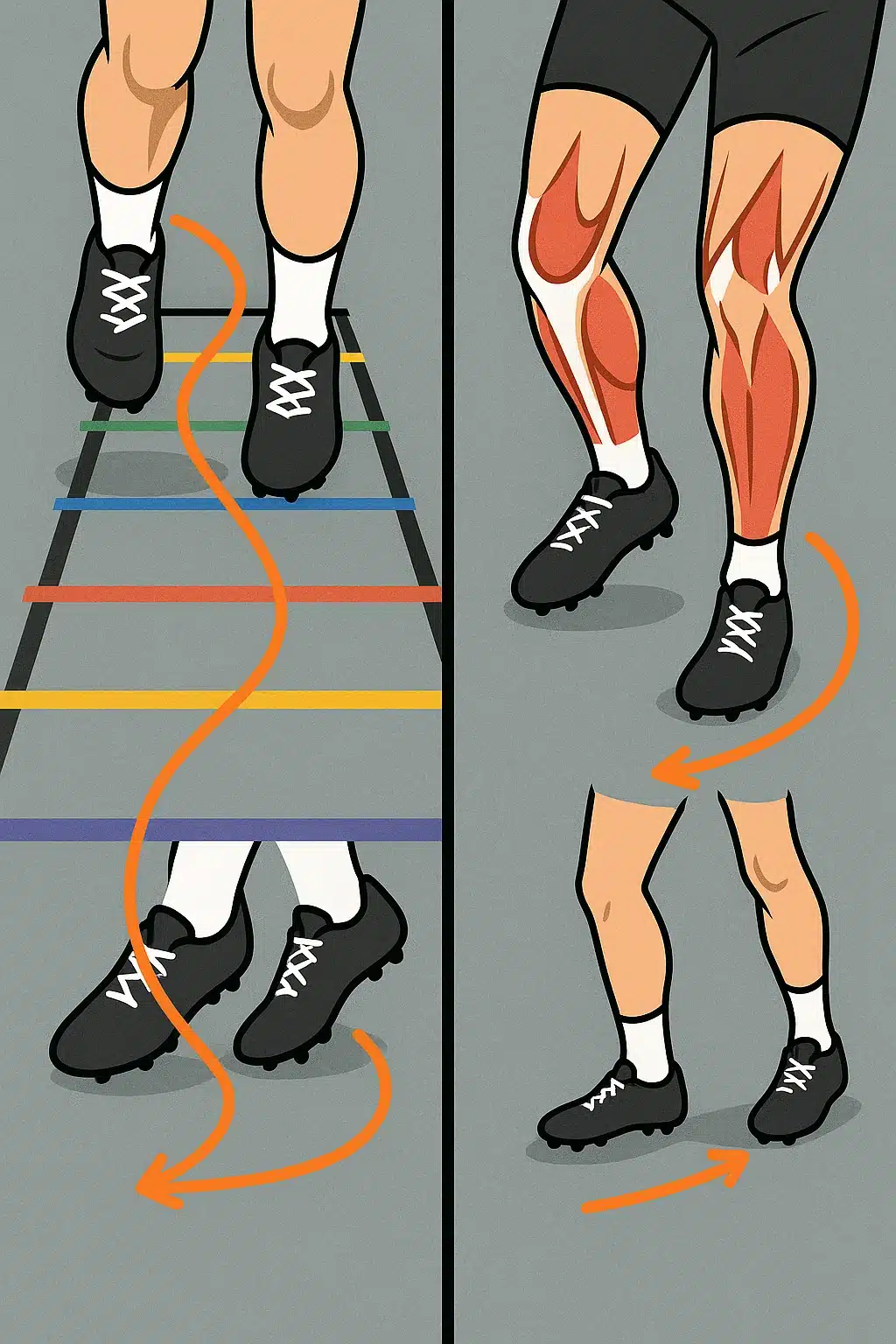
Before diving into any of the powerful soccer agility drills, warming up and conditioning your body properly is non-negotiable. This step maximizes performance benefits while minimizing injury risk during fast, high-impact movements.
Essential Warm-Up Routines to Enhance Performance and Prevent Injury
A dynamic warm-up is your best friend. Start with light jogging or skipping rope for 5-10 minutes to increase blood flow. Then move into dynamic stretches focusing on your calves, hamstrings, quadriceps, hips, and groin—the areas most engaged during agility drills.
Incorporate mobility exercises such as leg swings, high knees, butt kicks, and lateral lunges to prepare joints and muscles for quick direction changes. These movements not only loosen tight muscles but also activate neuromuscular pathways, setting your nervous system to respond swiftly during drills.
Incorporating Plyometric and Conditioning Workouts for Agility
Plyometric training complements agility training beautifully by improving your explosive power. Exercises like box jumps, bounding, and squat jumps train your fast-twitch muscle fibers—the fibers responsible for speed and quick bursts of energy.
Incorporate plyometric drills 2-3 times per week within your training routine to build the raw power and reactive strength that agility drills demand. Combined with endurance conditioning (like interval sprinting or circuit training), you’ll develop stamina to maintain agility throughout the entire match.
Drill 1: The 5-10-5 Shuttle for Explosive Direction Changes
Setup and Proper Execution for Maximized Benefits
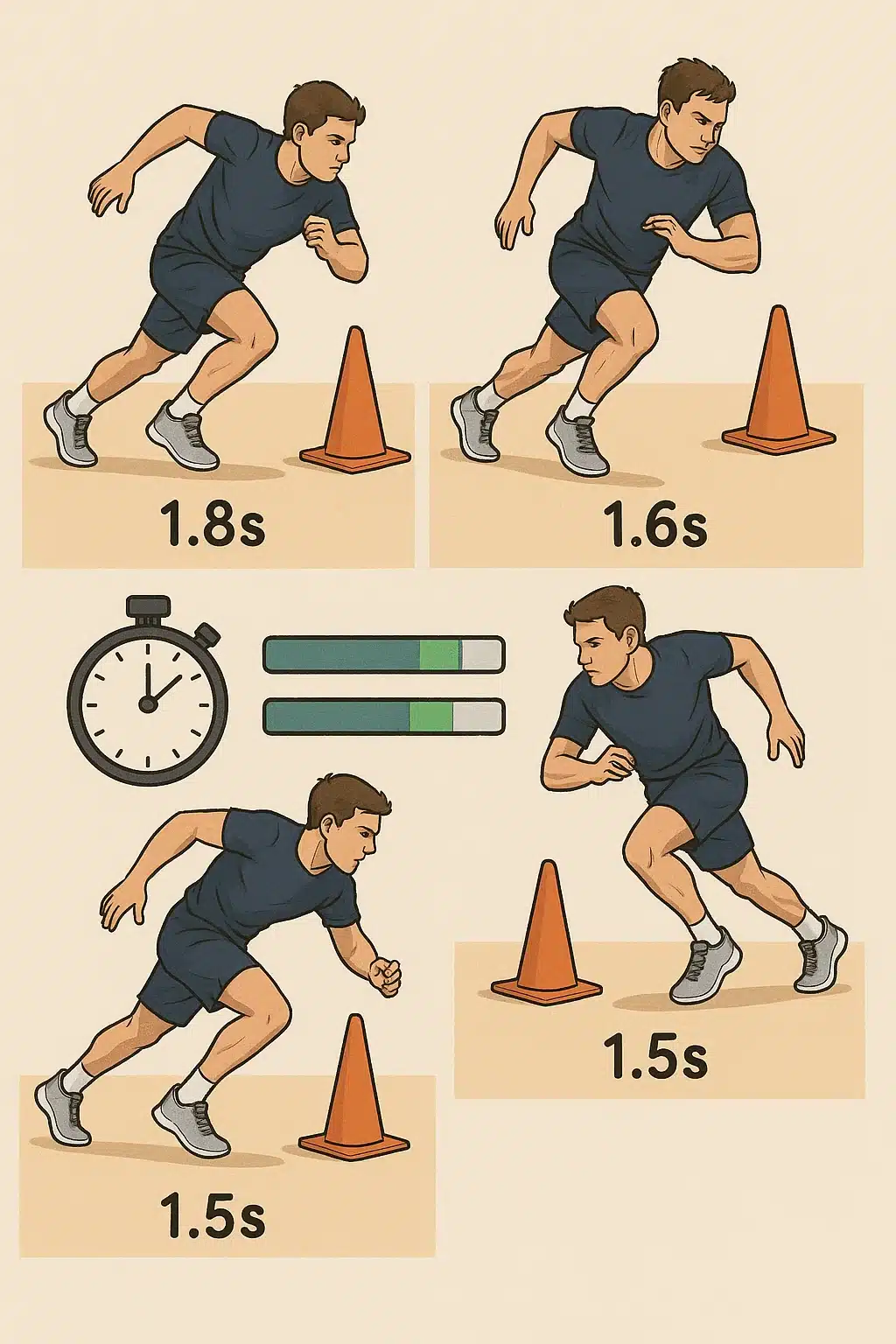
The 5-10-5 shuttle drill, also known as the Pro Agility Shuttle, is a classic but highly effective exercise that enhances your ability to switch directions rapidly. Set up three cones in a straight line 5 yards apart. Begin at the middle cone, sprint 5 yards to the right cone, touch the ground, then sprint 10 yards to the far left cone, touch the ground, and finally sprint back 5 yards to the middle.
Key to success here is staying low and balanced, pushing off explosively at every change of direction, and landing lightly to reduce injury risks. Keep your chest forward and stay on the balls of your feet to boost speed.
Variations Incorporating Ball Control and Sprint Drills
To up the ante, add a ball at your feet during the shuttle. Dribble while sprinting, keeping close ball control. This variation develops your soccer ball agility drills by combining foot speed with technical skill, mimicking in-game scenarios where you need to turn sharply while maintaining possession.
For beginners, start without the ball to master footwork, then add dribbling as confidence improves. Advanced players can integrate sprint and backpedal combos, emphasizing fluidity in acceleration and deceleration.
Drill 2: Cone Ladder Drill for Superior Footwork and Coordination
Step-by-Step Progression for Beginners to Advanced Players
Agility ladders are a fantastic tool for foot speed and coordination. Lay a ladder flat on the ground; start with simple two-feet-in-each-box drills, focusing on quick, light touches. As you progress, introduce variations such as lateral shuffles (sideways steps into each rung), in-and-out foot patterns, and single leg hops.
Begin slow to groove rhythm and form, then increase pace without compromising control. Keep your head up while performing drills to simulate match awareness.
Integrating Dribbling Drills with Ladder Exercises
For soccer ball lovers aiming to boost ball control alongside footwork, place cones intermittently beside the ladder and practice dribbling around them immediately after ladder runs. For example, sprint through the ladder, then perform a quick soccer cone drill, like a tight figure-eight dribble around cones.
This combination fosters coordination between precise foot placement and ball manipulation under the pressure of fast footwork, a skill every attacker or midfielder will appreciate on the field.
Drill 3: Partner Reaction Agility Drill for Quick Decision-Making

How Partner Drills Enhance Reaction Time and Soccer IQ
Adding a partner to your training injects the unpredictability missing from solo drills. The partner reaction agility exercise involves one player standing ready to point or call out a direction, while the other reacts by sprinting or dodging as directed.
This drill is exceptional at training your brain to respond instantly to external stimuli—much like real gameplay situations where anticipation and rapid reactions make all the difference.
Tips for Effective Communication and Drill Adaptation
Clear communication is vital to maximize this drill’s benefit. Use verbal and nonverbal cues to signal changes, and gradually increase the speed of commands to challenge reaction time. You can also incorporate a ball toss—partner throws a pass to any side, and you sprint to receive it—combining agility, reaction, and ball control.
Varying distances and rest intervals can adapt this drill to different skill levels and training goals.
Drill 4: Diamond Cone Drill to Improve Balance and Lateral Movement
Combining Speed Training and Endurance Building in One Drill
Set up cones in a diamond shape with about 5-7 yards between each. You sprint forward to the first cone, shuffle sideways to the next, backpedal to the third, and shuffle sideways again to the start. This continuous circuit challenges your ability to move laterally with balance, maintain speed while changing directions, and control your center of gravity.
The diamond drill not only builds agility but also stamina because it combines repeated efforts with short recovery. Soccer players often benefit from this endurance-agility hybrid as matches demand sustained top-end movement.
Adjusting Distances and Angles to Challenge Different Skill Levels
For beginners, widen cone placement to focus on smooth movement and adequate space. For advanced players, narrow the layout or add extra cones to increase complexity and intensity. Adjust angles—make the diamond more elongated or acute—to simulate different movement demands.
Implementing timed intervals, such as 30 seconds on with 15 seconds rest, also increases conditioning.
Drill 5: Sprint-Backpedal-Turn Drill to Simulate Game-Like Scenarios
Focus on Smooth Transitions and Proper Technique
This drill trains the muscle memory needed for quick acceleration, backward movement, and sharp turning—common in defense and counterattacking. Mark out a straight 10-yard run. Sprint forward full speed, backpedal quickly to the start, then make a sharp turn and sprint again.
Focus on keeping your posture upright while sprinting forward and leaning slightly backward during backpedal. Practice tight, balanced turns without losing speed. This cyclical movement sharpens the fast-twitch responses you’ll use to track opponents or recover quickly.
Incorporating Agility and Speed Training into Daily Routines
Add variations like starting with a fake sprint or changing turn directions randomly to enhance unpredictability. Doing this drill 3-4 times per week improves not only your agility but also your metabolic conditioning and speed endurance.
Drill 6: Agility Drills with the Soccer Ball: Mastering Control Under Pressure
Using Cones and Balls to Develop Quick Footwork and Ball Handling
The ultimate soccer agility drills incorporate the ball itself. Set up a series of cones spaced one yard apart. Dribble the ball quickly through the cones using quick touches (inside and outside of foot), changing pace and direction rapidly between each cone.
This drill forces you to blend precision footwork with sharp agility, precisely the skill set needed when defenders pressure you on a tight field. Maintain a low center of gravity, eyes up, and pump quick bursts of speed.
Advanced Variations for Enhanced Coordination and Multi-Directional Movement
Try using only one foot to dribble through cones or integrate feints and skill moves between cones. Another advanced version involves a partner passing balls intermittently as you maneuver through cones, forcing rapid adjustments.
Over time, these drills build superior multi-directional movement with ball control, granting you an edge during matches.
Designing a Soccer Agility Drills Routine for Consistent Improvement
Combining Drills for Balanced Development of Speed, Coordination, and Ball Control
To get the best results, combine several drills in your training sessions. For example, start with dynamic warm-ups, move into the 5-10-5 shuttle for explosive speed, follow with ladder drills to sharpen footwork, then partner reaction drills, and finish with ball control cone drills. This layered approach covers all critical aspects—speed, reaction, coordination, balance, and technical skill.
Tracking Progress and Adjusting Training Intensity Over Time
Keep a training journal or video record to monitor times, repetitions, and skill quality. Increase the complexity of drills once you master current levels by adding speed, volume, or ball control components. Don’t forget to schedule rest and recovery phases in your routine.
Indoor and At-Home Agility Drills for Soccer Fans With Limited Space
Creative Use of Household Items and Small Spaces for Effective Training
Even if you don’t have access to a formal field, you can still do quality agility work indoors or in your backyard. Use tape or chalk to mark ladder patterns on the floor, set up water bottles or small objects as cones, and do shuttle runs or ladder footwork drills.
Scissor kicks, quick feet taps on steps or small platforms, and wall passes with a soft ball all support agility at home. These adaptations make sure you can train consistently despite space constraints.
Maintaining Motivation and Consistency Without a Formal Field
Set goals, use music or timers, and challenge family or friends to keep sessions engaging. Mixing drills or setting mini-challenges (like best time or cleanest dribble) turns agility training into fun, competitive practice that builds habits.
The Science of Recovery: How Rest and Nutrition Boost Agility Gains
Strategies to Reduce Fatigue and Prevent Overtraining
Agility drills are demanding and require proper recovery to be effective. Aim for 7-9 hours of sleep, stay hydrated, and use active recovery movements like light jogging or stretching on rest days. Listen to your body—if soreness or fatigue persists, adjust intensity to avoid injuries.
The Role of Mental Agility and Visualization Techniques in Soccer Performance
Your brain is just as important as muscles when developing soccer agility. Practice mental visualization—imagine yourself executing drills perfectly and reacting quickly. This primes your nervous system and enhances physical execution.
Combine mindfulness and focus exercises in your routine to sharpen in-game decision-making, making your agility truly game-ready.
Frequently Asked Questions About Soccer Agility Drills
How Often Should I Perform These Drills?
For optimal improvement, do soccer agility drills 3-4 times per week, integrating rest and recovery days. Consistency over time is key, with intensity adapted to your fitness level.
What Equipment Is Essential for Effective Agility Training?
Basic equipment includes cones, an agility ladder, a stopwatch, and soccer balls. At home, household objects can substitute cones, and tape can mark spaces. An open field or gym space is ideal but not always necessary.
Can These Drills Improve Defensive and Offensive Skills Equally?
Absolutely. Agility drills build fundamental movement qualities applicable to all positions. Defenders benefit from reaction and change of direction drills, while attackers improve dribbling speed and explosive starts.
Are Soccer Ladder Drills Only for Footwork, or Do They Also Enhance Speed?
Ladder drills primarily target footwork and coordination but indirectly improve speed by promoting faster neuromuscular responses and refined mechanics during sprinting.
How Can I Incorporate Ball Control Into Agility Drills Without Losing Speed?
Start by mastering footwork without the ball, then gradually include dribbling at controlled speeds. Use short, sharp touches and maintain your posture. With practice, ball handling will become seamless even at full speed.
Quick Takeaways/Key Points
- Agility in soccer combines speed, lateral movement, quick decision-making, and coordination.
- Proper warm-up and plyometric training are essential steps before agility drills.
- Drills like the 5-10-5 shuttle, cone ladder drills, and partner reactions target different agility components effectively.
- Integrating ball control into agility drills mimics real-game challenges and improves overall skill.
- You can train agility indoors or with limited space using creative setups and household items.
- Recovery, nutrition, and mental focus are critical complements to physical agility training.
- Regular practice with progression and variety ensures consistent growth and better performance on the field.
Conclusion
For every soccer ball lover looking to level up their game, mastering soccer agility drills is an absolute must. These drills are not just about getting faster—they’re about becoming a smarter, more coordinated player who reacts instantly to the unpredictable flow of soccer. By incorporating the six powerful drills outlined here—ranging from explosive shuttle runs to partner reaction exercises—you’ll develop balanced agility that translates directly into better performance during matches.
Remember, success comes with dedication. Start with mastering technique, progressively increase intensity, and always prioritize your body’s preparation and recovery. Whether you train on a full field or in your living room, the commitment to consistent agility work will pay off with quicker feet, sharper moves, and greater confidence on the ball.
Now it’s your turn—grab some cones, lace up those cleats, and put these drills into action today. Your next standout performance awaits!
Happy training!