

Kicking a soccer ball might seem straightforward, but mastering it is an art that requires dedication, technique, and finesse. If you’re a soccer ball lover eager to elevate your game, understanding how to kick soccer ball properly is the foundation to becoming a skilled player. Whether you’re aiming to strike powerful shots, deliver pinpoint passes, or execute tricky chip shots, the right technique makes all the difference between a good kick and a great one.
In this comprehensive guide, I’ll walk you through six powerful tips that cover everything from the basics of stance and ball control to advanced bending kicks and knuckleballs. We’ll uncover the secrets behind foot placement, striking methods using different parts of your foot, common pitfalls to avoid, and effective drills to sharpen your skills. You’ll also discover how to select the best equipment to enhance your kicking and learn mental strategies that keep you confident under pressure. So, if you’ve been wondering how to kick a soccer ball with power and accuracy — read on! This detailed, step-by-step breakdown will have you kicking like a pro in no time.
Understanding the Basics: Player Stance and Ball Control
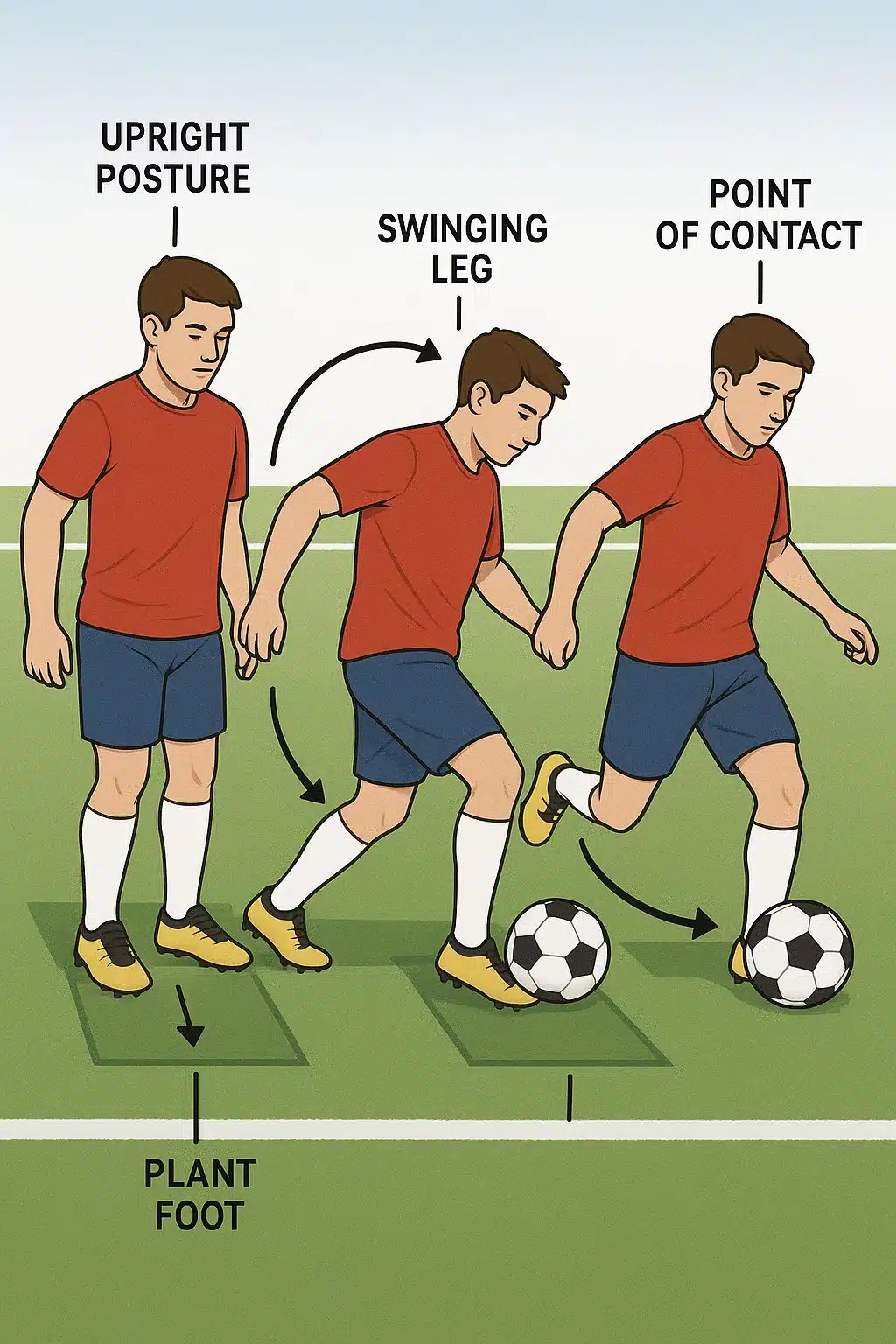
Before rushing into striking the ball, focus on your player stance and ball control—they’re the bedrock for executing any kick with precision. If your stance is off or your control weak, power and accuracy suffer. Let’s dive into the elements that set you up for success.
Proper Plant Foot Positioning for Optimal Balance
Your supporting or plant foot is your anchor point. Its placement dictates your balance and directs the ball’s trajectory. The plant foot should be placed about 6-12 inches to the side of the ball, pointing in the direction you want the ball to travel. This positioning steadies your body and allows your kicking leg freedom of motion.
For example, if you are kicking the ball straight ahead, your plant foot should point straight forward. However, if aiming to curve or bend the ball, angle your plant foot slightly to influence the spin. Too far forward or backward can throw off your balance and power. Many beginners tend to place their plant foot too close or directly behind the ball, resulting in poor accuracy and a weak strike.
A useful drill: mark the spot where you plant your foot and practice striking the ball while adjusting this position. Find the spot that maximizes your control and consistency.
Maintaining Ankle Stability to Improve Footstrike Techniques
The ankle stability of your kicking foot is critical. When your ankle is locked and firm, the striking surface becomes solid, allowing for a clean and powerful contact. Conversely, a floppy or bent ankle absorbs the impact and dissipates energy, robbing your kick of power.
How do you achieve that? Focus on keeping the foot firm and your toes pointed slightly downward during contact. This technique aligns your laces perfectly for powerful kicks and the inside of your foot nicely rounded for accurate passes.
Try practicing in front of a mirror or with a coach’s feedback to strengthen this habit. Over time, you’ll notice that a stable ankle correlates directly with increased distance and accuracy.
Mastering the Fundamental Kicking Styles
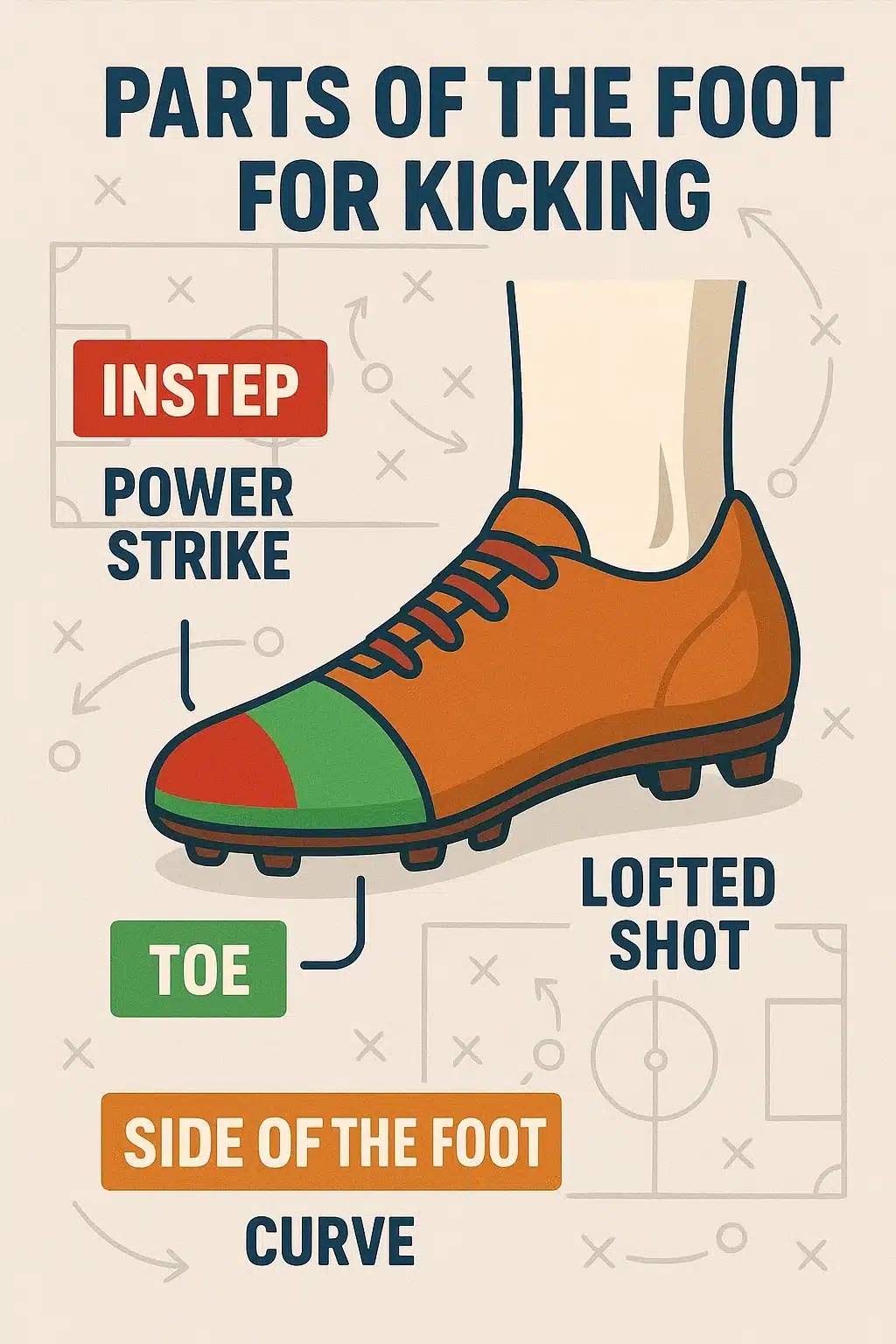
Now that your stance and control are sharp, we explore the best techniques for kicking a soccer ball. The three fundamental styles—inside-foot passes, laces strikes, and chip shots—each serve different purposes in gameplay.
Using the Inside of the Foot for Accurate Ground Passes
The inside of the foot provides the largest surface area for contact, making it ideal for accurate, short passes. This method is ideal when you want to maintain possession and keep the ball grounded.
To execute:
- Approach the ball at a slight angle.
- Plant your non-kicking foot beside the ball.
- Swing your kicking foot with the ankle locked, contacting the ball with the flat inside edge.
- Follow through straight towards your target.
For example, midfielders use this technique heavily to distribute the ball effectively across the field. Practicing wall passes repetitively using this method builds muscle memory and improves touch.
Striking with the Laces for Powerful Goal Shots
When you want power, the laces strike is your go-to. This style channels maximum force into the ball, and it’s commonly used for shooting long-range goals or firing crosses.
Steps include:
- Running up to the ball with speed.
- Placing your plant foot roughly 6 to 12 inches to the side and pointing toward the target.
- Locking your ankle and striking through the center of the ball with your shoelaces.
- Driving your foot forward in a controlled swing.
Think of famous players like Cristiano Ronaldo, whose thunderous shots are all about perfecting the laces strike along with follow-through. The secret lies not just in power but also in timing and clean ball contact.
Executing the Chip Shot to Lift the Ball Over Opponents
The chip shot is a more delicate kick used to lift the ball over an opponent’s head or goalkeeper with precision.
To perform:
- Approach the ball at a very shallow angle.
- Position your foot under the ball, open your instep.
- Use a quick, upward snapping motion with your ankle to pop the ball.
- Aim to hit beneath the ball’s center, generating loft and backspin.
This technique requires finesse over power and is often used in tight scenarios such as one-on-ones with the keeper. Practicing chip shots over cones or defenders will develop your feel and touch immensely.
Step-by-Step Guide to Kicking the Soccer Ball Properly
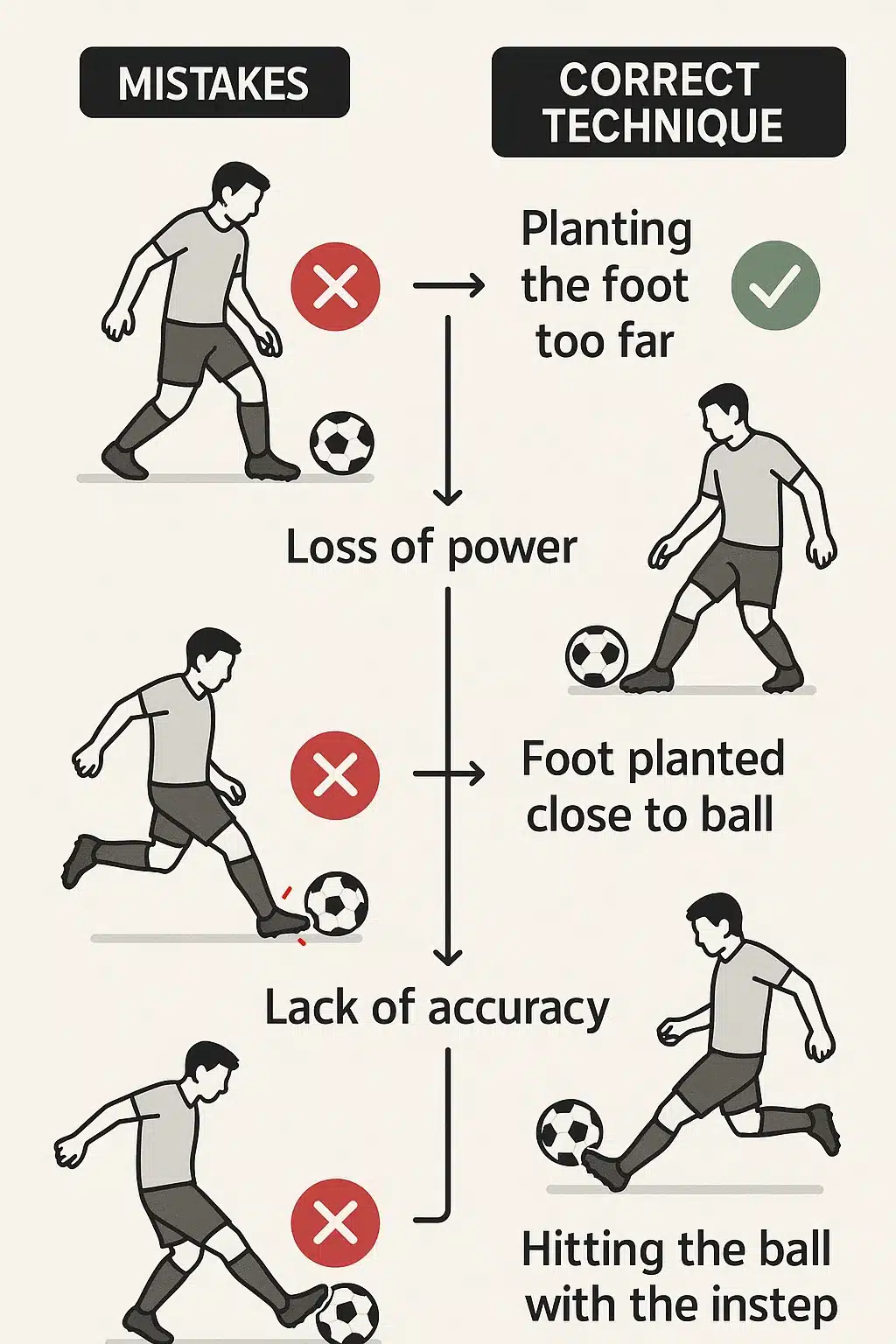
Let’s break down the step-by-step guide to kicking a soccer ball properly. Proper sequencing ensures every kick counts.
Approach Angle and Foot Placement
Start with a controlled run-up — about 3 to 5 steps is optimal. Too few steps reduce power, too many decrease control. Approach the ball at about a 30 to 45-degree angle for most kicks; this facilitates natural hip rotation and swing.
Your plant foot should rest alongside the ball, about 6 to 12 inches away, pointing precisely to where you want to send the ball. This foot provides balance and alignment.
Timing Your Strike and Ensuring a Clean Contact
Timing is crucial. For a clean strike, keep your eye on the ball until the moment of contact. Swing your kicking leg forward with controlled speed, locking your ankle at impact. The middle part of your foot should meet the ball firmly.
Avoid hitting the ball with the toes as it reduces power and can cause injury.
Follow-Through Techniques to Enhance Power and Accuracy
Power and accuracy increase with a proper follow-through motion. After contact, let your kicking leg continue its natural arc toward your target. For powerful shots, a high follow-through is common. For passes or chips, a shorter forward motion often suffices.
Follow-through also helps reduce stress on your kicking leg and improves balance.
Advanced Techniques: Curving, Knuckleball, and Long Passes

Once basics are nailed down, moving into advanced kicks can truly set you apart.
How to Curve a Soccer Ball: Bananar and Bending Kicks
Curving or bending the ball involves applying spin. Here’s how to bend a ball like a pro:
- Approach the ball at a slight angle.
- Strike the ball off-center with the inside or outside of your foot.
- Snap your ankle inward or outward at the moment of contact to create side spin.
- Follow through around the ball, not straight through it.
This technique causes the ball to follow a curved, predictable trajectory — perfect for free kicks or whipping in dangerous crosses. Players like David Beckham have made this kick legendary.
Creating Unpredictable Ball Trajectory with the Knuckleball Technique
The knuckleball is a disastrous shot for goalkeepers, characterized by its wobbling, unpredictable flight path.
To strike a knuckleball:
- Hit the ball with the laces, but instead of following through, stop abruptly, minimizing spin.
- Strike the ball near its center to create an erratic motion.
Mastering this requires practice, timing, and strong core muscles. When pulled off well, the ball flutters in the air, making saves incredibly difficult.
Generating Power for Long-Distance Passes
For long passes, combine the laces strike with a longer run-up and explosive leg extension.
Key points:
- Increase your run-up speed for momentum.
- Plant your foot firmly to channel force.
- Swing your kicking leg fully, locking your ankle at impact.
- Use your hips and core to maximize power transfer.
This technique is vital for switching play or launching counterattacks effectively.
Common Mistakes When Kicking and How to Avoid Them
Even seasoned players slip up. Here are common errors and how to fix them.
Avoiding Head Movement Too Early
Many players lift their eyes too early, losing track of the ball. Keep your gaze locked on the ball until right after contact to ensure precision.
Preventing the Ankle from Being Too Loose During Strike
A floppy ankle reduces both power and control. Practice locking your ankle and stabilizing your foot during training exercises focusing on foot position awareness.
Correcting Poor Follow-Through and Plant Foot Placement
An incorrect follow-through can sap momentum. Always swing through the ball confidently, and double-check that your plant foot is properly aligned.
Effective Practice Drills to Improve Accuracy and Power
Deliberate practice boosts skill faster. Here’s how:
Solo Drills: Wall Passing and Target Shooting
- Kick the ball against a wall aiming for a marked spot repetitively.
- Use targets on the ground at various distances for shooting drills.
- These drills build muscle memory and enhance ball control.
Partner Drills for Realistic Passing and Shooting Scenarios
Practice give-and-go passing focusing on timing and foot placement with partners. Incorporate shooting drills simulating game pressure.
Incorporating Footwork and Control in Drills
Work on agility ladders and cone drills to improve foot coordination, which directly impacts kicking accuracy.
Choosing the Right Equipment to Enhance Your Kicking Skills
Proper gear supports your development.
Selecting the Appropriate Soccer Ball for Training and Play
Use a size 5 ball (standard) if you’re an adult or older youth. A well-inflated ball with good grip improves striking feel. Training balls can have different textures for specialized practice.
See official FIFA approved balls.
Importance of Soccer Cleats and Footwear for Grip and Stability
Wear cleats suited for your playing surface. Firm ground cleats provide traction to prevent slipping during plant foot contact, enhancing power and precision.
Mental and Physical Preparation for Optimal Performance
Your mindset plays a big role.
Building Confidence Through Visualization and Repetition
Visualize successful kicks before training. Repetition builds confidence and automaticity.
Maintaining Body Balance and Focus Under Pressure
Practice breathing techniques and balance drills. Staying composed guarantees technical skills transfer to matches.
Integrating Kicking Skills into Offensive Soccer Strategies
Technique shines brightest within strategy.
Positioning Yourself to Maximize Passing and Shooting Opportunities
Read the game to position your plant foot and body effectively, enabling sharp passes and goal shots.
Combining Footstrike Techniques with Tactical Awareness
Mix inside foot passes, laces strikes, and chips depending on the situation to outsmart defenders.
FAQs
Q1: How to kick a soccer ball with power and accuracy?
Focus on proper plant foot placement alongside the ball, lock your ankle on the kicking foot, strike through the center or slightly off-center depending on technique, and follow through fully. Combining technique with controlled approach and consistent practice leads to powerful, accurate kicks.
Q2: What is the best technique to kick a soccer ball for beginners?
Beginners should master the inside foot pass to build accuracy and control. Starting with short passes, practicing plant foot positioning, and gradually increasing distance will develop a solid kicking foundation.
Q3: How can I curve a soccer ball when kicking?
To curve effectively, strike the ball slightly off-center with the inside or outside of your foot, and snap your ankle inward or outward to generate spin. Approach the ball at an angle and follow through around it. This technique creates bending trajectories like banana or curling shots.
Q4: What are common mistakes when kicking a soccer ball?
Typical mistakes include improper plant foot placement (too close or behind the ball), locking the ankle loosely, lifting your head too early, and poor follow-through. Each negatively impacts power and accuracy, but they can be corrected through focused drills and coaching.
Q5: How to practice kicking a soccer ball at home effectively?
Use wall passing drills to improve control and accuracy. Mark targets and practice both inside foot passes and laces strikes. Repetition and consistent timing improve muscle memory. Integrate footwork drills for balance and ankle stability.
Quick Takeaways/Key Points
- Plant foot positioning directly influences kicking direction and balance.
- Locking the ankle on the kicking foot improves power and clean contact.
- The inside of the foot is best for accurate passes; laces for powerful shots.
- Follow-through impacts both power output and accuracy.
- Advanced kicks like curve and knuckleball require mastering ball spin and timing.
- Avoid common mistakes by maintaining focus, stance, and foot technique.
- Use targeted drills consistently to build muscle memory and confidence.
Conclusion
Mastering how to kick soccer ball like a pro doesn’t happen overnight, but with mindful practice and attention to detail, you can elevate your game significantly. Start by perfecting your stance, plant foot placement, and ankle stability—all the basics build the foundation. Then, experiment with different kicking styles, from crisp inside-foot passes to thunderous laces strikes and clever chip shots. Remember, avoiding common mistakes and following through on every kick will make your training more effective.
Practice actively with drills that build both power and accuracy, and choose the right equipment to support your progress — including quality balls and soccer cleats. Importantly, don’t forget the mental side: stay confident, visualize your kicks, and focus under pressure. Your body and mind working together is what makes a successful soccer player.
So, soccer ball lovers, seize this knowledge and hit the field with renewed confidence. Commit to these six powerful tips, and watch your kicking skills soar! Ready to kick like a pro? Lace up, focus, and start practicing today. Your next goal awaits!