

Warm ups aren’t just a formality before stepping onto the pitch — they are a game changer! As a fellow soccer ball lover, you know that kicking off any session without warming your body properly is like trying to score without a goalpost. That’s why soccer warm up exercises are essential. They prepare your muscles, sharpen your reflexes, and get you mentally tuned for the tactical battles ahead. Having tested, tweaked, and trusted countless drills through years of playing and coaching, I’m excited to walk you through five powerful warm up exercises designed not just to fire you up but also to prevent injuries and boost performance.
In this comprehensive guide, we’ll break down the science behind warming up, explain the critical components of an effective warm up, and explore how you can tailor these exercises whether you’re just starting out, playing youth soccer, or gearing up for a competitive match. You’ll also find insights on integrating strength, agility, and technical skills into your routine—ensuring every minute of your warm up counts. So lace up, and let’s kick things off with the ultimate warm up knowledge every soccer enthusiast deserves!
Understanding the Importance of Soccer Warm Up Exercises
The Science Behind Warming Up: Muscle Activation and Neuromuscular Stimulation
Before diving into drills, it’s crucial to understand why warming up is vital. Your muscles don’t just instantly fire into action when you start sprinting or dribbling. They require a gradual increase in blood flow and temperature, which enhances elasticity and reduces stiffness. This process, called muscle activation, helps prepare fibers to contract more efficiently and powerfully.
Neuromuscular stimulation is another facet — this is where your brain and muscles sync, improving coordination and reaction time. Research shows that dynamic warm ups enhance nerve conduction velocity, meaning quicker responses during match play. For example, a study published in the Journal of Sports Sciences demonstrated athletes who engage in dynamic warm ups perform faster sprints and have better agility than those who stretch statically.
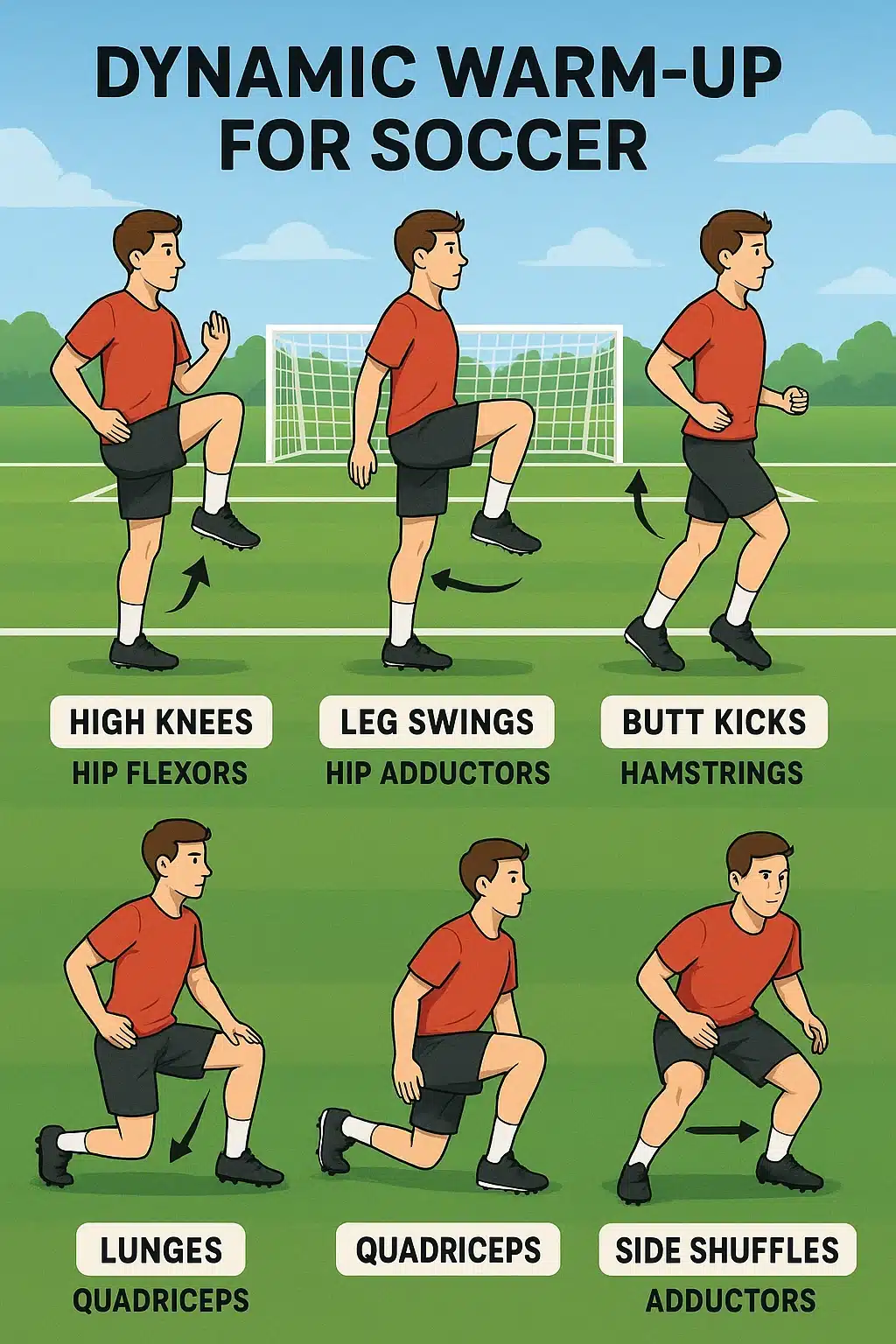
Taking this into the field, soccer warm up exercises activate key muscle groups like the quadriceps, hamstrings, and calves, while priming your nervous system for intricate footwork and ball control. This scientific backbone makes warming up not a mere ritual, but a cornerstone of athletic excellence.
Injury Prevention Through Effective Pre-Game Preparation
Nothing wrecks the game day vibe faster than an injury. Sprains, strains, and muscle tears are often linked to insufficient warm ups. Effective soccer warm up exercises increase tissue temperature and joint lubrication, significantly reducing injury risk.
Dynamic stretches and activation work help elongate muscles without overstretching, preserving tendon integrity. According to the American College of Sports Medicine, a warm up routine that includes movement-specific drills can decrease injury incidence by up to 30%. For soccer players, whose sport demands sudden stops, rapid changes in direction, and explosive kicks, this is a literal lifesaver.
Moreover, warming up promotes psychological readiness, easing pre-game anxiety and boosting focus. This mental prep is just as key to injury prevention because distracted or tense muscles tend to respond slower and less effectively during play.
Key Components of a Soccer Warm Up Routine
Dynamic Stretching: The Foundation for Flexibility and Mobility
Dynamic stretching involves moving parts of your body through a range of motion repeatedly, rather than holding a stretch. Unlike static stretching, which can reduce muscle strength if done pre-activity, dynamic stretches like leg swings, walking lunges, and hip circles increase core body temperature and flexibility specific to soccer movements.
Flexibility training here isn’t just about touching toes; it’s about preparing functional movements vital for quick turns and long kicks. For example, leg swings gently prep your hips and hamstrings in a soccer-specific way, unlike traditional static hamstring stretches that might stiffen the muscles.
Agility and Coordination Exercises to Enhance Footwork and Balance
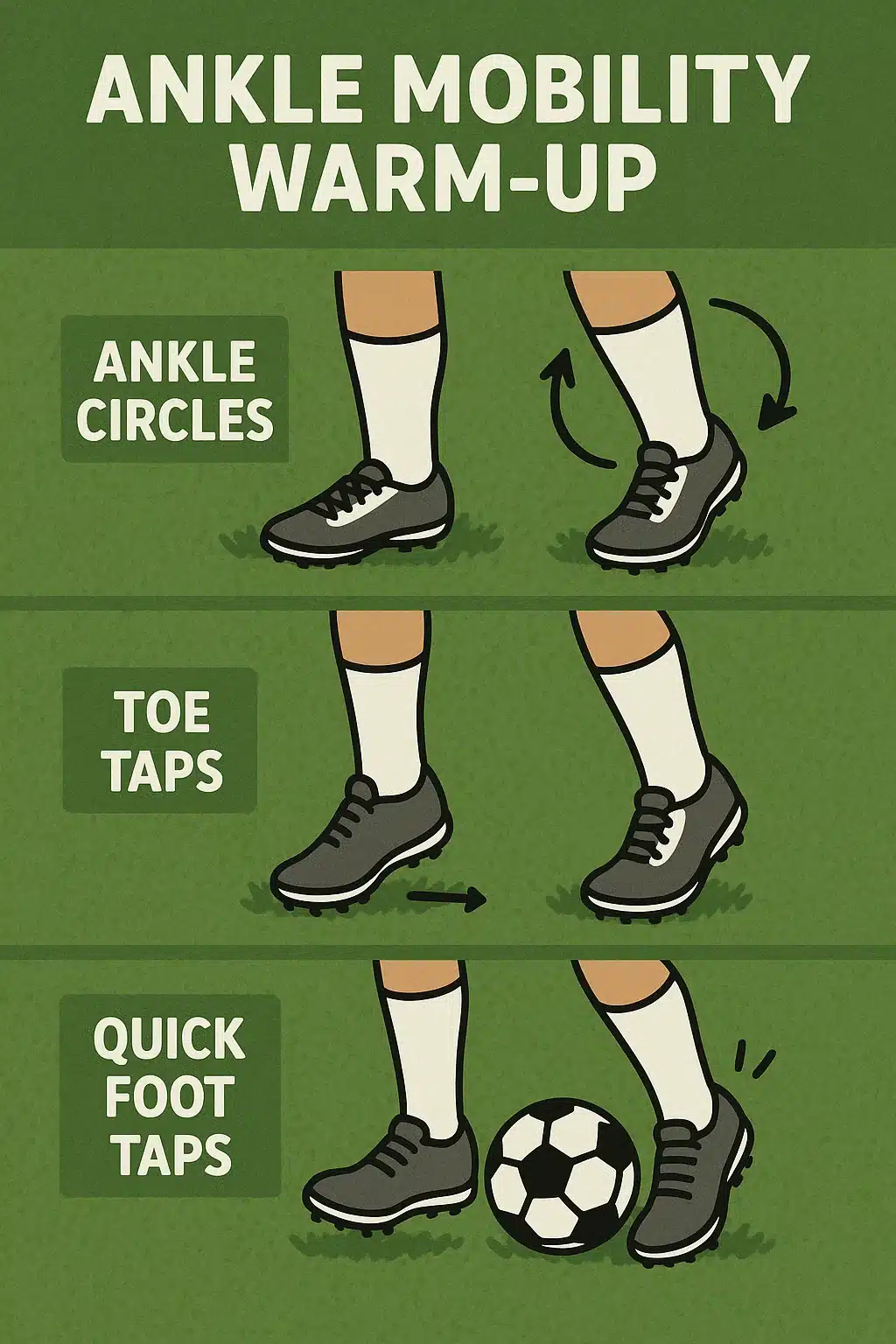
Agility is king on the soccer field. Exercises that challenge your body to abruptly change speed and direction not only improve your balance but also boost brain-body communication. Drills using cones or agility ladders demand foot quickness while engaging your proprioception – your body’s awareness of position.
Coordination-focused exercises, like lateral fast feet or crossover steps, sharpen your ability to react to opponents and maintain control during tricky plays. These key skills separate good players from great ones by enabling fluid, precise movement.
Strength and Power Activation for Explosive Performance
Soccer isn’t just about finesse; it requires bursts of power — think sprinting past a defender or launching a shot. Warm ups that target strength activation, such as power skips and glute bridges, engage large muscle groups primed for explosiveness.
Activating the core, glutes, hamstrings, and quadriceps ensures you can generate force safely and effectively. This part of the warm up often uses bodyweight exercises or resistance bands, making it adaptable for all levels.
Technical Skill Drills Incorporated in Warm Up
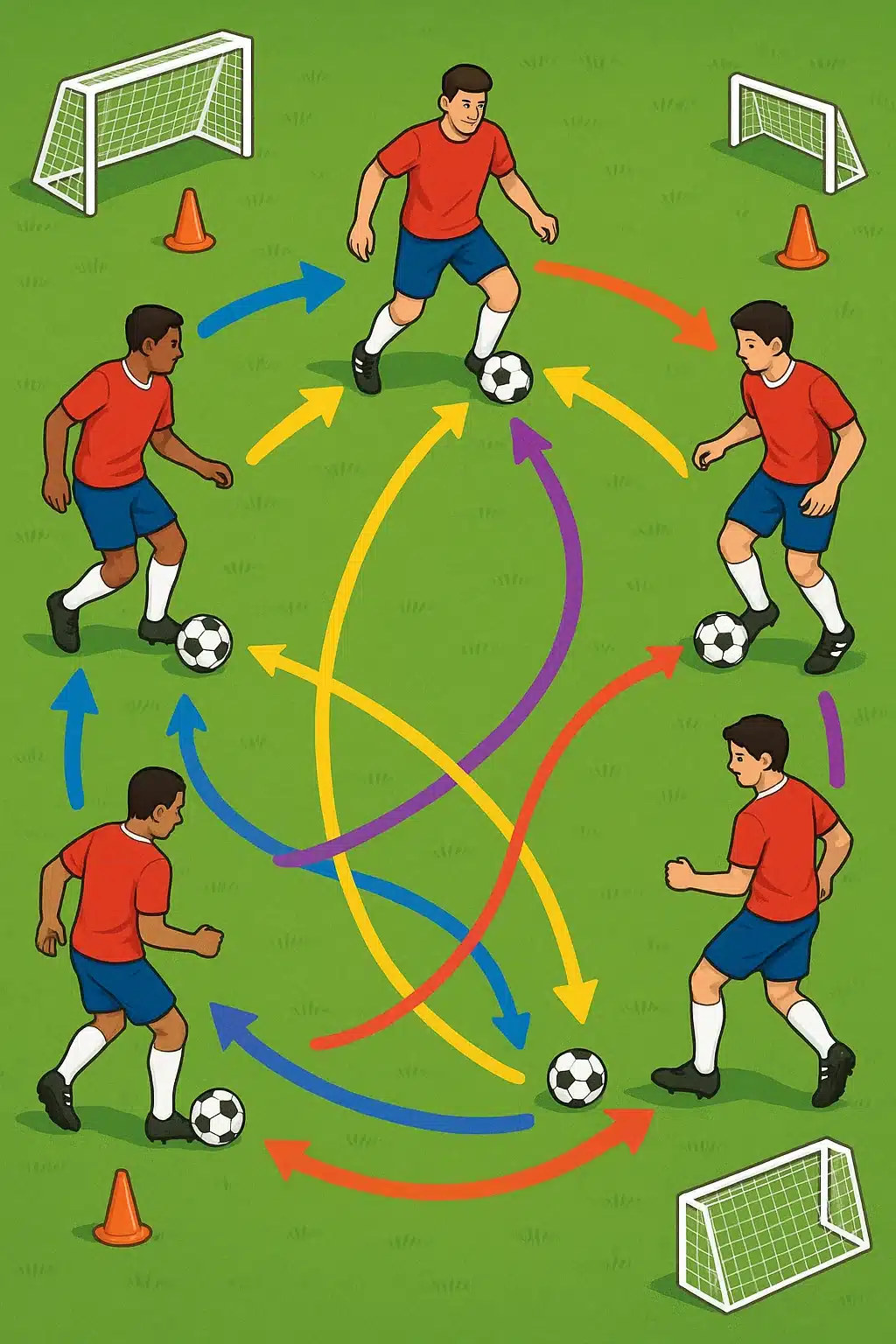
It pays dividends to integrate ball work early. Coordinating technical drills like small-sided passing, quick touches, or dribbling at low intensity warms the neural pathways used during matches. These warms up your skillset alongside your muscles and mentally tune you to the ball’s movement.
Detailed Breakdown of the 5 Powerful Soccer Warm Up Exercises
Dynamic Leg Swings and Walking Lunges for Flexibility Training
Proper Technique and Progression: Start with forward and sideways leg swings, keeping your posture upright and swinging your leg through a controlled range, around 10-15 repetitions each side. Follow with walking lunges – take a step forward lowering your back knee towards the ground, then push off to the other leg, performing 10 lunges per leg. Remember to engage your core and avoid leaning too far forward.
Why This Works: Leg swings actively stretch the hip flexors, hamstrings, and adductors, replicating motions crucial for sprinting and directional changes. Walking lunges enhance hip mobility and strengthen stabilizers, preparing you for tackling and quick cuts.
Agility Ladder Drills to Improve Speed and Coordination
Utilizing Cones and Ladders for Enhanced Footwork: Using an agility ladder, perform quick feet drills such as high knees, lateral in-and-outs, and single-leg hops. Repeat each pattern 2-3 times moving with purpose but control. For added complexity, set cones for zigzag runs or shuttle sprints.
Why This Works: This trains both speed and fine motor control, mimicking in-game situations that demand rapid acceleration and sharp directional shifts. It also conditions your central nervous system for faster muscle firing patterns.
Power Skips and Glute Bridges for Muscle Activation
Targeting Glutes, Hamstrings, and Quadriceps Effectively: Power skips involve skipping forward with exaggerated knee lift and an explosive push-off, performed over 15 meters and repeated twice. Glute bridges lie on your back, feet flat, lifting the hips upward by squeezing glutes, holding for a count of two, and lowering down slowly — do 15 reps for 2 sets.
Why This Works: Power skips activate your fast-twitch muscle fibers vital for sprinting. Glute bridges strengthen your posterior chain, a hotspot for injury if neglected but essential for stability and power in shots or jumps.
Soccer Ball Control Warm Up Drills to Hone Technical Skills
Small-Sided Passing and Dribbling Routines: Pair up or work in small groups to practice quick wall passes, two-touch control, and tight dribbling within a 5×5 meter space. Incorporate changes in direction and pace, focusing on soft touches and precision.
Why This Works: This hones your first touch while increasing neural efficiency in ball handling—setting a solid foundation for high-paced game situations.
Quick Jogging and High Knees for Cardiovascular Activation
Integrating Running Drills into Warm Up to Boost Endurance: Finish off your warm up with 3 minutes of light jogging interspersed with 20 seconds of high knees. Keep movement smooth and controlled, progressively increasing your heart rate.
Why This Works: It activates the cardiovascular system, ensuring your energy systems are primed for sustained activity. It also warms the Achilles and calves, which are prone to tighten during long play.
Designing a Pre-Game Warm Up Routine for Various Skill Levels
Best Dynamic Soccer Warm Up Exercises for Beginners
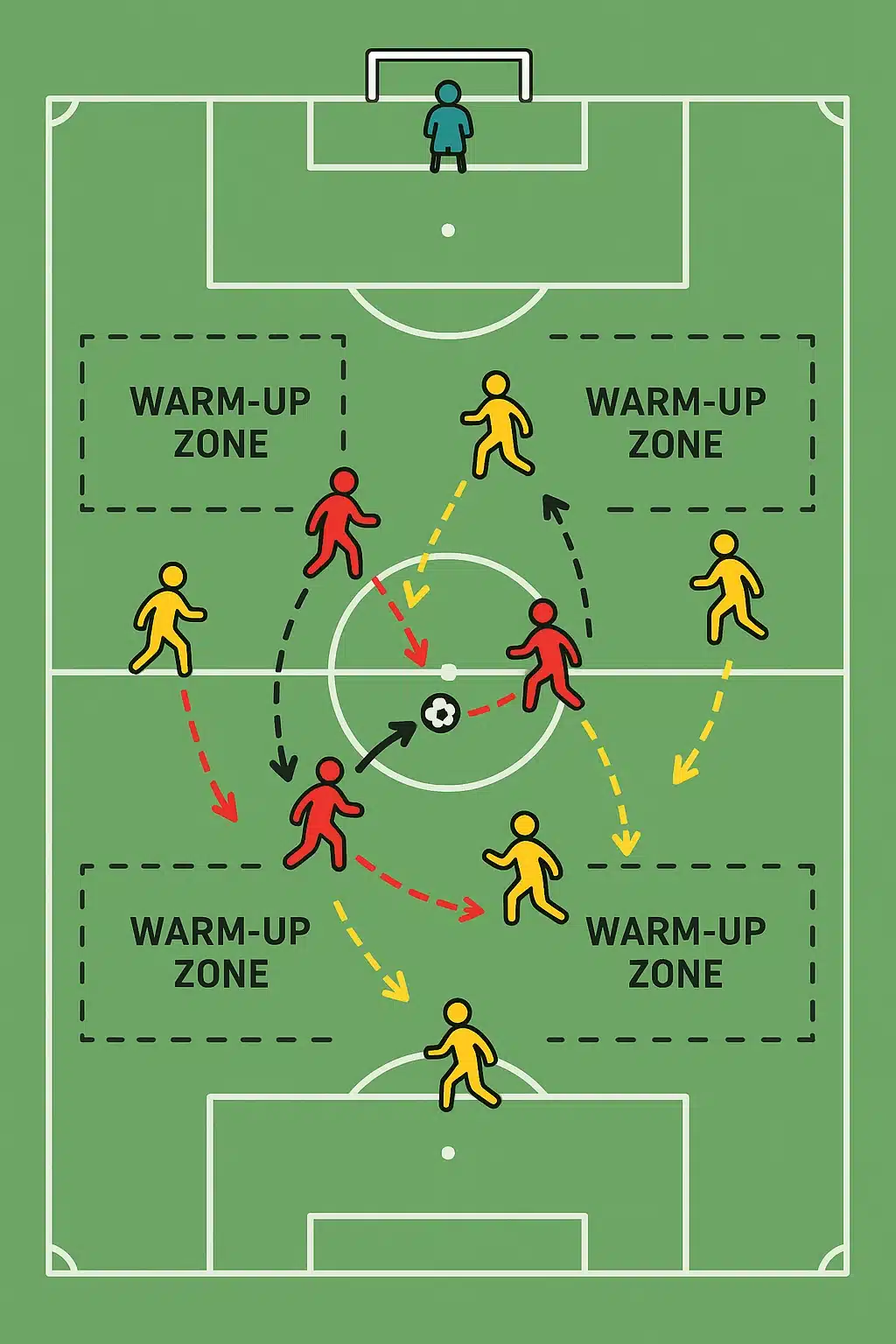
For beginners, focus primarily on basic movement patterns that build flexibility and coordination safely. Incorporate dynamic stretches like leg swings, basic walking lunges, and slow agility ladder drills. Keep intensity moderate to avoid fatigue before play.
Tailoring Warm Up Routines for Youth Soccer Players
Youth players benefit from fun, varied drills that embed agility and ball skills early. Adding games that incorporate cones and soccer balls can help maintain engagement while improving technique and fitness.
Warm Up Exercises to Elevate Competitive Match Readiness
For competitive players, include advanced sprint drills, resistance-band power activations, and high-intensity ball control exercises. The warm up should simulate game intensity progressively.
Incorporating Strength and Agility Together in Warm Ups
Combining Resistance Bands with Plyometric Movements
Using resistance bands during lateral walks or monster walks enhances hip stability. Pair this with plyometric moves like bounding and quick jumps to increase explosiveness.
Training Techniques to Improve Speed and Explosiveness
Incline sprints, resisted sprints, and bounding drills all integrate seamlessly into warm ups to cultivate acceleration and maximal power without overexerting.
Using Warm Up Equipment: Cones, Ladders, and Resistance Bands
Benefits and Proper Setup for Effective Drills
Cones are versatile for marking agility drills; ladders build foot speed and coordination, and resistance bands target strength activation safely. Setting up circuits or stations with these tools maximizes warm up efficiency and engagement.
Soccer Warm Up Exercises Focused on Goalkeepers
Specialized Muscle Activation and Coordination Drills
Goalkeepers need quick lateral moves and explosive dives. Warm ups should include side shuffles, reaction ball drops, and activated core strengthening.
Stretching Techniques for Flexibility and Reaction Time
Dynamic hamstring stretches, torso rotations, and wrist mobility drills prepare goalkeepers for rapid multi-directional activity.
Common Mistakes to Avoid During Soccer Warm Up
Overstretching and Neglecting Dynamic Movements
Static stretching before play can sap muscle power; so avoid prolonged holds. Neglecting dynamic moves can leave the body underprepared.
Poor Progression Leading to Increased Injury Risk
Jumping into intense drills without gradual buildup invites injury. Warm ups should progressively increase in intensity.
Measuring the Effectiveness of Your Warm Up Routine
Tracking Performance Improvements and Injury Reduction
Use basic data logging (sprint times, agility tests) and monitor injury frequency to assess warm up benefits.
Adjusting Routines Based on Player Feedback and Match Demands
Soliciting player input and tailoring warm ups to specific game conditions ensures optimal readiness.
Advanced Insights: Neuromuscular Stimulation’s Role in Soccer Conditioning
How Targeted Warm Ups Enhance Athletic Performance Beyond Tradition
Focused neuromuscular training can recondition poor movement patterns, improving efficiency and longevity in the sport.
The Future of Soccer Warm Ups: Integrating Technology and Data
Wearables and motion analysis now enable personalized warm ups, adjusting intensity and type of exercises in real time for maximum effect.
FAQs
1. What are the best dynamic soccer warm up exercises for beginners?
Beginners should start with leg swings, walking lunges, light jogging, and simple agility ladder drills to build flexibility, coordination, and cardiovascular readiness safely.
2. How can soccer warm up exercises help prevent injuries?
Effective warm ups increase muscle temperature, elasticity, and joint mobility while improving neuromuscular coordination, all of which reduce the risk of strains and sprains common in soccer.
3. What warm up drills improve soccer ball control skills?
Small-sided passing exercises, dribbling through cones, and two-touch drills warm up your technical skills by enhancing control and muscle memory.
4. How do professional players integrate strength and agility in their warm ups?
They combine resistance bands for hip activation, plyometric jumps for explosive power, and reactive drills that challenge both speed and coordination.
5. What warm up exercises are recommended for soccer goalkeepers?
Goalkeepers benefit from lateral shuffles, reaction drills, dynamic torso rotations, and wrist mobility exercises to boost flexibility and reaction times.
Quick Takeaways / Key Points
- Warming up activates muscles and neuromuscular pathways crucial for soccer performance.
- Dynamic stretching outperforms static stretching in pre-game routines.
- Agility ladder drills and cone exercises are key to sharpening footwork and coordination.
- Power skips and glute bridges activate muscles essential for explosive movements.
- Incorporating technical ball drills during warm ups hones touch and control.
- Tailor warm ups by skill level, with simpler exercises for beginners and advanced routines for competition.
- Avoid common mistakes like overstretching and skipping progression to prevent injury.
Conclusion
Every soccer ball lover knows the joy and thrill of the beautiful game—but making the most of each match starts well before the kickoff. Properly designed soccer warm up exercises are fundamental to unlocking your best performance by priming your body and mind. Whether it’s dynamic stretches getting your muscles loose, agility drills sharpening your footwork, or power activation exercises boosting your explosive capacity, the right routine transforms your warm up into a launchpad for success.
I encourage you to embrace these five powerful exercises as part of your daily practice or pre-game ritual. Start small, stay consistent, and watch how your skills, speed, and resilience improve over time. Ready to level up? Grab your cones, lace your cleats, and get warming up like a pro today—because every great game begins with a solid warm up!
Stay passionate, play smart, and let’s keep the game beautiful!