
When it comes to soccer, defense often doesn’t get the same spotlight as flashy goals or dazzling dribbles, but believe me, as a soccer ball lover, you know that defense wins games. Mastering soccer defense drills isn’t just about stopping the opposition; it’s about reading the game, positioning yourself smartly, and working as a unit. Whether you’re a budding youth player, a weekend warrior, or a coach looking to build rock-solid defenses, these six powerful drills will sharpen crucial defensive skills and take your game to the next level.
In this comprehensive guide, we’ll kick off with foundational defensive principles like positioning, communication, and goalkeeper organization. Then, I’ll walk you through each drill step-by-step—from rapid defending to high-intensity rondos—explaining setup, coaching points, variations, and how to make them game-realistic. We’ll also explore tactical concepts like zonal versus man-to-man defenses, small-sided game benefits, and even cognitive training to boost your mental sharpness on defense. So gear up, because we’re diving deep into detailed, practical, and actionable soccer defense drills every soccer ball lover can implement today.
Understanding the Fundamentals: Defensive Positioning and Awareness in Soccer
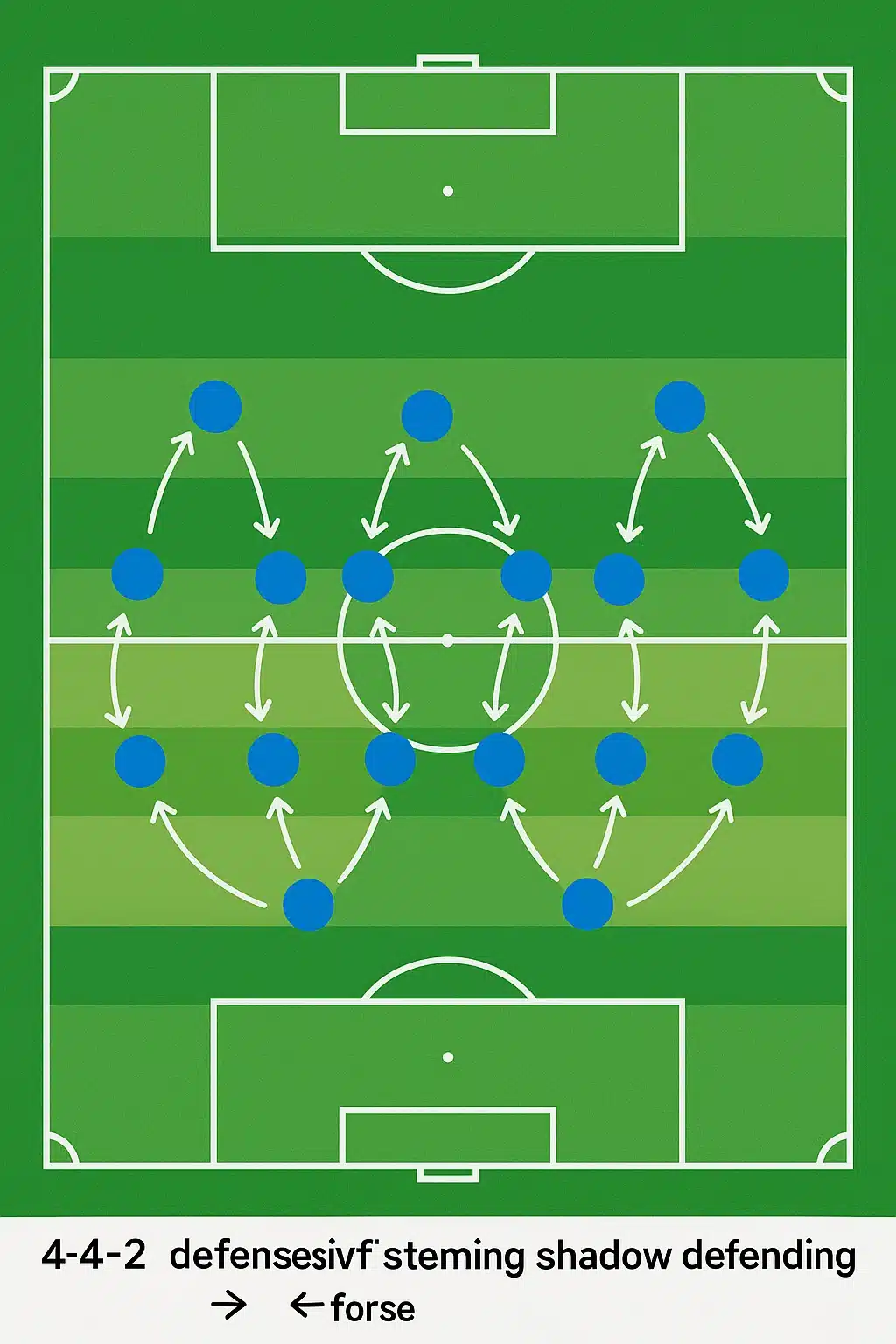
Before running drills, every great defender must grasp defensive positioning and awareness. Defending isn’t just about chasing the ball—it’s about anticipating play, maintaining shape, and controlling space. In soccer, these fundamentals create the foundation for effective marking, timely tackles, and seamless rotations.
Defensive Positioning: Think of yourself as a chess player. Position depends heavily on where the ball is, where teammates and opponents are, and the goal you’re defending. Proper positioning means staying between your man and the goal, cutting off passing lanes, and providing cover to teammates. For example, a center-back should be alert not just to the ball but areas attackers might exploit. Wide defenders must be wary of wingers and overlapping runs, always ready to force attackers toward less dangerous zones.
Defensive Awareness: This is your ability to “see” the game—scanning, reading cues, anticipating passes, and sensing when to press or hold your line. Building this comes through experience and drills that replicate real-game scenarios. Awareness also involves knowing your teammates’ movements and ensuring you fill gaps and support each other seamlessly.
The Importance of Communication and Goalkeeper Organization in Defense
Communication is the secret sauce for a well-organized defense. Defenders must constantly talk—calling out marks, warning of runs, and coordinating effort. The goalkeeper is the defense’s eyes on the backline, often the loudest organizer. Good defensive teams rely on clear commands from the keeper such as “press,” “hold,” “shape up,” or “rotate” to maintain structure.
Imagine your defensive line as a well-oiled machine—the goalkeeper signals to adjust, defenders shout for cover, and midfielders track back to add pressure. This real-time communication prevents confusion during high-pressure moments and limits exploitable mistakes.
By prioritizing defensive positioning, awareness, and communication, you set your defense up for success and maximize the effectiveness of the drills below.
Drill 1: Rapid Defending – Pressuring and Winning Possession Quickly
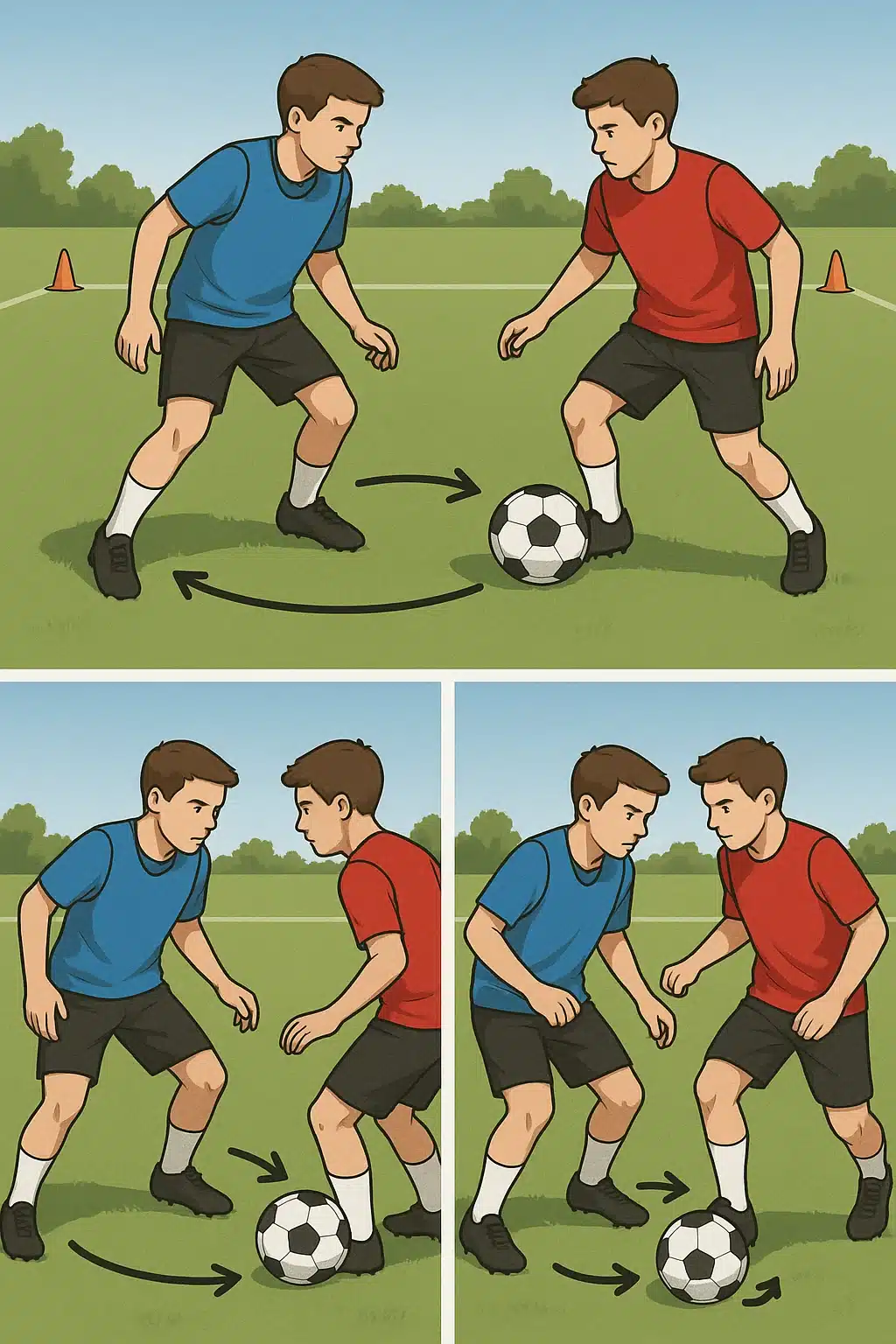
One of the most vital aspects of defense is the ability to close down space quickly and force turnovers. The Rapid Defending Drill trains players to apply immediate pressure on the ball and win possession efficiently.
Setup and Rules of the Rapid Defending Drill
- Set up a 20×20 yard grid with one neutral player in the center.
- Two defenders and one attacker start inside; the attacker tries to keep possession.
- On signal, the two defenders rapidly close down the attacker, aiming to win the ball within 5 seconds.
- Defenders must maintain a good defensive shape; one closes while the other covers angles.
- Once possession is won, defenders pass to the neutral player and reset.
Coaching Points: Immediate Pressure, Risk Management, and Defensive Shape
- Immediate Pressure: Encourage defenders to approach aggressively but not recklessly. Closing down quickly forces the attacker into mistakes.
- Risk Management: Remind defenders to avoid lunging or diving in too early, which risks getting beaten or fouling.
- Defensive Shape: One defender pressures the ball-carrier; the partner provides cover, cutting passing lanes and ready to intercept.
Progressions and Game-Like Adaptations
- Introduce a time limit on possession for attackers to increase pressure.
- Increase attacker numbers to two, forcing defenders to communicate and switch marks.
- Use a larger grid for longer passes, encouraging defenders to judge when to press or contain.
This drill hones quick decision-making and builds confidence for high-tempo defensive actions during matches.
Drill 2: 1v1 Soccer Defense Drills for Quick Reaction and Effective Tackling
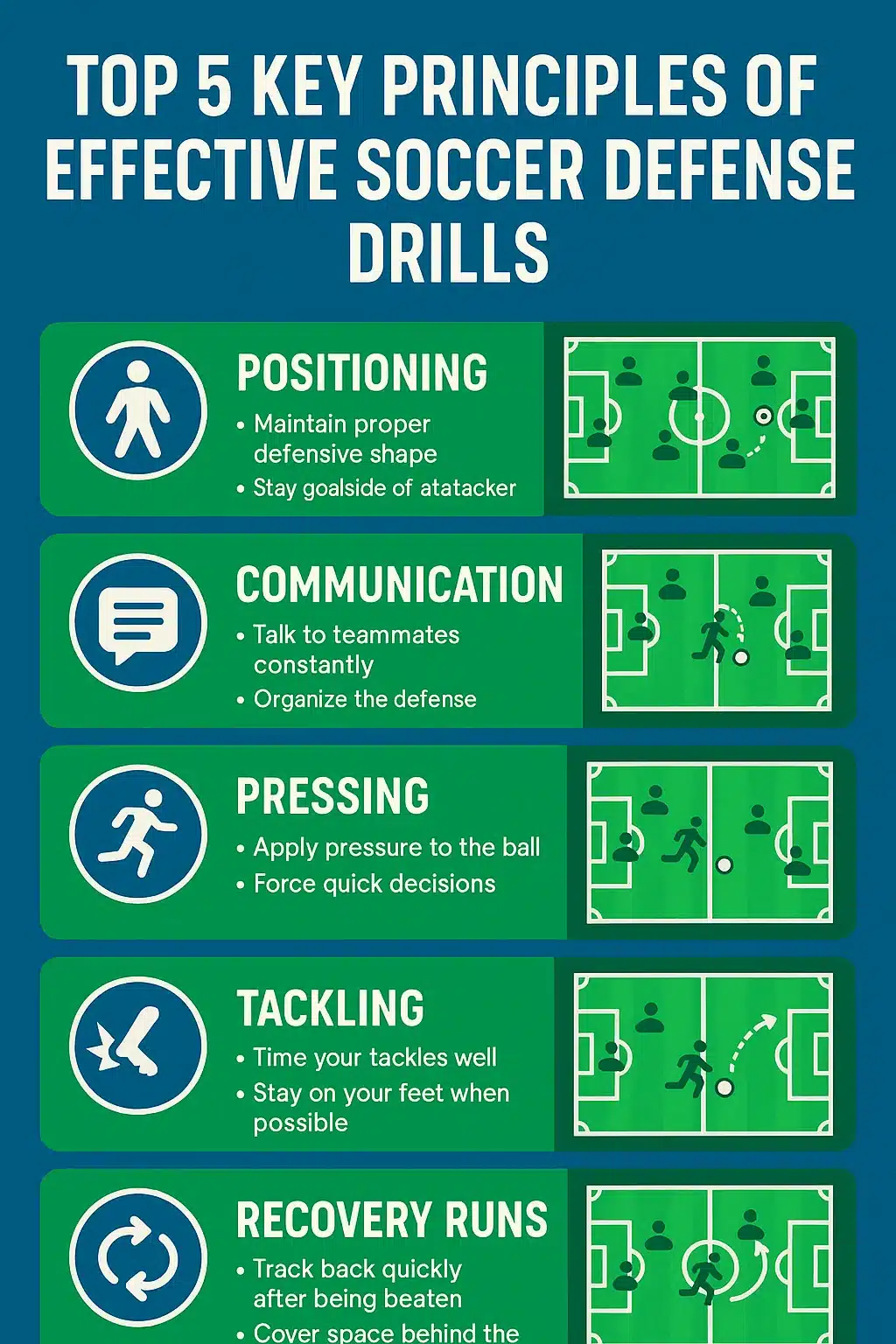
Nothing sharpens a defender like the intensity of a 1v1 battle. Our 1v1 Soccer Defense Drill focuses on teaching marking, timing, and angles to stop attackers in their tracks.
Teaching Marking, Timing, and Angles in One-on-One Situations
- Set up a 10×15 yard lane with a starting line for attacker and defender.
- The attacker tries to dribble from the starting point to the opposite line.
- The defender aims to prevent progress by positioning between the attacker and the goal line.
- Focus on body positioning to channel the attacker toward less dangerous areas.
- Timing is crucial—wait for the right moment to tackle or force the attacker wide.
Drill Variations to Improve Defensive Agility and Decision-Making
- Add a passive defender version, where the defender can only shadow, improving positioning.
- Introduce a reaction element: attacker starts with variable delays or fake moves.
- Use cones as obstacles to improve lateral agility and balance for quick direction changes.
This drill massively improves reaction speed, tackling timing, and defensive confidence when isolated against attackers.
Drill 3: 2v2 Soccer Drills to Force Attackers Wide and Improve Defensive Rotation
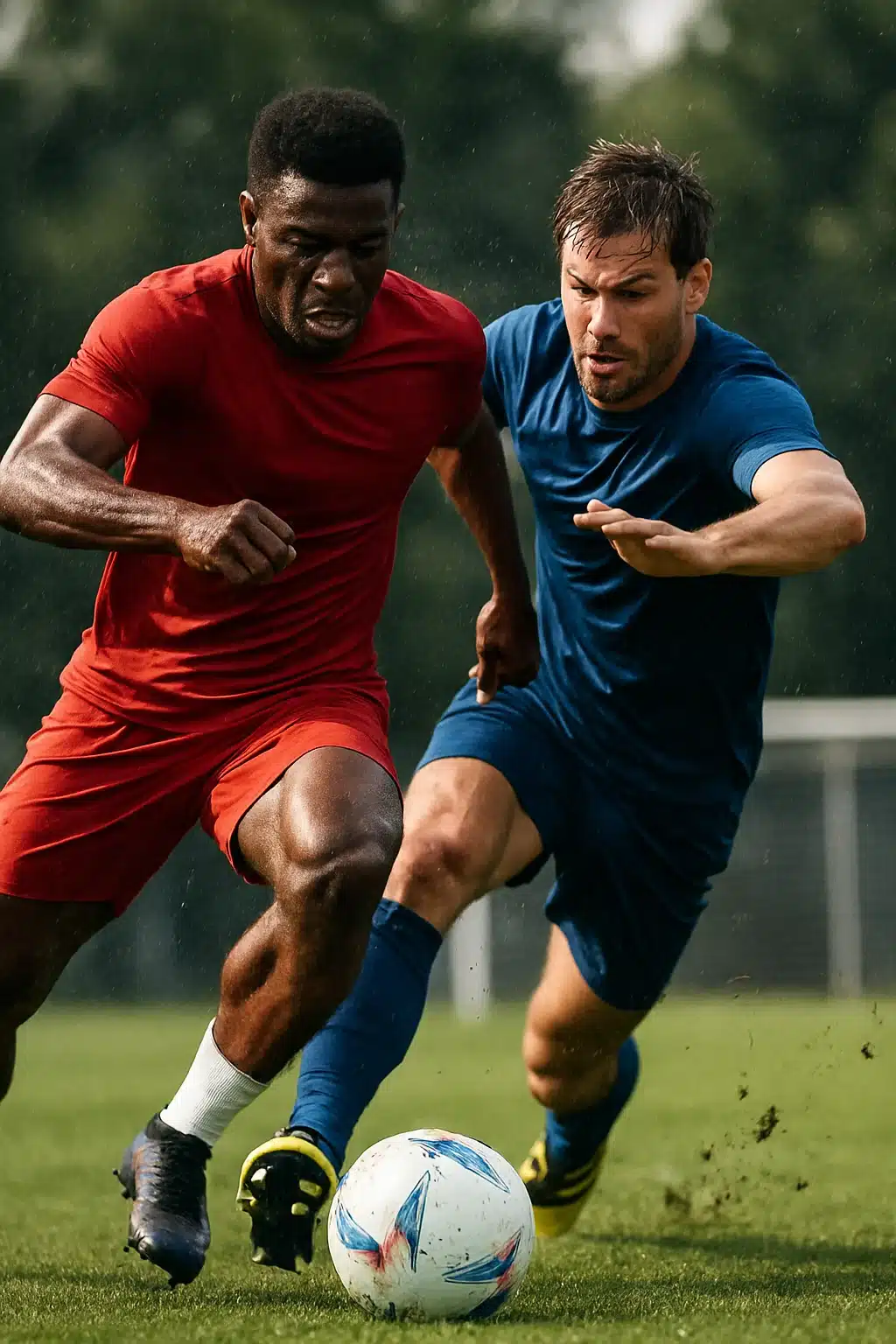
Soccer defense is rarely about one-on-one duels; it’s about teamwork and rotations. The 2v2 Drill teaches players how to pressure attackers and force them down less dangerous flanks while practicing smooth rotations.
Small-Sided Setups to Encourage Pressure and Cover Concepts
- Mark out a 25×25 yard square with two small goals (or cones) on each end.
- Play 2 attackers versus 2 defenders, focusing on defenders working together.
- Defenders pressure ball-carriers to force attacks wide, cutting off central penetrations.
- When pressuring, the other defender covers passing lanes or potential cutbacks.
Scoring and Competitive Elements to Enhance Engagement
- Award points for defenders intercepting or forcing weak crosses.
- Give attackers points for penetrating central zones or shooting on target.
- Rotate pairs regularly, encouraging consistent communication and tactical adaptation.
This drill encourages teamwork, defensive rotations, and intelligent spatial control—key in implementing the pressure-cover-rotate concept under real match conditions.
Drill 4: Team Defensive Shape and Pressure-Cover-Rotate Concept
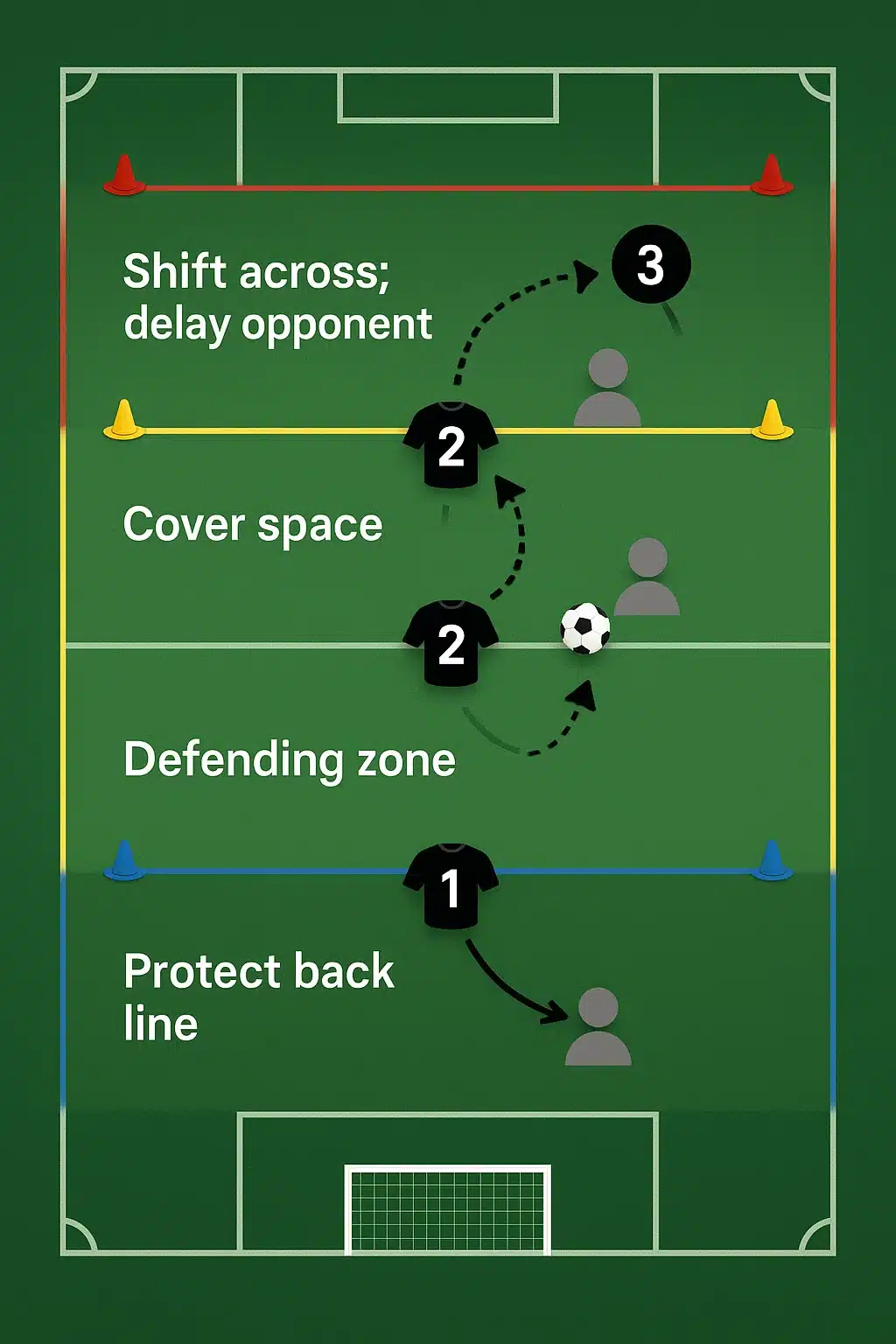
To defend at the highest levels, players must master the team defensive shape and the subtle art of pressure, cover, and rotate—a triad that makes your defense fluid and impenetrable.
Building Awareness of Defensive Structure and Rotations
- Set up a half-pitch scenario with a full defensive unit (4 defenders, 2 midfielders).
- Coaches simulate ball movement; defenders shift their shape and responsibilities.
- One defender pressures ball carrier; a teammate covers behind, and a third rotates to cover another threat or forward passing lane.
- Use cones or zones to help players understand positioning relative to the ball, teammates, and goal.
Integrating Communication and Spatial Awareness into Team Defense
- Encourage continuous verbal commands like “press,” “cover,” and “rotate” to coordinate movements.
- Assign roles so every player knows when and how to rotate; for example, full-backs stepping up and center-backs dropping back.
- Conduct video reviews to show players how elite teams maintain shape and rotate seamlessly under pressure.
Mastering this concept dramatically improves defensive reliability and allows your team to handle complex attacking plays with confidence.
Drill 5: High-Intensity Rondo Defense to Boost Anticipation and Counter-Pressing Skills
The rondo drill is famous for improving offensive quick passing, but with a defensive twist, it develops defensive anticipation and fast counter-pressing abilities.
Using Small-Sided Games for Defensive Awareness and Fast Transition
- Arrange 5 attackers in a circle with 2 defenders inside trying to intercept the ball.
- Attackers move the ball quickly with the goal of maintaining possession.
- Defenders must anticipate passes, pressure immediately, and apply quick tackles.
- When defenders win the ball, they try to make a quick outlet pass to a waiting neutral or start a counter-press.
Encouraging Recovery Runs and Quick Defensive Shifts
- Post-rondo, immediately transition into a recovery drill where defenders quickly sprint back and reset.
- This replicates real-game scenarios where teams lose and regain possession rapidly.
- Track defensive success with time limits or repetitions to encourage intensity.
This drill enhances not only tactical awareness but also physical conditioning and speed of thought on defense.
Drill 6: Defensive Challenge Drill – Enhancing Marking, Sprinting, and Blocking Skills
The final drill is a versatile challenge focusing on the physical and technical aspects of defending including marking tight opponents, explosive sprinting, and blocking shots.
Focus on Individual Defensive Techniques with Goalkeeper Coordination
- Use a 30×20 yard field with attackers aiming to shoot on the goal defended by a keeper.
- Defenders start from distance and sprint to mark attackers as they receive passes.
- Drill emphasizes tight marking, timing blocks of shots, and clearing dangerous balls.
- The goalkeeper communicates directing defenders on positioning and when to close down.
Incorporating Tactical Scenarios into Drill Execution
- Make attackers vary runs: diagonal, straight, or feints to test defenders’ adaptability.
- Introduce variations such as limiting defenders to one touch clearance to speed decision-making.
- Use score tracking for defenders thwarting attacks or successfully blocking shots to add competitive spirit.
This challenge drill brings individual defensive skills into a real match-like rhythm, emphasizing both mental and physical readiness.
Implementing Zonal vs. Man-to-Man Defense Techniques Through Drills
Understanding when to use zonal defending or man-to-man marking is a cornerstone of team strategy.
Understanding When to Use Zonal Marking or Man Marking
- Zonal Marking: Players defend spaces rather than specific opponents. Ideal for handling crosses or loosely organized attacks.
- Man Marking: Each defender tracks a specific opponent. Useful in neutralizing key threat players or tight game contexts.
Drills Tailored to Each Defensive Style
- For zonal defense, set up drills where players cover predetermined zones and pass off attackers entering their space with seamless communication.
- For man marking, emphasize lock-on drills where defenders follow players through complex movement patterns forcing attackers to improvise.
Cultivating proficiency in both styles gives coaches and players tactical flexibility to adjust to different match demands.
Enhancing Game Awareness: Using Small-Sided Games for Realistic Defensive Training
Small-sided games are a gold mine for developing defensive skills under game-like pressure.
Benefits of Small-Sided Games in Developing Defensive Anticipation and Coordination
- Fewer players mean more touches, tackles, and decisions per player.
- Players adapt quickly to changing situations, improving anticipation.
- Communication and spatial awareness develop as space is tight and movement constant.
Designing Drills That Simulate Game Pressure and Transitions
- Tailor fields and rules to emphasize defensive transitions—e.g., immediate defending after loss.
- Rotate player roles to develop all-around defensive understanding.
- Use scoring systems rewarding successful defensive actions: interceptions, tackles, or preventing shots.
Such games build not only technique but also mental toughness and teamwork.
Unique Insight: Integrating Cognitive Training With Physical Soccer Defense Drills
The mind and body must sync perfectly for elite defense.
Incorporating Decision-Making and Visual Perception Skills into Defensive Drills
- Add cues like colored flags or numbers called out by coaches which dictate defensive actions (e.g., press left, rotate right).
- Use reaction lights or partner commands to enhance visual focus and quick decision-making.
Examples of Cognitive-Physical Hybrid Drills for Next-Level Defensive Performance
- Use ball machines or apps that randomize passes, forcing defenders to adapt instantly.
- Incorporate memory elements—defenders must remember movement patterns or opponent tendencies mid-drill.
By blending physical drills with cognitive challenges, defenders become razor-sharp, ready for unpredictable game situations.
Practical Tips for Coaches and Players to Maximize Drill Effectiveness
Adapting Drills for Different Age Groups and Skill Levels
- Simplify drill rules for youth players, focus on basics like positioning and light tackling.
- Increase complexity and pace for advanced players by adding competitive elements, time limits, or multitasking requirements.
Tracking Progress and Providing Constructive Feedback
- Use video recordings to review performance and highlight improvements.
- Provide specific, actionable feedback rather than general comments.
- Encourage players to self-assess and set personal goals for tackling, marking, and communication.
With consistent practice and thoughtful coaching, these soccer defense drills become powerful tools for individual and team growth.
1. What are the most effective soccer defense drills for youth players?
Effective soccer defense drills for youth players focus on basic positioning, 1v1 marking, and small-sided games that improve communication and spatial awareness. Drills such as 1v1 defending and rapid defending with simplified rules are ideal starting points.
2. How do soccer defense drills improve marking skills?
Soccer defense drills enhance marking skills by training players to read opponents’ movements, maintain body positioning, and time tackles precisely. Drills like 1v1 defense and the defensive challenge simulate real-game situations requiring close tracking and quick reactions.
3. Can small-sided soccer defense drills help improve team defensive rotation?
Absolutely. Small-sided soccer defense drills like 2v2 games encourage players to practice pressure, cover, and rotate concepts in tight spaces, which are critical for effective team rotations during matches.
4. How can defenders improve their anticipation and counter-pressing through drills?
Drills such as high-intensity rondos train defenders to anticipate passes, pressure the ball quickly, and transition from defense to attack. Incorporating cognitive cues during these drills sharpens mental processing speed for better anticipation.
5. Should coaches focus on zonal or man-to-man defense techniques in training drills?
Coaches should teach both, as each has strategic value. Using drills tailored to zonal defending emphasizes spatial awareness and team shape, while man-marking drills focus on individual responsibility and tight tracking. The choice depends on team tactics and opponents.
- Effective defense starts with mastering positioning, awareness, and communication.
- The Rapid Defending Drill develops fast pressure and possession wins.
- 1v1 drills sharpen individual marking, tackling, and reaction skills.
- Team-oriented drills like 2v2 and pressure-cover-rotate improve defensive structure and rotations.
- High-intensity rondos build anticipation and fast counter-pressing abilities.
- Understanding zonal vs. man marking styles allows tactical flexibility.
- Integrating cognitive training with physical drills elevates defensive decision-making.
Conclusion
Developing a strong defense isn’t just about raw power or speed—it’s a blend of sharp positioning, smart communication, tactical awareness, and relentless practice. The six soccer defense drills detailed here offer you concrete, step-by-step ways to boost your defensive prowess, whether you’re playing in youth leagues, adult recreational teams, or coaching others. By focusing equally on individual skills like tackling and marking alongside team tactics such as rotations and defensive shape, you create a balanced and formidable defensive unit.
So, why wait? Grab your ball, gather your team, and put these drills into practice. Watch as your defensive resilience, anticipation, and game confidence soar—because every soccer ball lover deserves to defend like a pro!