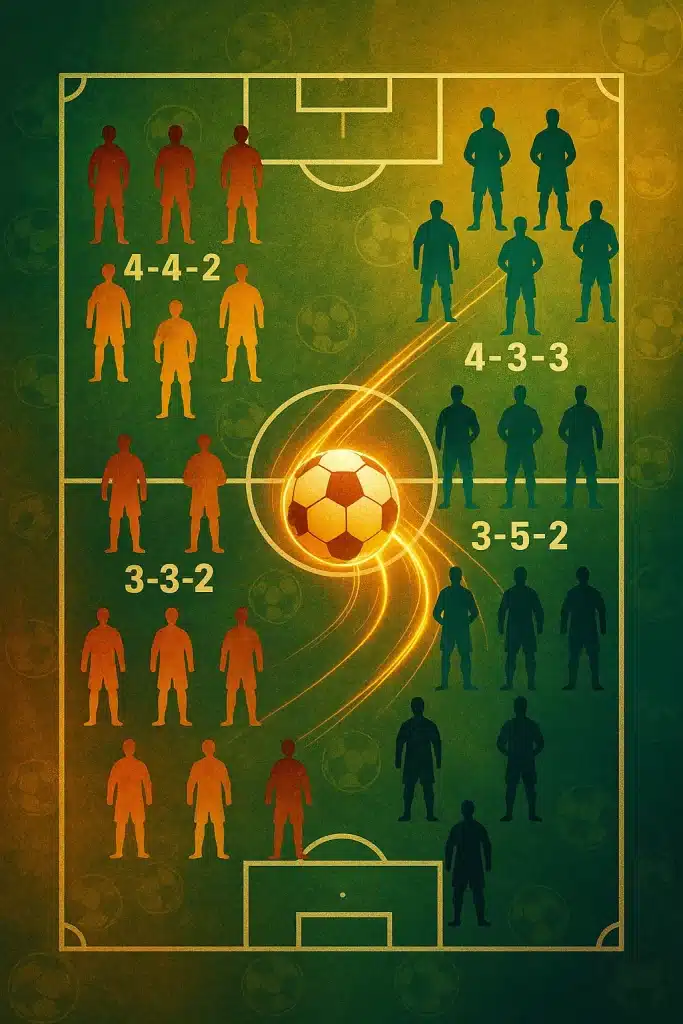

Introduction to Soccer Team Formations: The Foundation of Tactical Mastery
If you’re a true soccer ball lover, you know that the beauty of the game doesn’t lie just in the skill of a single player but also in the intricate dance of the entire team. At the heart of this dance are soccer team formations—the strategic blueprints that shape how a team moves, attacks, and defends. Whether you’re kicking off as a backyard coach or simply fascinated by the nuances of the game, understanding soccer team formations deepens your appreciation and sharpens your knowledge.
Soccer formations aren’t just about lining up players; they define the distribution of roles, dictate the balance between offense and defense, and influence how a team controls the midfield. Over the course of this article, I’ll guide you through the historical evolution of formations, analyze five powerful ones every soccer fan should know, and share expert insights on choosing and adapting formations to your team’s unique strengths. Along the way, we’ll also explore how formations affect set pieces, team psychology, and professional tactics.
So strap on your cleats and get ready! Together, we’ll dive deep into the tactical heart of soccer and explore the art and science of soccer team formations in a way that’s engaging, detailed, and jam-packed with real-world examples.
The Role of Formation in Shaping Team Strategy and Dynamics
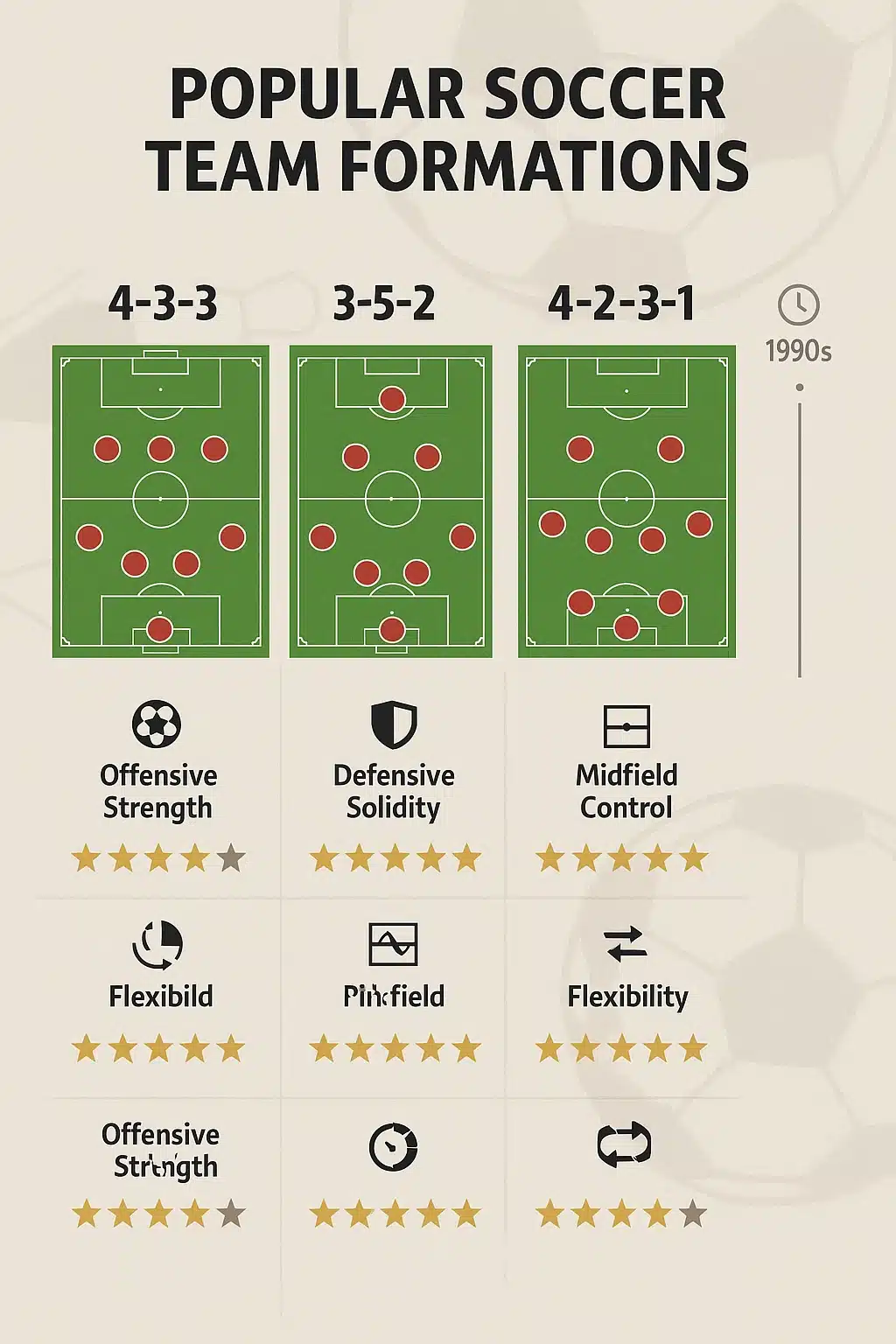
At its core, a soccer team formation is the numerical arrangement and positioning of players on the pitch. But don’t let that simple definition fool you—it’s the backbone of your team’s entire approach to the game. The shape you choose dictates the team’s overall strategy, defining everything from pressing intensity to attacking patterns.
For instance, some formations emphasize attacking width through wingers, while others prioritize a reinforced midfield to dominate possession. The tactical setup can make or break a team’s ability to control tempo or stifle opponents’ attacks. Think of it like a chess opening—your opening moves (formation) influence your mid-game control and final checkmate strategies.
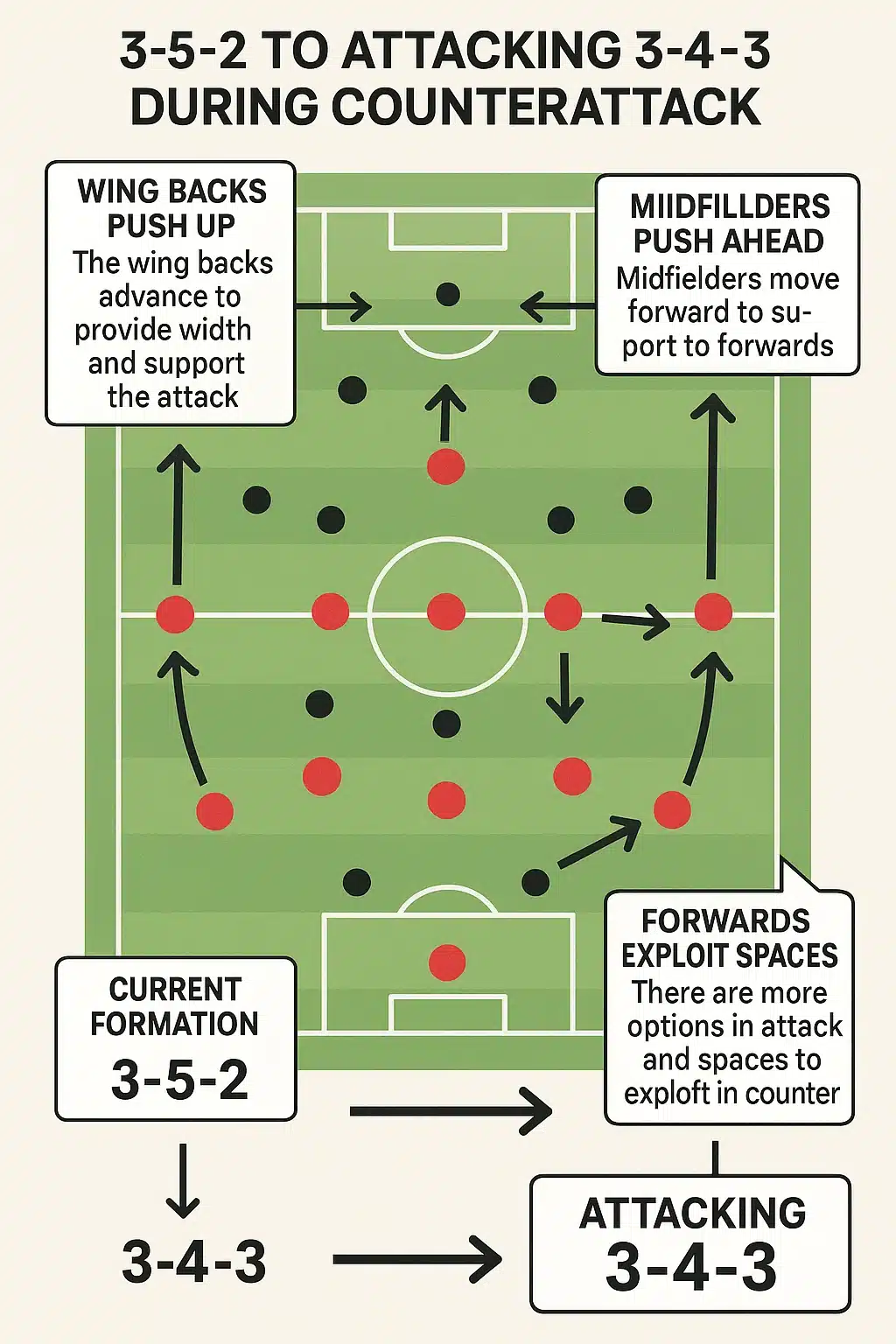
Dynamic formations adapt during matches: a team might start with a defensive 4-5-1 and shift into an attacking 4-3-3 as the game unfolds. The best coaches understand how to mold formations in real-time based on player performance and opposition tactics.
How Formations Influence Midfield Control and Defensive Lines
The midfield is often called the engine room of any soccer team. Managing midfield effectively enables a team to control the flow of the game—dictating possession, creating chances, and breaking up opposition plays. Soccer team formations decide how many midfielders you field and what their roles will be—defensive, box-to-box, or attacking.
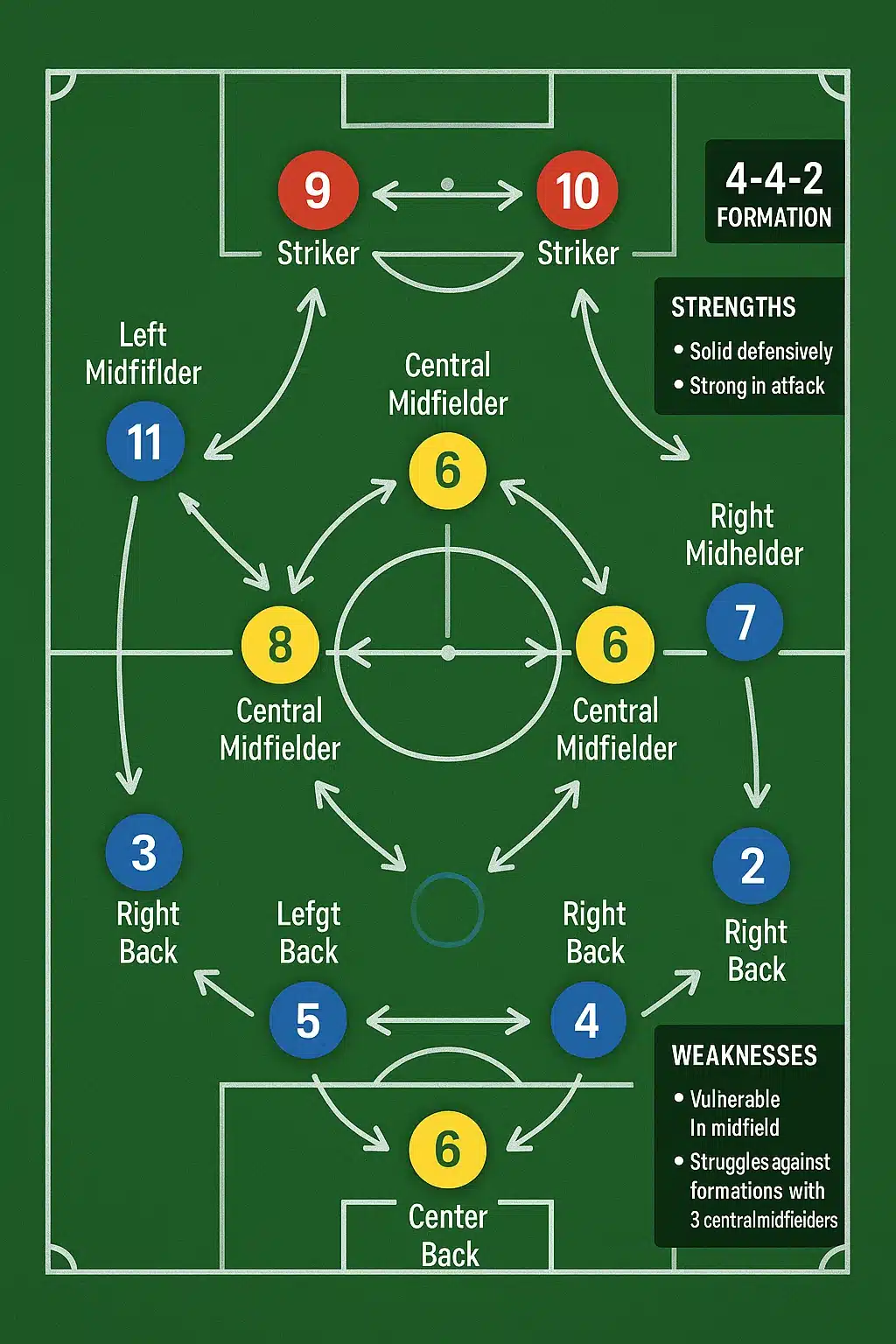
For example, the classic 4-4-2 setup offers a balanced midfield line that can shift between defensive doubles and support for forwards. In contrast, the 4-3-3 formation tends to crowd the midfield center, leveraging a trio of midfielders that can press aggressively or build from deep.
Defensively, formations establish the number and arrangement of defenders. A flat back four is a staple for a reason—it balances coverage across the width and depth of the defensive third. Alternatively, formations with three central defenders and wing-backs, like 3-5-2, offer flexibility by enabling wing-backs to bolster midfield or defense according to situational needs.
In essence, formations carve out how teams manage space, maintain shape, and implement offside traps or pressing systems—critical to both staving off attacks and sparking counter-attacks.
Historical Evolution of Soccer Team Formations: From Pyramid to Modern Tactics
Early Tactical Formats: Pyramid (2-3-5) and the WM Formation
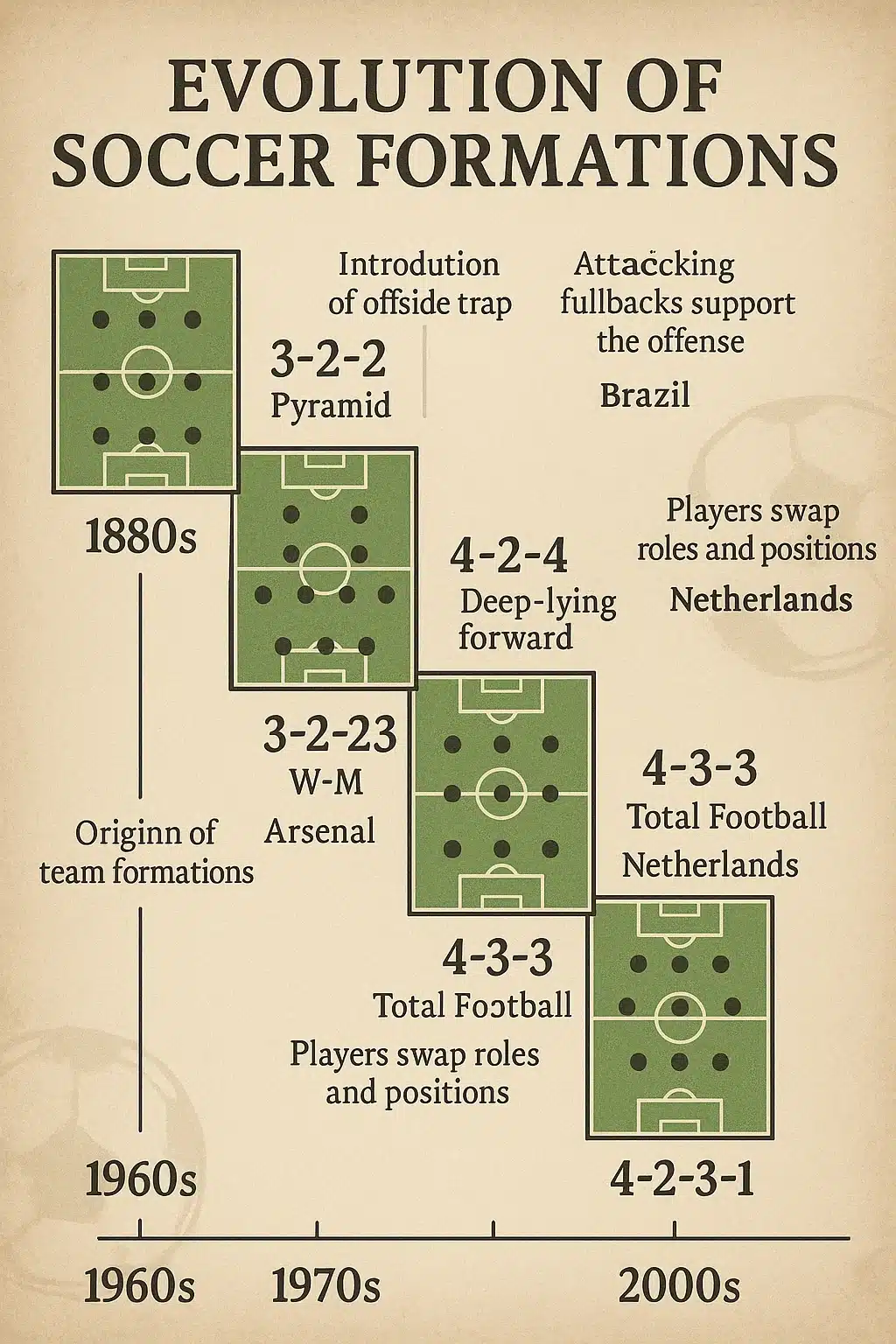
The earliest formations were quite different from what we see today. The Pyramid (2-3-5) formation dominated late 19th and early 20th-century soccer, placing heavy emphasis on offense with five forwards leading the attack. Think about it—two defenders and five strikers! This meant teams played with an all-out attack mentality.
As soccer evolved, the WM formation emerged in the 1920s and 1930s, shaping the game with its shape resembling the letter “W” and “M” stacked atop each other. This setup (3-2-2-3) improved defensive balance without sacrificing attacking power, featuring three defenders and a more organized midfield line. It revolutionized defensive solidity and became a staple for teams focused on both defense and attack.
The Birth and Impact of the 4-2-4 Formation on Balanced Play
In the mid-20th century, particularly during Brazil’s football golden era, the 4-2-4 formation came into prominence. This introduced four defenders, two midfielders, and four forwards—a significant shift from the Pyramid. It allowed teams to maintain defensive stability while unleashing potent attacking moves through two wingers and two strikers.
This formation was vital in Brazil’s World Cup triumphs and highlighted the importance of midfielders who could both defend and initiate attacking plays. It’s often credited for pioneering more balanced, fluid soccer tactics.
Transition to Contemporary Midfield-Focused Formations
As the game became more physical and tactical awareness improved, midfield control gained prominence. Formations like 4-3-3, 4-2-3-1, and 3-5-2 grew popular, focusing on compact midfield blocks, high pressing, and rapid transitions. These modern setups complimented the evolving technical skills and athleticism of players, making the game more dynamic yet strategic.
This evolution reflects a shift from sheer attacking quantity to quality, pressing intensity, and fine positional discipline.
Detailed Breakdown of the 5 Essential Soccer Formations
The Classic 4-4-2: Strengths, Weaknesses, and Optimal Usage
Formation layout: 4 defenders, 4 midfielders, 2 forwards
Strengths: Balanced between defense and attack, very straightforward and familiar to players across all levels. The two banks of four offer solid defensive coverage and width, while two strikers ensure consistent attacking threat.
Weaknesses: Midfield can be outnumbered by teams playing 4-3-3 or 4-2-3-1; struggles to control the center against technically gifted teams.
When to use: Ideal for youth teams or sides emphasizing structured defense with quick counter-attacks.
Example: Teams like Manchester United and Arsenal have famously relied on variants of the 4-4-2 due to its simplicity and reliability.
Controlling the Midfield with 4-3-3: Flexibility and Offensive Width
Formation layout: 4 defenders, 3 midfielders, 3 forwards
Strengths: Excellent for dominating possession and pressing high up the pitch. The midfield trio can include defensive holding roles and attacking playmakers, while the wide forwards provide width and pace.
Weaknesses: Can be vulnerable on the flanks defensively if wingers don’t track back. Requires multisided midfielders capable of covering a lot of ground.
When to use: Perfect for teams that focus on ball retention and aggressive attacking with wing play.
Example: FC Barcelona’s tiki-taka era and Liverpool under Jürgen Klopp utilize dynamic variants of 4-3-3 to control tempo and pressure opponents.
Defensive Solidity and Counter-Attacks Using the 4-2-3-1 Formation
Formation layout: 4 defenders, 2 defensive midfielders, 3 attacking midfielders, 1 striker
Strengths: Provides great midfield protection behind the lone striker, enabling quick transitions and counter-attacks. The split between holding midfielders and attacking midfielders offers tactical depth and defensive balance.
Weaknesses: Relies heavily on the lone striker, who must be mobile and able to hold up the ball. Midfielders need great stamina to cover large distances.
When to use: Optimal against teams who dominate possession, allowing for a disciplined defensive block and rapid breaks forward.
Example: Many Premier League sides adopt this formation, with managers like José Mourinho favoring it for its defensive logic and attacking flexibility.
Modern Midfield Dominance with the 3-5-2 Formation and Wing-Backs
Formation layout: 3 central defenders, 5 midfielders (2 wing-backs), 2 forwards
Strengths: Allows numerical superiority in midfield and wide areas. Wing-backs serve dual roles—supporting defense and providing width to attack. The three central defenders cover the backline with flexibility.
Weaknesses: Wing-backs need incredible stamina and tactical discipline; vulnerable to quick counter-attacks if wing-backs are caught high.
When to use: Suited for teams wanting to control midfield while maintaining defensive solidity with flanking options.
Example: Antonio Conte’s Chelsea and Inter Milan sides have employed 3-5-2 to great success, balancing defensive resilience with attacking width.
The Versatile 3-4-3 Formation: Balancing Attack and Defense in High-Press Systems
Formation layout: 3 defenders, 4 midfielders, 3 forwards
Strengths: Provides aggressive pressing capabilities, wide attacking options, and midfield density. The front three apply constant pressure, while the midfield supports both defense and attack.
Weaknesses: Requires players with high fitness and excellent positional sense; exposed to counter-attacks especially if midfield lacks discipline.
When to use: Great for teams that emphasize high-pressing and quick ball recovery in opponents’ half.
Example: Liverpool under Klopp frequently uses a variant of 3-4-3 to suffocate opponents with relentless pressing and attack from multiple angles.
How to Choose the Right Soccer Formation for Your Team
Assessing Player Roles: Strikers, Playmakers, Midfielders, and Defenders
Choosing a formation boils down to understanding your players’ strengths. For example, if you have fast wingers and a clinical finisher, formations like 4-3-3 or 4-2-3-1 suit an attack-first approach. Alternatively, if your squad includes rugged midfield enforcers, formations ensuring solid midfield protection like 4-2-3-1 or 3-5-2 might be best.
Don’t force a formation that doesn’t suit player skillsets—flexibility in roles, like converting wingers into wing-backs, can unlock hidden potential.
Adapting Formations to Team Strengths and Styles
Tactical awareness means choosing formations that amplify your team’s style. For possession-based teams, a midfield-heavy setup like 4-3-3 helps control the ball and dictate play. Defensively organized teams may prefer solid structures like 4-4-2 or 4-2-3-1.
It’s essential to consider fitness levels, player versatility, and game context when deciding on formations.
Formation Flexibility: Transitioning between Defensive and Attacking Setups
Top-level soccer isn’t one-dimensional. Teams that can switch formations mid-game often gain the upper hand. For instance, a 4-2-3-1 can transition to 4-3-3 by pushing wingers higher or revert to 4-5-1 when defending a lead.
Training players to adapt seamlessly to formation shifts contributes to tactical unpredictability and prepares your side for diverse match scenarios.
Unique Tactical Insights: Formation Influence Beyond the Field
Impact on Set Pieces: Corners, Free Kicks, and Throw-Ins Strategies
Formations affect not only open play but also set-piece setups. Defensive formations may see players assigned clear marking zones on corners, while attacking formations spread out for creative free-kick routines.
For example, the 3-5-2 formation, with wing-backs acting as set-piece specialists, enhances delivery accuracy and aerial threats.
Squad Numbering Systems: Linking Positions to Tactical Formations
Historically, squad numbers correlated to positions, reflecting formation roles—for instance, the number 9 traditionally denoting a central striker in the front two of a 4-4-2.
Modern numbering sometimes blurs lines, but coaches still use numbering to organize tactical plans and communicate formation changes, highlighting the formation’s deep integration into team culture.
Psychological and Coaching Aspects of Formation Choices
Choosing and communicating formations can affect player confidence and team morale. A clearly understood formation breeds unity and execution precision. Conversely, confusion over roles triggers positional mistakes.
Good coaches tailor formation choice to maximize psychological comfort, reinforcing team identity, and empowering player roles—key to competitive success.
Case Studies: How Professional Teams Use Soccer Team Formations Effectively
Pep Guardiola’s Adoption of the 3-2-4-1: Midfield Control Redefined
Guardiola, renowned for tactical innovation, popularized the 3-2-4-1, an evolution of 3-5-2, emphasizing midfield overloads and positional interchange. This formation empowers midfielders to create passing triangles, overwhelming opponents’ defenses.
Manchester City’s dominance in controlling possession and creating scoring chances showcases this setup’s effectiveness in modern soccer.
Brazil’s Use of the Flat Back Four to Neutralize Opponents’ Wing Play
Brazilian teams often rely on a disciplined flat back four, complemented by skillful fullbacks supporting attack. This defensive line minimizes risk on the flanks while allowing creative midfielders to flourish centrally.
This approach helped Brazil neutralize counter-attacks from wing-heavy teams during multiple international campaigns.
High-Pressing Success with the 3-3-1-3 Formation Explained
Teams employing 3-3-1-3 focus on relentless pressing, utilizing a high defensive line and intense midfield pressure. This aggressive formation compresses playing space, forcing turnovers and immediate attacking transitions.
Such systems require top physical conditioning and tactical discipline, often used by teams seeking to dominate possession and tempo high up the field.
Common Misconceptions and Pitfalls in Selecting Soccer Formations
Overreliance on Traditional Tactics Without Adapting to Opponents
One major pitfall is blindly sticking to a traditional formation without considering the opponent’s style. Soccer is a game of adjustments; rigid formations can be exploited by adaptable teams.
Successful coaches tweak formations, pressing intensities, and player roles as the match unfolds to seize advantage. Stubborn attachment to a formation often results in inefficiency and defeat.
Ignoring Player Compatibility and Squad Numbering in Tactical Planning
Another common mistake is ignoring how players fit into formation roles or how their natural positions interact. For instance, forcing a striker who excels as a target man into a wide forward slot can diminish offensive threat.
Additionally, squad numbering and positional familiarity affect player comfort and team shape cohesion, impacting formation success.
Future Trends: Evolving Soccer Formations and Tactical Innovations
Increasing Importance of Formation Flexibility and Player Versatility
The future of soccer formations lies in adaptability. Coaches demand players capable of switching roles mid-match. Formations are becoming fluid, with seamless transitions between defense and attack, even multiple formation shifts in one game.
This trend reflects growing tactical complexity and the value of versatile athletes.
Emerging Formations for Youth and Developmental Teams
Youth coaches increasingly embrace flexible formations like 4-3-3 and 3-5-2 to develop players’ tactical understanding and all-around skills. These setups teach young athletes to balance defense and attack, prepare them for high-press systems, and cultivate adaptable mindsets.
Formations fostering creativity and problem-solving will shape future soccer talent.
The Role of Data Analytics in Refining Team Formations
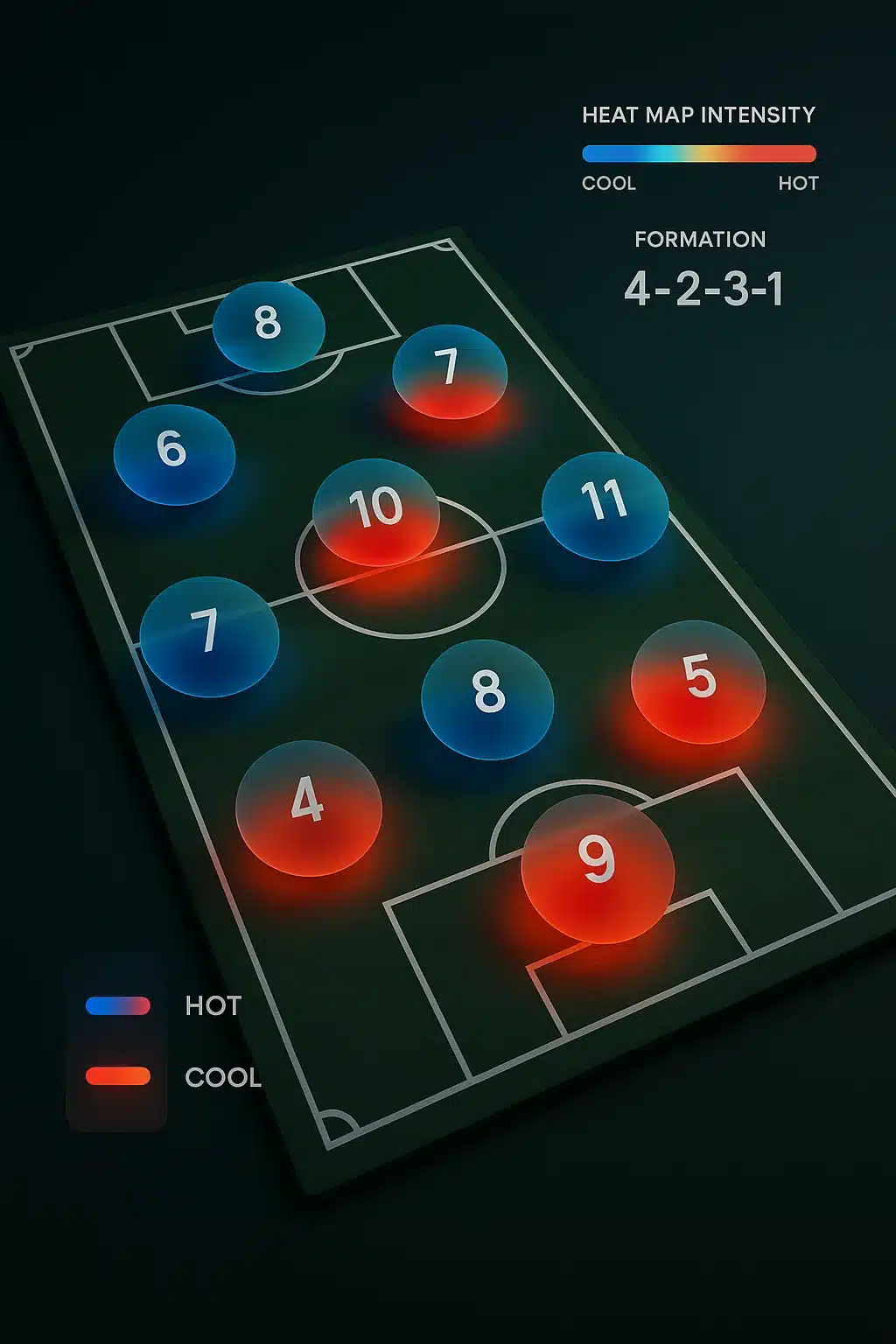
Data-driven insights now influence formation choices profoundly. Coaches use performance metrics, heat maps, and opponent analysis to devise formations maximizing team strengths and mitigating weaknesses.
Analytical tools lead to evidence-based tactics rather than assumption-based decisions, refining formation effectiveness in real time.
Conclusion: Mastering Soccer Team Formations for Competitive Edge
The world of soccer team formations offers a fascinating blend of history, strategy, and practical application. From the early Pyramid formation to the modern 3-5-2 and high-press 3-4-3, each setup brings unique advantages and challenges, shaping how teams attack, defend, and control the game.
As a soccer ball lover, understanding these formations enriches your viewing experience and equips you with the knowledge to analyze or coach effectively. Remember, picking the right formation is about matching tactics to player strengths, adopting flexibility, and embracing tactical evolution.
Don’t shy away from experimenting—whether coaching a youth squad or organizing a casual match, trying different formations teaches valuable lessons and can transform your team’s performance.
So, next time you watch a match or set up your lineup, keep these powerful formations in mind. Dive into the tactical battlefield with confidence, and let your love for soccer deepen with every formation mastered.
FAQs
1. What are the best soccer team formations for youth teams?
For youth teams, formations like 4-4-2 and 4-3-3 are ideal because they balance simplicity with tactical variety, helping young players understand different positions while encouraging teamwork and basic tactical principles.
2. How do soccer team formations impact control of the midfield?
Formations with a strong midfield presence, such as 4-3-3 or 3-5-2, offer greater control of the midfield by increasing player numbers and facilitating possession, passing options, and pressing, essential for dictating the game’s tempo.
3. What are the advantages of the 4-2-3-1 soccer formation?
The 4-2-3-1 offers solid defensive cover with two holding midfielders while maintaining attacking creativity through three advanced midfielders behind a lone striker, enabling both defensive solidity and fast counter-attacks.
4. How does the 3-5-2 formation work in modern soccer tactics?
The 3-5-2 uses three center-backs and wing-backs to create numerical advantages in midfield and wide areas, allowing flexibility for both defense and attack. Wing-backs are key for providing width, while the triple central defense ensures stability.
5. Can soccer formations change during a match?
Absolutely! Coaches often instruct teams to shift formations mid-game to respond to tactical demands, opponent strengths, or game situations—for example, switching from a defensive 4-5-1 to an attacking 4-3-3 when chasing a goal.
Quick Takeaways
- Soccer team formations dictate how teams balance attack, midfield control, and defense.
- Historical formations like the Pyramid and WM laid foundations for modern tactics.
- Five essential formations: 4-4-2, 4-3-3, 4-2-3-1, 3-5-2, and 3-4-3 offer varied tactical benefits.
- Player roles and team strengths should guide formation choice for optimal results.
- Formation flexibility during games is crucial for tactical success.
- Formations influence set-piece strategies, squad numbering, and team psychology.
- Data analytics is increasingly refining formation decisions in professional soccer.
Unlock the full potential of your soccer passion by mastering these powerful soccer team formations—and watch as your understanding, enjoyment, and performance on the pitch soar to new heights!