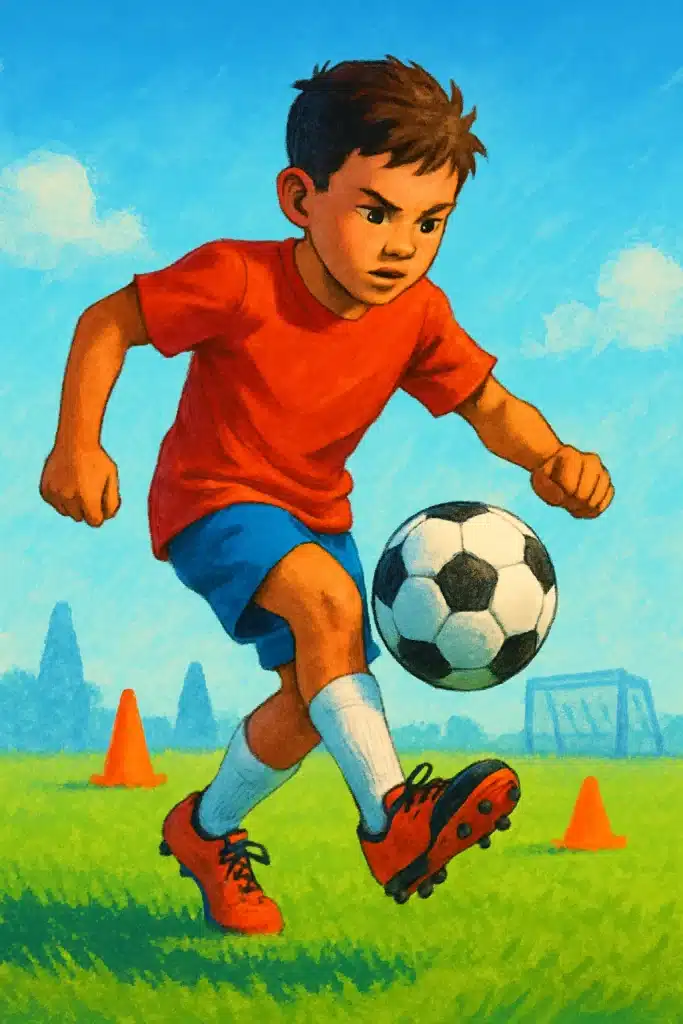

If you’re a soccer ball lover just starting out on your soccer journey, you know how thrilling—and sometimes overwhelming—it can be to master the basics. Soccer is an art and a science, and building strong foundational skills is your ticket to enjoying the game at any level. In this guide, I’ll walk you step-by-step through soccer drills for beginners that are designed to develop your technique, build confidence, and get you game-ready. From beginner soccer dribbling drills for kids to agility ladder exercises and passing accuracy techniques, these drills incorporate real-world soccer situations that will have you shining on the field in no time.
Whether you’re training solo or with a group, I’ll share tried-and-true, easy-to-follow drills that focus on ball control, shooting, passing, and fitness. Plus, I’ll delve into coaching tips to keep your practice sharp and fun. So lace up your cleats, grab a ball, and let’s dive into essential beginner drills that every soccer fan needs to know!
Understanding the Fundamentals before Starting Soccer Drills
Before kicking off any practice, it’s crucial to grasp the fundamentals that will underpin all your training. Soccer is much more than just running and kicking; it’s about precision, timing, and mental preparation.
Importance of Mastering Basic Ball Control Techniques
Ball control is the heartbeat of soccer. Without it, you’re just chasing after the ball, but with finesse, you dictate the game. Mastering ball control means learning how to stop, trap, dribble, and manipulate the ball with various parts of your feet, thighs, or chest with ease.
Starting with simple touches—like toe taps and sole rolls—you develop a feel for the ball, which translates to improved dribbling and passing skills later. For example, practicing toe taps for 5 minutes daily can boost your foot-eye coordination dramatically, allowing you to keep the ball glued to your feet even under pressure.
Building Confidence Through Consistent Practice
Practice breeds confidence. I can’t stress this enough. That feeling of uncertainty when the ball approaches disappears after countless rehearsals. Consistency not only refines muscle memory but also alleviates performance anxiety.
Scheduling regular sessions and being patient with yourself is key. If you miss a practice, don’t fret. Just get back on the field. Remember, even world-class players started as beginners, fumbling before soaring.
Warm-up Routines: Preparing Your Body and Mind
Jumping into drills cold can lead to injuries or poor performance. Before every session, prioritize a solid warm-up. Start with 5-10 minutes of light jogging to raise your heart rate, then move on to dynamic stretches like leg swings, lunges, and high knees to loosen tight muscles.
For beginners, adding ball-related activities like juggling or light dribbling during warm-ups engages your mind and sharpens coordination. Warming up mentally is just as vital as physically; reviewing your training goals beforehand keeps you focused and motivated.
Drill 1: Beginner Soccer Dribbling Drills for Kids
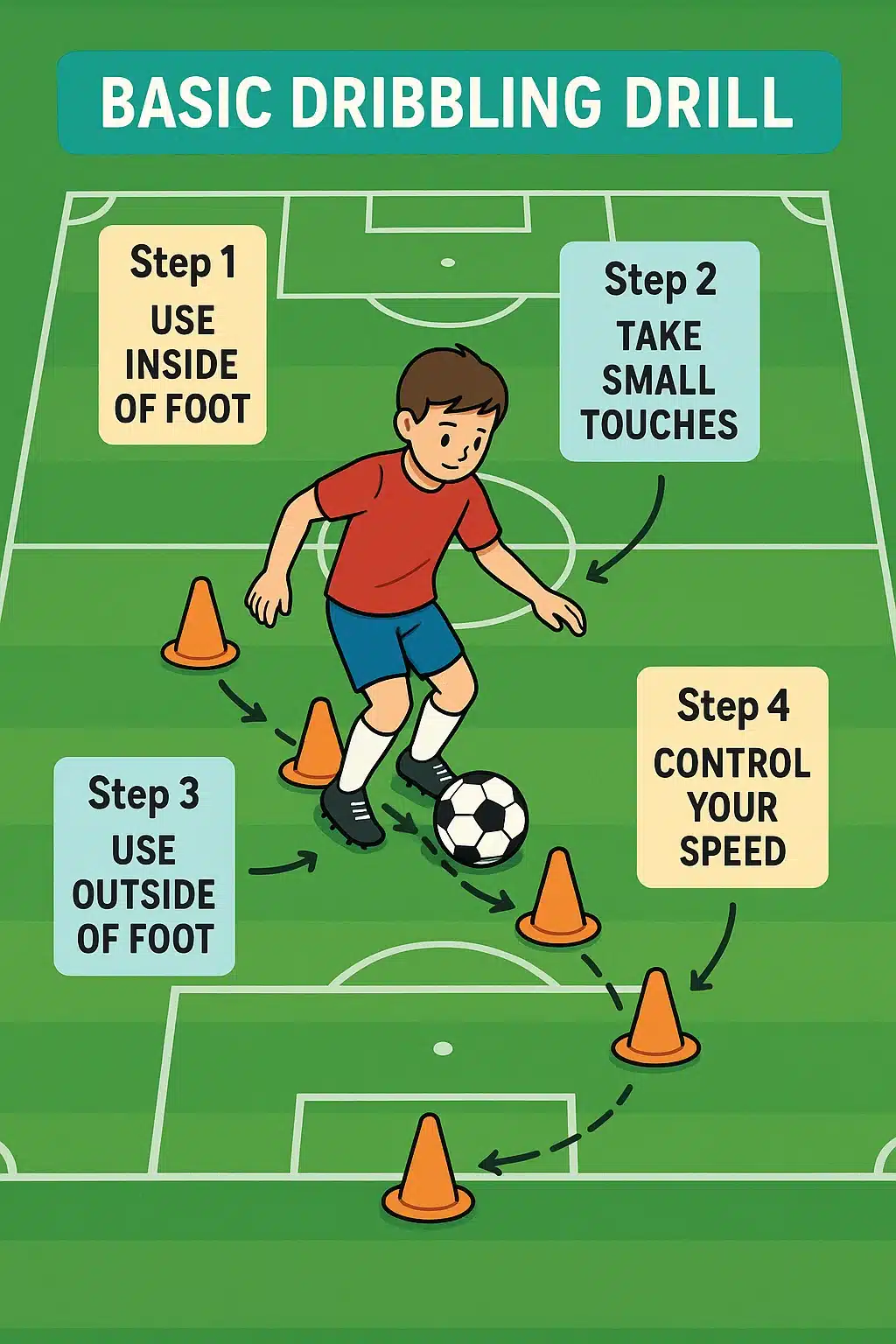
Dribbling is the foundation of individual offensive skill. When you master dribbling, you gain control of the game tempo and can create scoring opportunities.
Cone Weaving Techniques to Improve Close Ball Control
Cone weaving involves setting up cones about a yard apart in a straight line or zigzag format. The goal is to dribble the ball through the cones using the inside and outside parts of both feet while keeping the ball close.
How to do it:
– Start slowly to maintain ball control.
– Use short taps and keep your head up intermittently to simulate in-game awareness.
– Gradually increase speed as confidence grows.
This drill improves agility, touch sensitivity, and teaches you to maneuver tight spaces—skills applicable in congested game scenarios.
Free Dribble and Lane Dribbling for Game Situations
Free dribble means moving with the ball on an open field, experimenting with changes in pace and direction. Lane dribbling restricts you to a narrow path where you practice keeping the ball contained within bounds.
These exercises teach you spatial awareness and improve your ability to protect the ball from opponents. Try combining sudden stops, feints, and step-over moves on these dribbles for advanced touches.
Advanced Touches: AJAX Dribble and Side-to-Side Taps
The AJAX dribble mimics the style made famous by Ajax Amsterdam players—quick, rhythmic touches alternating between the inside and outside of the foot. Side-to-side taps mean pushing the ball laterally between your feet repeatedly to refine touch precision.
Both drills challenge your foot-eye coordination, necessary for quick pivots and escapes from defenders.
Drill 2: Simple Soccer Passing Drills for Beginners
Passing is the lifeblood of soccer teamwork. Even with stellar dribbling skills, without accurate passing, your plays fall apart.
Passing and Receiving Accuracy with Two-Touch Wall Passes
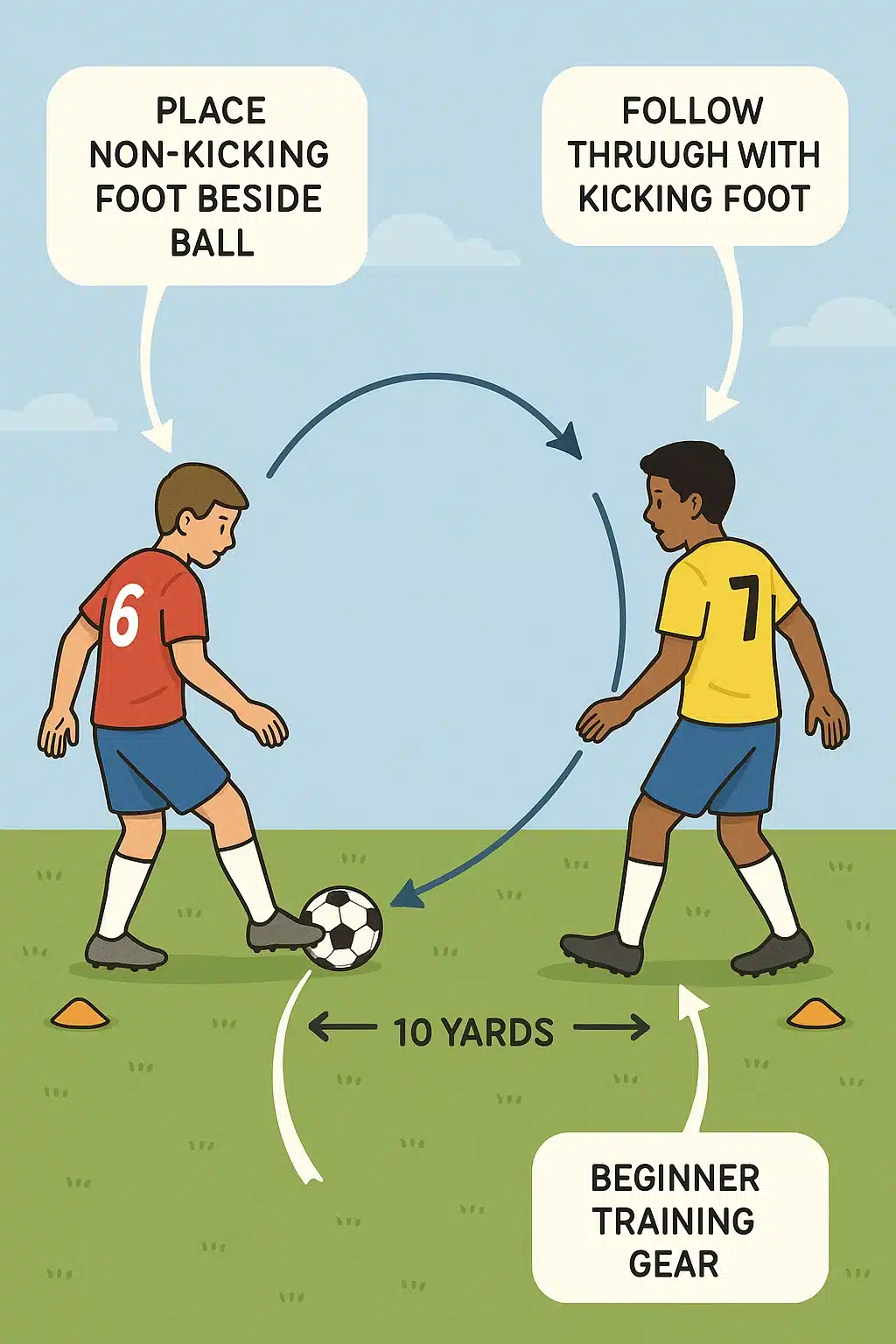
Find a sturdy wall and stand about 5-7 feet away. Pass the ball to the wall and control the rebound with one touch, then pass back with the other. This “two-touch” method trains you to receive and pass accurately under rhythm.
As your confidence builds, vary the force and angle of your passes to simulate different game situations. Wall drills are perfect for solo practice and sharpening your timing.
Short-Pass Circuits for Developing Quick Decision-Making Skills
Set up small targets or cones in a triangle or square formation. Practice making quick passes between targets, looking up to identify the next pass rather than staring at the ball.
This drill develops spatial awareness and encourages quick decisions, essential when you’re surrounded by opponents pressing for the ball.
Passing and Moving: Pass-and-Follow Drill
Pass the ball to a partner or target, then immediately move to a new position to receive the ball again. This drill mimics realistic match play where static passing won’t cut it; you need to think about movement and space creation.
Encourage communication during this drill to improve teamwork and reading each other’s intentions on the field.
Drill 3: Easy Shooting Drills for Beginner Soccer Players
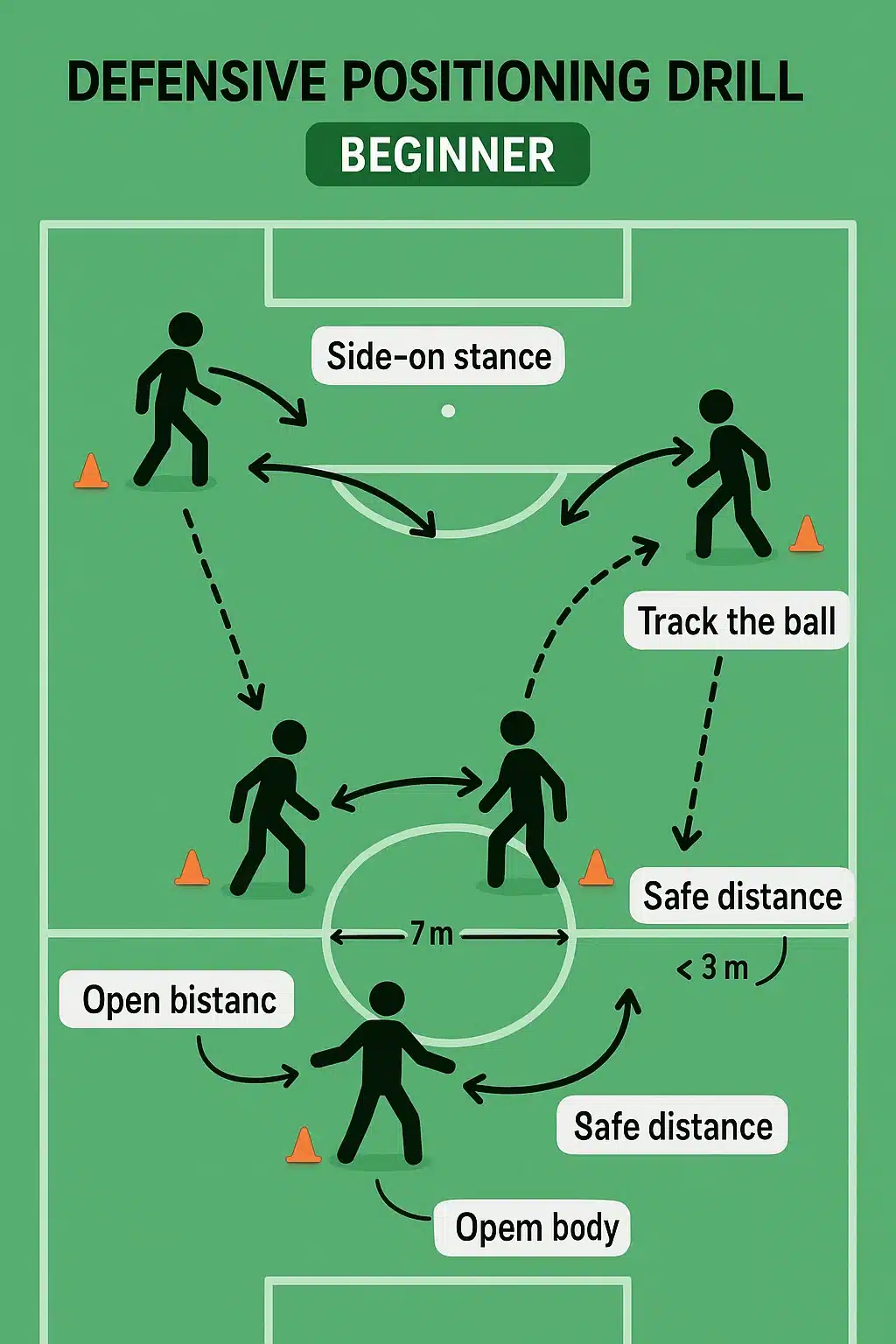
Scoring goals is the most exhilarating part of soccer, and honing shooting technique early lays the groundwork for success in matches.
Turn and Shoot Drills to Enhance Finishing Techniques
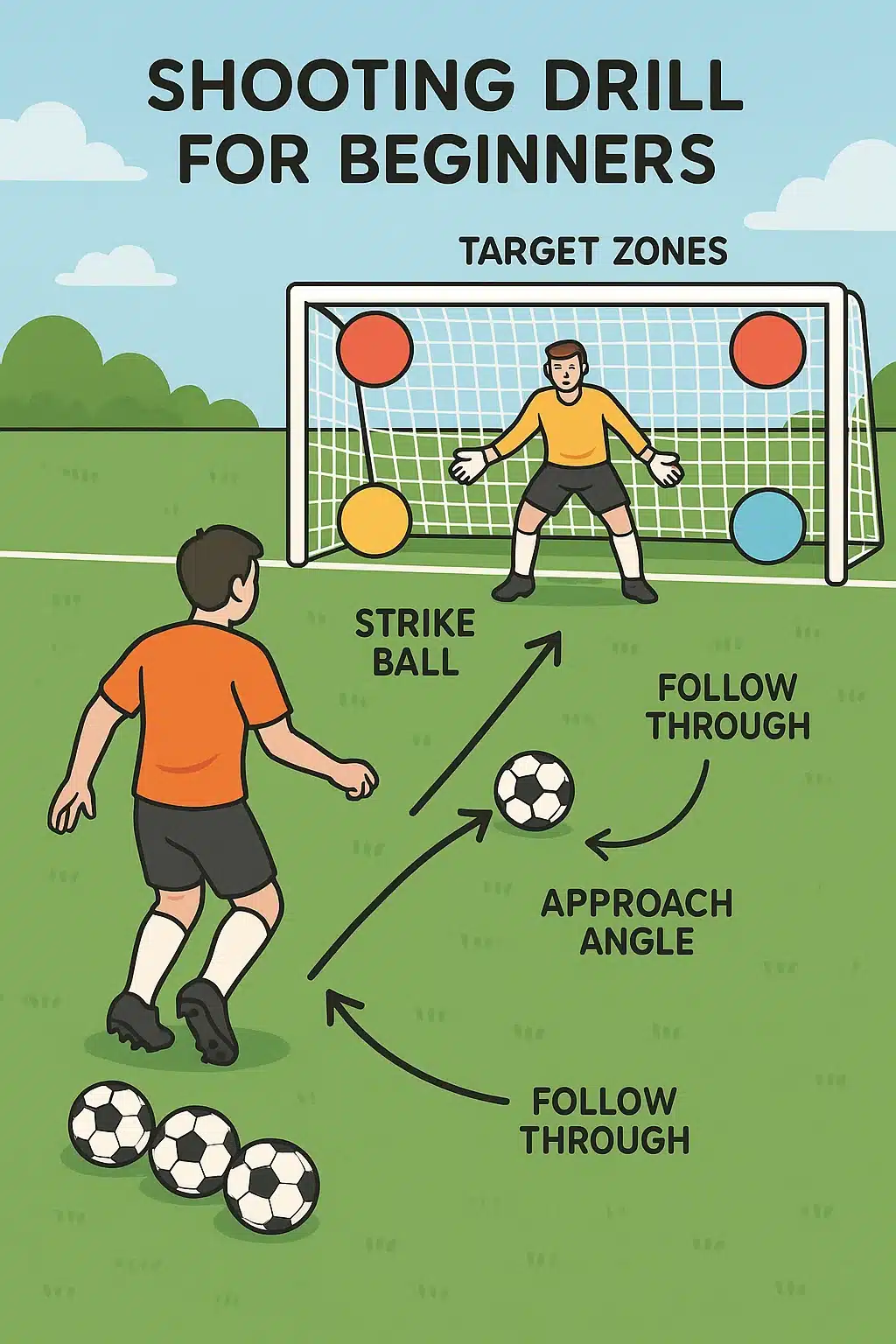
Place the ball facing away from a marked target (goal or cone). Practice turning your body quickly around the ball and striking it toward the target in one fluid motion.
This drill trains coordination between foot positioning, hip rotation, and follow-through, essentials for shooting power and accuracy.
Shooting on Goal After Dribbling: Combining Skills
Dribble towards a goal or target, then take a shot while maintaining balance and composure. This simulates real attacking moments where you’re under pressure and must strike immediately.
Focus on keeping your head down momentarily at the strike to ensure clean contact with the ball. Repeat from different angles to develop versatile shooting ability.
Shooting Technique Fundamentals: Accuracy and Power
When practicing shots, prioritize accuracy over pure power at first. Target specific spots in the net rather than blasting randomly. Gradually increase shot force with improved technique.
Use the instep (laces) of your foot for powerful shots and the inside of your foot for more precise placement. Developing both methods early gives you options during gameplay.
Drill 4: Soccer Ball Control Drills for Beginners
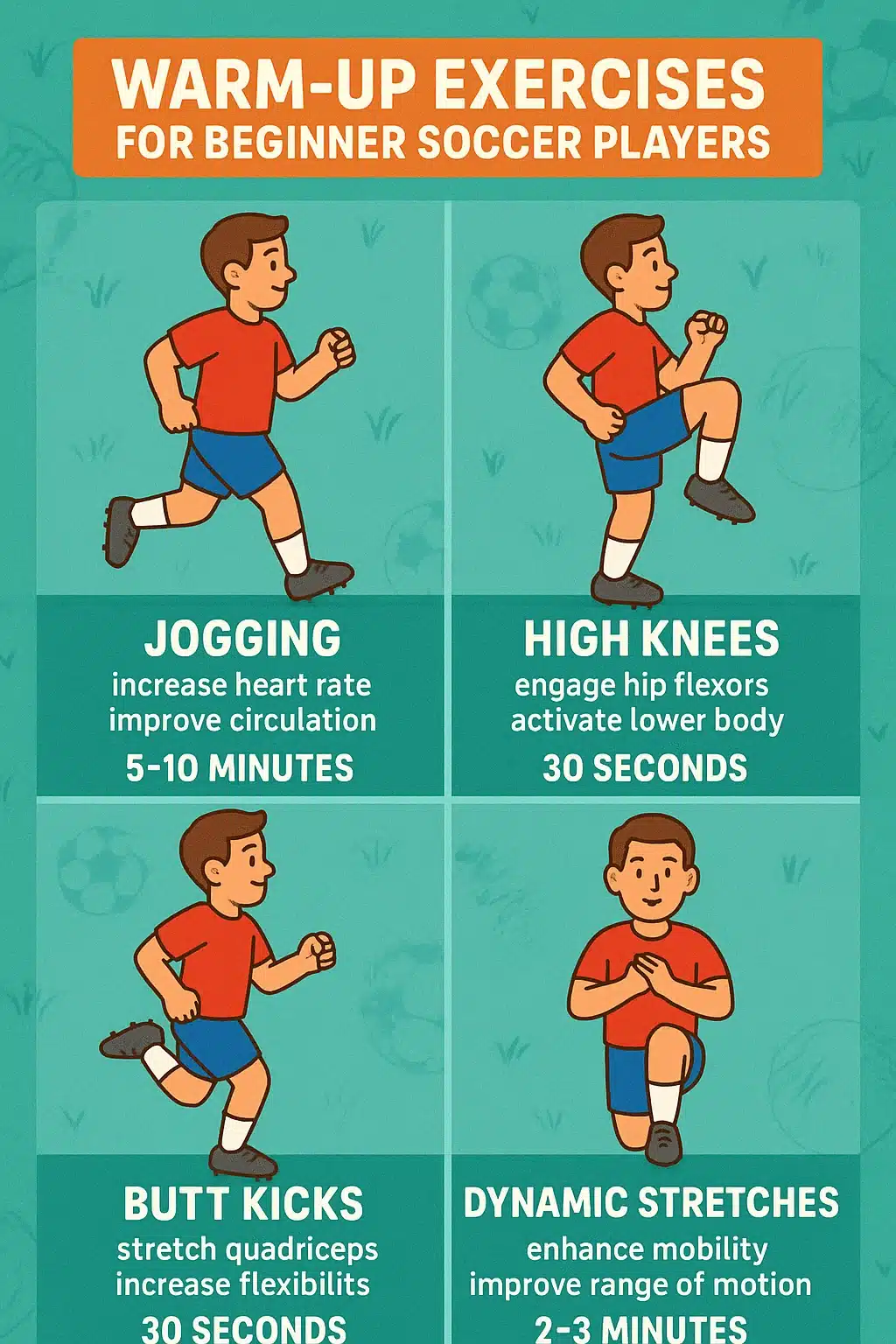
Ball control drills improve your ability to interact with the ball under different scenarios, boosting confidence in versatile game contexts.
Juggling Drills and Foot-Eye Coordination Tips
Juggling starts with small touches using feet, thighs, and head to keep the ball airborne without letting it hit the ground.
Try starting with 5 juggles and slowly increase. Juggling sharpens touch sensitivity, promotes balance, and enhances your overall ball feel.
A tip: Keep your eyes on the ball’s top surface and use relaxed, controlled touches to avoid losing control.
Touch and Trap Exercises for Receiving Under Pressure
Practice receiving passes with a first touch trap: stopping or controlling the ball close using various body parts (foot, thigh, chest).
Try alternating between ground passes and air passes to simulate game unpredictability. This builds quick reflexes and stable ball control even under pressure.
Small-Sided Games to Apply Ball Control Skills in Match Scenarios
Playing 3v3 or 4v4 games on smaller fields forces quick decisions and uses ball control skills under real pressure.
Small-sided games promote creativity, teamwork, and reinforce learned ball manipulation skills effectively.
Drill 5: Agility Ladder and Fitness Drills for Beginner Soccer Players
Soccer demands not just skill, but fitness and swift feet. Agility and endurance allow you to maintain performance throughout the match.
Agility Ladder Drills to Increase Speed and Coordination
An agility ladder is a simple tool to develop foot speed, balance, and coordination.
Basic drills include:
– One foot in each square: Step quickly but precisely inside each rung.
– Two feet in each square: Increase lower body cadence and power.
– Lateral shuffles: Step sideways rapidly, improving change of direction speed.
Consistency with ladder drills can noticeably enhance your ability to maneuver opponents and react quickly.
Conditioning Exercises to Build Endurance
Base aerobic fitness is essential for beginner soccer players to keep up with the game over 90 minutes.
Incorporate:
– Interval runs (short bursts of speed followed by recovery jogs).
– Bodyweight circuits (jump squats, push-ups, lunges) for strength and stamina.
– Core exercises like planks to improve balance and injury prevention.
Fun Soccer Drills without Cones or Goals for Limited Space
No cones or goals? No problem! Use markers like shoes, backpacks, or even chalk lines to create boundaries for drills.
Try dribbling around household items or quick toe taps in confined space. Fun drills like “circle keep-away” with friends encourage engagement while building skills even indoors.
Incorporating 1v1 Attacking and Defending Drills for Beginners
The essence of soccer competitiveness lies in 1v1 battles. Practicing these helps you think on your feet and boosts confidence during matches.
1v1 Gate Dribbling to Practice Under Pressure
Set up two gates (small goals) spaced apart. Try to dribble through your gate while your opponent tries to stop you.
This drill develops composure, quick decision-making, and improves defensive anticipation.
Mini Goals for Developing Offensive and Defensive Skills
Mini goals encourage fast shooting practice and tight defense in small spaces.
Players rotate offensive/defensive roles to learn both sides of the game. This dynamic makes drills exciting and well-rounded.
Balancing Individual Skill Development with Team Play
While individual skill drills are important, balance training time with small-sided games and teamwork exercises. Soccer is ultimately a team sport, and developing communication and group tactics will elevate your overall game sense.
Essential Coaching Tips for Beginner Soccer Drills
Great coaches make drills impactful. Here’s how to get the best from each session.
Using Animated and Video Resources for Better Technique Learning
Visual learning accelerates skill acquisition. Watch tutorial videos from credible sources like US Soccer or FIFA Training to see drills executed perfectly.
Reviewing your own practice videos can also pinpoint areas of improvement.
Encouraging Self-Teaching and Fun in Practice
Make drills fun with friendly competition and positive reinforcement. Encourage players, or yourself, to experiment with moves and self-correct through trial and error.
Fun keeps you motivated, helping you stick to training long-term.
Avoiding Overuse of Traditional Line Drills to Maintain Engagement
Classic line drills (running up and down lines to warm up) become monotonous fast. Mix agility, ball skills, and gamified exercises to maintain engagement and improve various abilities in one session.
Structuring a Beginner Soccer Training Session
To maximize improvement, organize your session effectively.
Warm-Up, Skill Drills, Small-Sided Games, and Cool-Down Protocols
- Warm-Up: 10 minutes light jogging, dynamic stretches, easy ball touches.
- Skill Drills: 20-30 minutes focusing on dribbling, passing, shooting, or ball control.
- Small-Sided Games: 15-20 minutes applying skills under pressure.
- Cool-Down: 5-10 minutes light jogging or walking plus static stretching to aid recovery.
Progressive Difficulty and Drill Variations to Sustain Improvement
As skills improve, tweak drills by increasing speed, difficulty, or adding defenders. Progressively challenging yourself keeps growth steady and prevents plateauing.
Unique Perspective: Blending Solo Practice with Small Group Drills for Accelerated Growth
To develop faster, combine independent work with group training.
Leveraging Solo Wall Passes and Juggling to Supplement Team Training
Solo drills like wall passes and juggling build reflexes and ball feel when no team is around. Using a rebounder net or a sturdy wall turns these into productive solo sessions.
How Combining Individual and Group Drills Enhances Game Intelligence and Adaptability
Individual drills focus on technique; group drills nurture tactical understanding and communication. The blend prepares players for all facets of match play, from skill execution to teamwork under pressure.
Tracking Progress and Building Confidence Through Measurable Outcomes
Tracking helps you stay motivated and know where to improve.
Setting Clear Skill Milestones
Define targets like “50 consecutive juggling touches” or “completed 10 cone weaves without losing the ball.” Achieving milestones builds confidence and offers tangible evidence of growth.
Using Game Scenarios and Friendly Matches to Evaluate Improvement
Apply skills in scrimmages and informal matches. Notice decision-making speed, control under pressure, and execution accuracy. Observing these elements shows real-world progress beyond drills.
Celebrating Small Wins to Boost Beginner Motivation
Celebrate improvements no matter how small: a sharper pass, a smoother turn, or a better shot can all be milestones. Positive reinforcement inspires commitment and long-term joy in the game.
Frequently Asked Questions (FAQs)
1. What are the best beginner soccer dribbling drills for kids?
Cone weaving drills, free dribbling in lanes, and basic AJAX dribbles are excellent for kids to develop close ball control and foot coordination.
2. How can beginners improve passing and receiving accuracy?
Practicing two-touch wall passes, short-pass circuits, and pass-and-follow drills greatly enhances precision and quick decision-making in beginners.
3. Are agility ladder drills effective for beginner soccer players?
Absolutely! Agility ladder drills boost foot speed, coordination, and reaction time—all essential for soccer movement efficiency.
4. What is a good warm-up routine for beginner soccer drills?
A warm-up with light jogging, dynamic stretching, and simple ball touches prepares both the body and mind, reducing injury risk and sharpening focus.
5. How do small-sided games help beginner players?
Small-sided games increase touch frequency, improve teamwork, and place players in realistic match scenarios, accelerating skill application and game understanding.
Quick Takeaways / Key Points
- Mastering ball control techniques lays the foundation for all soccer skills.
- Consistent and fun practice builds beginner confidence and skill retention.
- Drills like cone weaving, two-touch passing, and turn-and-shoot advance core abilities.
- Integrating fitness and agility ladders enhances speed, endurance, and coordination.
- Balancing solo practice with group drills fosters technical skill and game intelligence.
- Structured sessions with warm-up, drills, games, and cool-down maximize training benefits.
- Tracking milestones and enjoying small victories propels beginner motivation and progress.
Conclusion
Embarking on your soccer journey through well-designed soccer drills for beginners is both exciting and rewarding. By systematically developing your ball control, passing, shooting, and agility skills, you not only play better but deepen your love for the game. Remember, patience and consistent practice are your best teammates—skills are built brick by brick, touch by touch.
I encourage every soccer ball lover out there to embrace these drills with enthusiasm, adapting them to your unique pace and environment. Experiment, learn, and most importantly, enjoy every moment you get to spend with the ball at your feet. Now that you’ve got these 5 essential beginner drills in your toolkit, it’s time to get out there and experience the magic of soccer firsthand. Happy training!